THE CLASSIC COLLECTION✦Edward BurtonCLASSIC FREE BOOKS
Edward Burton
Henry Wood
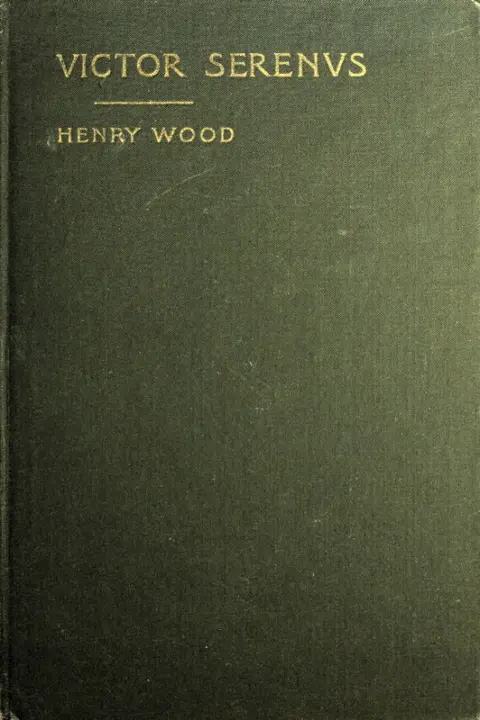
THE CLASSIC COLLECTION · 1898
"Victor Serenus: A Story of the Pauline Era" by Henry Wood is a historical novel written in the late 19th century. The narrative is set during the early years of the Christian era and focuses on the character of Saulus Paulus (later known as Paul the Apostle), exploring his upbringing in Tarsus amidst a rich tapestry of cultural and religious conflict. The author aims to blend historical fact with fictional elements, illuminating the spiritual and societal dynamics of the time. At the start of the story, we are introduced to a solemn religious procession in Tarsus, where a group of Hebrew priests leads a ceremonial event. The infant, Saulus Paulus, is presented in a synagogue ritual that underscores his significance within the Jewish community. The tale unfolds against the backdrop of Tarsus, a bustling hub of commerce and culture, characterized by both Hellenistic and Roman influences. As the narrative progresses, it touches on the tensions between the Jewish tradition and the broader pagan society, with predictions about Saulus's future painted vividly through prophetic blessings and hints of his eventual role in the rise of Christianity. This opening segment sets a rich scene, hinting at the larger themes of faith, destiny, and societal conflict that will likely unfold throughout the novel.
Introduction adapted from the source catalogue; source summaries may be automatically generated.
Free to read · English · 125,559 words · No account needed
MAKE TIME FOR A GOOD BOOK
On by default. Untick to stop anonymous reading totals. Each page counts after 10 seconds in view. How this works.
Anonymous counting is on unless you have switched it off.
“Behold one is straitened to set forth the doctrine of the Spirit in the language of men,” said Serenus. “It is a hidden life, and being veiled, only can be made known through parables and symbols. It dwelleth in the heart too deep for the persuasiveness of speech.”
“How unlike the learning of the schools!” said Marcius.
“Yea; words and writings which concern the bodily sensations of men, and the things that are without and seen, are multiplied, while the things of the spirit are silently digged out of the depths of the soul.”
“After what manner was the teaching of the great prophet of Nazareth?”
“Through symbols and parables! Nay, even more through his life and example, and by means of the outward signs, ministries, and miracles which witnessed the divinity that was within him.”
“Have all men the same divinity?”
“All in their real being are sons of God, but being ignorant of their sonship, have not unfolded it into outward manifestation. It is like a seed, containing life, but not yet quickened into outward form and fruitfulness. Man is only perfected as man, in the degree that he expresses God.”
“Why are men so slow in their progress upward?”
“Chiefly because they think themselves to be bodies rather than what they really are,—spirits having present bodily articulation.”
“In other words, thou wouldst say, that having only a fleshly consciousness, they perform the works of the flesh, ignorant of the spirit or real self which hath not yet received a quickening.”
“Thou hast spoken it plainly. The works of the flesh are mischievous, selfish, hateful, and corrupting, while those of the Spirit are peace, joy, love, and purity. So long as men think themselves carnal in their being, the corresponding works will follow. Every kind of thought and belief bringeth forth a harvest of its own kind.”
“If I rightly apprehend,” said Marcius, “thou dost not set forth that the body is evil in itself?”
“Nay! the body, as the temple and expression of the Spirit, is an holy building, sanctified and honorable. But to be after that manner it must be man’s servant, and not his master. It may render a delightful service, or be a deadly tyrant! Shall the clay rule the potter?”
“Whence come its weaknesses and sicknesses?”
“From the prevailing bodily consciousness which giveth man the feeling that he must perish. He is therefore filled with thoughts, fears, and beliefs of ill which bring forth a universal fruitage of their own kind. Man therefore bows himself in servitude to these, his own creations, and ignorantly thinketh that they are sent by God.”
“How are they to be put away?”
Your reading position is saved on this browser. Take it to another device with a library code. Reading pages adapt to text, rather than matching a printed edition.
BEHIND THE BOOK
This eBook is for the use of anyone anywhere in the United States and most other parts of the world at no cost and with almost no restrictions whatsoever. You may copy it, give it away or re-use it under the terms of the Project Gutenberg License included with this eBook or online at www.gutenberg.org. If you are not located in the United States, you will have to check the laws of the country where you are located before using this eBook. Read the source licence.
The original source file, including credits and licence, is retained by this library. Request an original-format copy at no charge. Please include the book title and Project Gutenberg identifier #55225.
KEEP YOUR CURIOSITY GOING
Cécile Tormay

Moritz Busch
Coulson Kernahan
John L. Ransom

Maurice Baring
Frances Wright