THE CLASSIC COLLECTION✦Edward BurtonCLASSIC FREE BOOKS
Edward Burton
Henry Wood
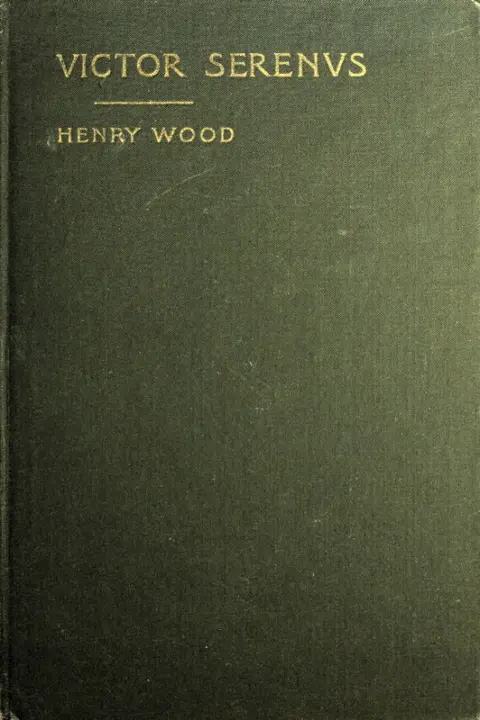
THE CLASSIC COLLECTION · 1898
"Victor Serenus: A Story of the Pauline Era" by Henry Wood is a historical novel written in the late 19th century. The narrative is set during the early years of the Christian era and focuses on the character of Saulus Paulus (later known as Paul the Apostle), exploring his upbringing in Tarsus amidst a rich tapestry of cultural and religious conflict. The author aims to blend historical fact with fictional elements, illuminating the spiritual and societal dynamics of the time. At the start of the story, we are introduced to a solemn religious procession in Tarsus, where a group of Hebrew priests leads a ceremonial event. The infant, Saulus Paulus, is presented in a synagogue ritual that underscores his significance within the Jewish community. The tale unfolds against the backdrop of Tarsus, a bustling hub of commerce and culture, characterized by both Hellenistic and Roman influences. As the narrative progresses, it touches on the tensions between the Jewish tradition and the broader pagan society, with predictions about Saulus's future painted vividly through prophetic blessings and hints of his eventual role in the rise of Christianity. This opening segment sets a rich scene, hinting at the larger themes of faith, destiny, and societal conflict that will likely unfold throughout the novel.
Introduction adapted from the source catalogue; source summaries may be automatically generated.
Free to read · English · 125,559 words · No account needed
MAKE TIME FOR A GOOD BOOK
On by default. Untick to stop anonymous reading totals. Each page counts after 10 seconds in view. How this works.
Anonymous counting is on unless you have switched it off.
But in spite of appearances, Leander gathered himself together, and with a
chuckle exclaimed,—
“By the thirst of Bacchus! I adjudge this a strong and artistic stage‐ setting for a Greek tragedy!”
Then, striking an attitude, he began, in impassioned style, to recite some lines from one of the dramas of Sophocles.
After listening a while the horrible gigantic Shape began slowly to turn away, and exclaimed in hoarse, hollow tones,—
“Enough! I surrender!”
Leander neatly turned the exclamation into a compliment.
“My oratory conquers gods, men, or she‐devils!”
He then addressed the retiring Shape.
“Stay, I pray thee! Thou art not comely, but peradventure thou canst serve me! I would have none of thy incantations, but thou hast in store a variety of potions. Art thou skilled in their preparation?”
“For more than twoscore years have I distilled and cunningly concentrated the occult and deadly forces of nature,” said the Shape with a ghastly grin. “I am a daughter of the Etrurians, and their wonderful secrets and enchantments have come down to me from the dim past. I have philters for the loveless, promises of treasure for the needy, and potions for revenge, for tragedy, for blight, and for destiny! What wilt thou?”
“Hast thou a blight which will very slowly, but with grim certainty, dull the reason, destroy the wisdom, and hasten to decay before the wonted time all the faculties of the Mind?”
The Shape stretched out her long, bony fingers and took one of the small phials, and holding it before her stony eyes, replied,—
“In color and taste like water; yet he who takes it in any form, in three years will become a drivelling idiot! The brain! the brain! It slowly scorches, and nothing can put it out! It will mingle with water or even Falernian!”
The Shape gave a malicious leer.
“I believe neither in shades, spectres, nor enchantments, but of chemistry am persuaded! But how can I be assured of what thou sayest?”
“I will give thee a sign of my power!”
“As thou wilt.”
The Shape, taking an empty phial, poured into it a portion of the contents of several of the dark liquids, and the mixture was clear and colorless.
“By the eyes of yonder Hecate, thou hast power! and now the price of thy
potion?”
“From thee, O dramatic ranter, a full purse of gold, for thou art rich.”
Leander drew from an inner secret fold in his tunic a small purse filled with gold, and taking the phial, carefully deposited it in the place from whence he had taken the coin.
Your reading position is saved on this browser. Take it to another device with a library code. Reading pages adapt to text, rather than matching a printed edition.
BEHIND THE BOOK
This eBook is for the use of anyone anywhere in the United States and most other parts of the world at no cost and with almost no restrictions whatsoever. You may copy it, give it away or re-use it under the terms of the Project Gutenberg License included with this eBook or online at www.gutenberg.org. If you are not located in the United States, you will have to check the laws of the country where you are located before using this eBook. Read the source licence.
The original source file, including credits and licence, is retained by this library. Request an original-format copy at no charge. Please include the book title and Project Gutenberg identifier #55225.
KEEP YOUR CURIOSITY GOING
Cécile Tormay

Moritz Busch
Coulson Kernahan
John L. Ransom

Maurice Baring
Frances Wright