THE CLASSIC COLLECTION✦Edward BurtonCLASSIC FREE BOOKS
Edward Burton
Henry Wood
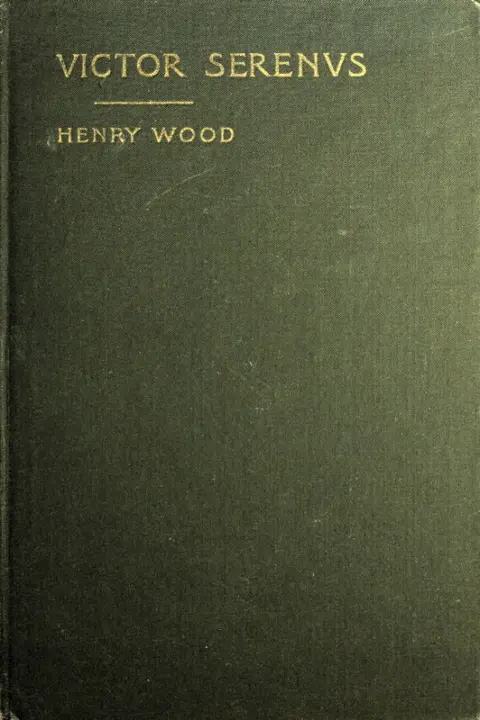
THE CLASSIC COLLECTION · 1898
"Victor Serenus: A Story of the Pauline Era" by Henry Wood is a historical novel written in the late 19th century. The narrative is set during the early years of the Christian era and focuses on the character of Saulus Paulus (later known as Paul the Apostle), exploring his upbringing in Tarsus amidst a rich tapestry of cultural and religious conflict. The author aims to blend historical fact with fictional elements, illuminating the spiritual and societal dynamics of the time. At the start of the story, we are introduced to a solemn religious procession in Tarsus, where a group of Hebrew priests leads a ceremonial event. The infant, Saulus Paulus, is presented in a synagogue ritual that underscores his significance within the Jewish community. The tale unfolds against the backdrop of Tarsus, a bustling hub of commerce and culture, characterized by both Hellenistic and Roman influences. As the narrative progresses, it touches on the tensions between the Jewish tradition and the broader pagan society, with predictions about Saulus's future painted vividly through prophetic blessings and hints of his eventual role in the rise of Christianity. This opening segment sets a rich scene, hinting at the larger themes of faith, destiny, and societal conflict that will likely unfold throughout the novel.
Introduction adapted from the source catalogue; source summaries may be automatically generated.
Free to read · English · 125,559 words · No account needed
MAKE TIME FOR A GOOD BOOK
On by default. Untick to stop anonymous reading totals. Each page counts after 10 seconds in view. How this works.
Anonymous counting is on unless you have switched it off.
“O my young friend! behold my loved and dutiful daughter hath been beguiled of the heresy. To‐day, before the third hour, she left me that she might join these deluded people, thus giving up my favor, affection, home, and honor. Peradventure she went directly to the Upper Chamber, and hath gone to prison with the other women. Behold my sorrow!”
“She hath chosen her own portion!” said Saulus unconcernedly.
“O Saulus!” said the Rabban pleadingly. “She is young, and knoweth little of the heresy, being deceived.”
“I will visit the prison, and find if she be among the women. What is her
name?”
“Amabel.”
“If she be with them, I will command her release, and direct that she return to her father’s house.”
“I thank thee for thy great favor! After being cast into prison, I am persuaded that when released she will show her former wisdom in this matter.”
Gamaliel brightened at the renewal of his own hope, and added,—
“Peradventure it is well! I perceive that nothing less than some such experience would have turned her. Now I soon shall see my daughter!”
Saulus took his leave, and proceeded directly to the prison.
“Hast thou among the heretics a young woman called Amabel?” asked Saulus
of the keeper.
Looking over the roll, he replied in the affirmative.
“Release her, and command her to go to her father’s house!”
Saulus disdained to make any explanation, and left at once, without waiting to see her. Gamaliel had requested that his name be not mentioned, and it was therefore impossible that she should be conducted to the palace. It would lead to recognition.
The jailer went to the cell where Amabel was incarcerated, and unbarring the heavy door, proclaimed,—
“By order of Saulus, deputy of the Sanhedrin, behold thou art released, and commanded to go to thy father’s house!”
She passed out of the dark damp interior into the sunshine, and disappeared in the crowded street.
Whither would she go? Her father’s house had been closed against her. Hesitating but a moment, she turned her back toward Mount Zion, and passing northward, continued along the narrow street that led beyond Hezekiah’s Pool, at length coming to the home of Serenus. She knocked at the humble door, and was warmly received and ministered unto by his mother, who welcomed her as her own daughter.
Saulus returned to the Sheepmarket near the close of the eventful day, feeling that his work was well begun.
Your reading position is saved on this browser. Take it to another device with a library code. Reading pages adapt to text, rather than matching a printed edition.
BEHIND THE BOOK
This eBook is for the use of anyone anywhere in the United States and most other parts of the world at no cost and with almost no restrictions whatsoever. You may copy it, give it away or re-use it under the terms of the Project Gutenberg License included with this eBook or online at www.gutenberg.org. If you are not located in the United States, you will have to check the laws of the country where you are located before using this eBook. Read the source licence.
The original source file, including credits and licence, is retained by this library. Request an original-format copy at no charge. Please include the book title and Project Gutenberg identifier #55225.
KEEP YOUR CURIOSITY GOING
Cécile Tormay

Moritz Busch
Coulson Kernahan
John L. Ransom

Maurice Baring
Frances Wright