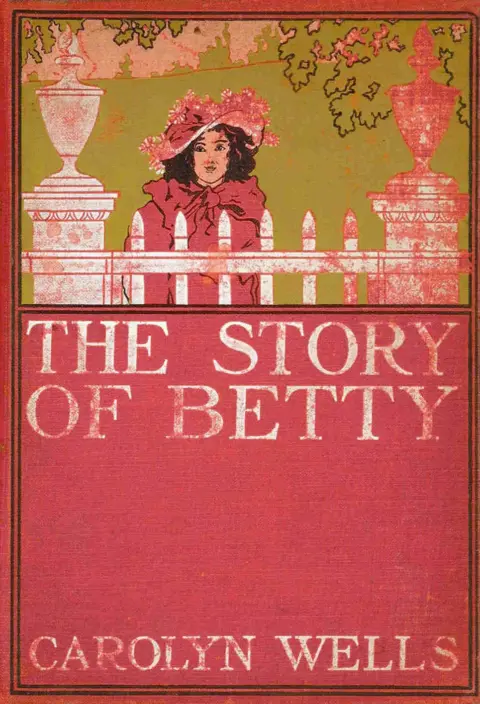
The story of Betty
Carolyn Wells
THE CLASSIC COLLECTION · 1918
"Vicky Van" by Carolyn Wells is a novel written during the early 20th century. The story introduces us to Victoria "Vicky" Van Allen, a lively and captivating young woman who is at the center of an intrigue that unfolds during an evening gathering in her charming New York City home. As the narrative starts, we meet the main character Chester Calhoun, who is intrigued by Vicky's vibrant personality and the social dynamics at play among her eclectic group of friends. At the start of the book, we are drawn into Vicky’s world through the eyes of Chester Calhoun, a junior partner at a law firm who often mingles within the fashionable circles of New York society. The narrative sets a light-hearted tone as Chester describes his admiration for Vicky and her fashionable salon filled with lively games of bridge and charming guests. However, the atmosphere quickly shifts when a tragic event occurs; a man named Somers is mysteriously stabbed, which sparks concern for Vicky's safety and involvement. The opening chapters offer hints at Vicky’s elusive nature, her relationships with her friends, and the tensions that arise when scandal enters her seemingly glamorous life. As the mystery unfolds, the stakes are raised, leading readers to question Vicky's innocence and the true nature of her social world amidst the shocking turn of events.
Introduction adapted from the source catalogue; source summaries may be automatically generated.
Free to read · English · 61,669 words · No account needed
MAKE TIME FOR A GOOD BOOK
On by default. Untick to stop anonymous reading totals. Each page counts after 10 seconds in view. How this works.
Anonymous counting is on unless you have switched it off.
"Oh, no, you don't. Why, you don't know this minute but what I stabbed
that man, and--"
"You didn't, Vicky--tell me you didn't!"
"I can't tell you that. I can't tell you anything. I am the most miserable girl on God's earth!" and I heard tears in Vicky's voice, and a sob choked her utterance.
"Now go," she said, after a moment, "I can't stand any more. Please go, and do what you can for me, without getting yourself into trouble. Go, and don't look back to see how I make my exit, will you?"
"Indeed, I won't do that. Your confidences are safe with me, Vicky, and I will do all in my power to help you, in any way I can."
"Then go now," she said, and a gentle pressure of her hand on my arm
urged me toward the door.
I went without another word, and neither while in the street, nor
after gaining my own house, did I look back for another glimpse of
Vicky Van.
And yet, try as I would, maneuver as I might, I couldn't prevent the
arrival of Fleming Stone.
The Schuyler sisters were determined to have the great detective, and though Mrs. Schuyler wasn't so anxious, yet she raised not the slightest objection, and after some persuasion, Stone agreed to take the case.
I was present at his first call to discuss details and was immensely interested in my first sight of the man.
Tall, well-formed, and of a gravely courteous manner, he impressed me as the most magnetically attractive man I had ever seen. His iron-gray hair and deep-set, dark eyes gave him a dignity that I had never before associated with my notions of a detective.
The Schuyler sisters were frankly delighted with him.
"I know you'll run down the murderer of my brother," Miss Rhoda exulted, while Miss Sarah began to babble volubly of what she called clues and evidence.
Fleming Stone listened politely, now and then asking a direct question and sometimes turning to Ruth Schuyler for further information.
As I watched him closely, it occurred to me that he really paid little attention to what the women said, he was more engaged in scanning their faces and noting their attitudes. Perhaps I imagined it, but I thought he was sizing up their characters and their sympathies, and intended looking up his clues and evidence by himself.
"The first thing to do," he declared, at last, "is to find Miss Van
Allen."
This was what I had feared, and remembering my promise to Vicky I said, "I think that will be impossible, Mr. Stone. She wrote she was leaving New York forever."
Your reading position is saved on this browser. Take it to another device with a library code. Reading pages adapt to text, rather than matching a printed edition.
Carolyn Wells
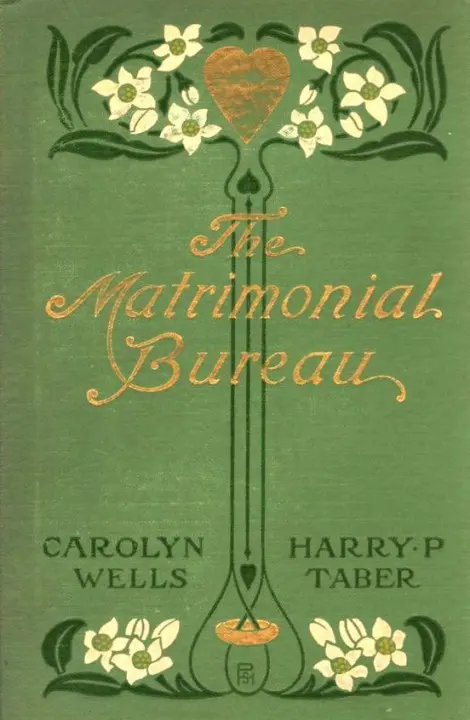
Carolyn Wells & Harry Persons Taber

Carolyn Wells
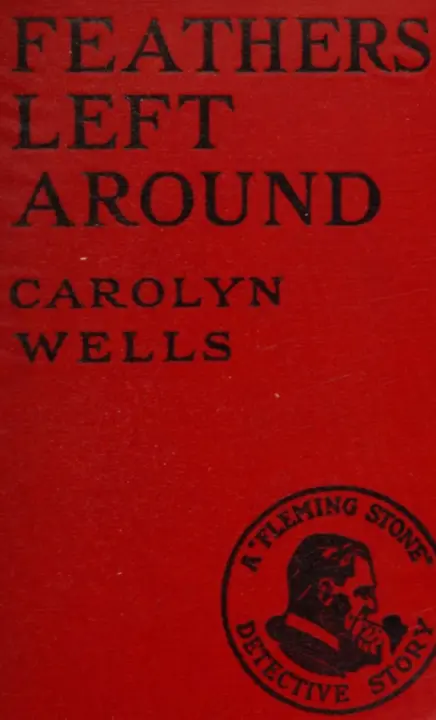
Carolyn Wells
BEHIND THE BOOK
This eBook is for the use of anyone anywhere in the United States and most other parts of the world at no cost and with almost no restrictions whatsoever. You may copy it, give it away or re-use it under the terms of the Project Gutenberg License included with this eBook or online at www.gutenberg.org. If you are not located in the United States, you will have to check the laws of the country where you are located before using this eBook. Read the source licence.
The original source file, including credits and licence, is retained by this library. Request an original-format copy at no charge. Please include the book title and Project Gutenberg identifier #6159.
KEEP YOUR CURIOSITY GOING
Coulson Kernahan

Maurice Baring
Frances Wright
Cécile Tormay

Frederic Jesup Stimson

W. H. P. (William Henry Pope) Jarvis