
The story of Betty
Carolyn Wells
THE CLASSIC COLLECTION · 1918
"Vicky Van" by Carolyn Wells is a novel written during the early 20th century. The story introduces us to Victoria "Vicky" Van Allen, a lively and captivating young woman who is at the center of an intrigue that unfolds during an evening gathering in her charming New York City home. As the narrative starts, we meet the main character Chester Calhoun, who is intrigued by Vicky's vibrant personality and the social dynamics at play among her eclectic group of friends. At the start of the book, we are drawn into Vicky’s world through the eyes of Chester Calhoun, a junior partner at a law firm who often mingles within the fashionable circles of New York society. The narrative sets a light-hearted tone as Chester describes his admiration for Vicky and her fashionable salon filled with lively games of bridge and charming guests. However, the atmosphere quickly shifts when a tragic event occurs; a man named Somers is mysteriously stabbed, which sparks concern for Vicky's safety and involvement. The opening chapters offer hints at Vicky’s elusive nature, her relationships with her friends, and the tensions that arise when scandal enters her seemingly glamorous life. As the mystery unfolds, the stakes are raised, leading readers to question Vicky's innocence and the true nature of her social world amidst the shocking turn of events.
Introduction adapted from the source catalogue; source summaries may be automatically generated.
Free to read · English · 61,669 words · No account needed
MAKE TIME FOR A GOOD BOOK
On by default. Untick to stop anonymous reading totals. Each page counts after 10 seconds in view. How this works.
Anonymous counting is on unless you have switched it off.
First came the two sisters. These ladies, though not elderly, were middle-aged, and perhaps, a few years older than their brother. They were austere and prim, of aristocratic features and patrician air.
But they were almost hysterical in their excitement. A distressed maid hovered behind them with sal volatile. The ladies were fully attired, but caps on their heads and woolly wraps flung round them bore witness to hasty dressing.
"What is it?" cried Miss Rhoda, the younger of the two. "What has
happened to Randolph?"
I introduced myself to them. I told them, as gently as I could, the bare facts, deeming it wise to make no prevarication.
So raptly did they listen and so earnestly did I try to omit horrible details, and yet tell the truth, that I did not hear Mrs. Schuyler enter the room. But she did come in, and heard also, the story as I told it.
"Can it not be," I heard a soft voice behind me say, "can it not yet be there is some mistake? Who says that man is my husband?"
I turned to see the white face and clenched hands of Randolph Schuyler's widow. She was holding herself together, and trying to get a gleam of hope from uncertainty.
If I had felt pity and sorrow for her before I saw her, it was doubly
poignant now.
Ruth Schuyler was one of those gentle, appealing women, helplessly feminine in emergency. Her frightened, grief-stricken eyes looked out of a small, pale face, and her bloodless lips quivered as she caught them between her teeth in an effort to preserve her self-control.
"I am Chester Calhoun," I said, and she bowed in acknowledgment. "I am junior partner in the firm of Bradbury and Calhoun. Mr. Bradbury is one of your husband's lawyers and also a friend, so, as circumstances brought it about, I came here, with Inspector Mason, to tell you--to tell you--"
Mrs. Schuyler sank into a seat. Still with that air of determination to be calm, she gripped the chair arms and said, "I heard you tell Miss Schuyler that Randolph has been killed. I ask you, may it not be some one else? Why should he be at a house where people called him by a name not his own?"
She had heard, then, all I had told the older ladies. For Mrs. Schuyler was not old. She must be, I thought at once, years younger than her husband. Perhaps a second wife. I was glad she had heard, for it saved repeating the awful narrative.
"He has not been identified, Mrs. Schuyler," I said, "except by the policeman of this precinct, who declares he knows him well."
Your reading position is saved on this browser. Take it to another device with a library code. Reading pages adapt to text, rather than matching a printed edition.
Carolyn Wells
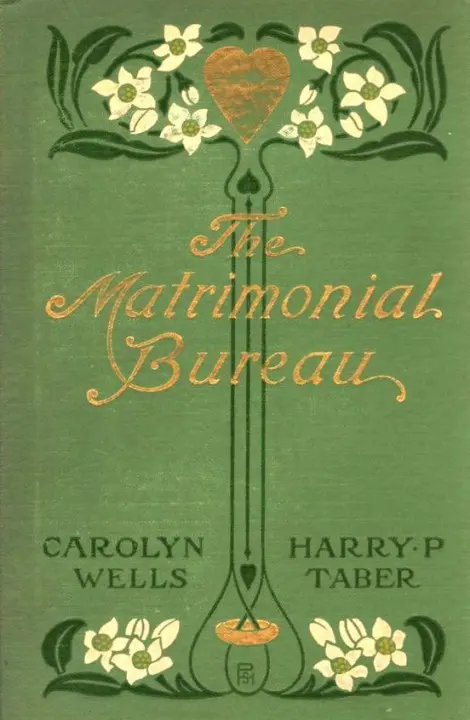
Carolyn Wells & Harry Persons Taber

Carolyn Wells
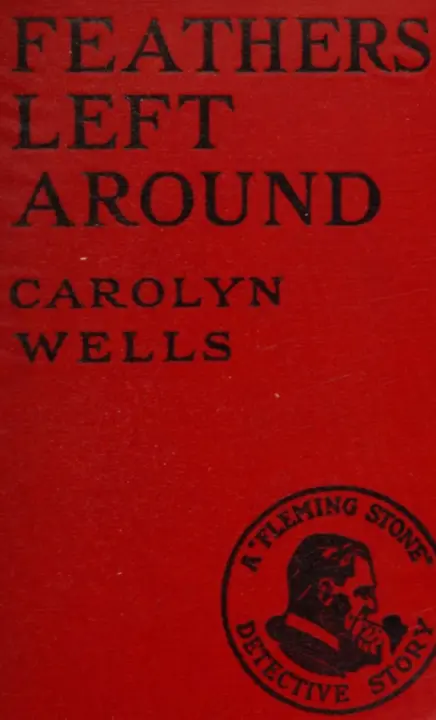
Carolyn Wells
BEHIND THE BOOK
This eBook is for the use of anyone anywhere in the United States and most other parts of the world at no cost and with almost no restrictions whatsoever. You may copy it, give it away or re-use it under the terms of the Project Gutenberg License included with this eBook or online at www.gutenberg.org. If you are not located in the United States, you will have to check the laws of the country where you are located before using this eBook. Read the source licence.
The original source file, including credits and licence, is retained by this library. Request an original-format copy at no charge. Please include the book title and Project Gutenberg identifier #6159.
KEEP YOUR CURIOSITY GOING
Coulson Kernahan

Maurice Baring
Frances Wright
Cécile Tormay

Frederic Jesup Stimson

W. H. P. (William Henry Pope) Jarvis