THE CLASSIC COLLECTION✦Cape Cod FolksCLASSIC FREE BOOKS
Cape Cod Folks
Sarah Pratt McLean Greene
THE CLASSIC COLLECTION · 1892
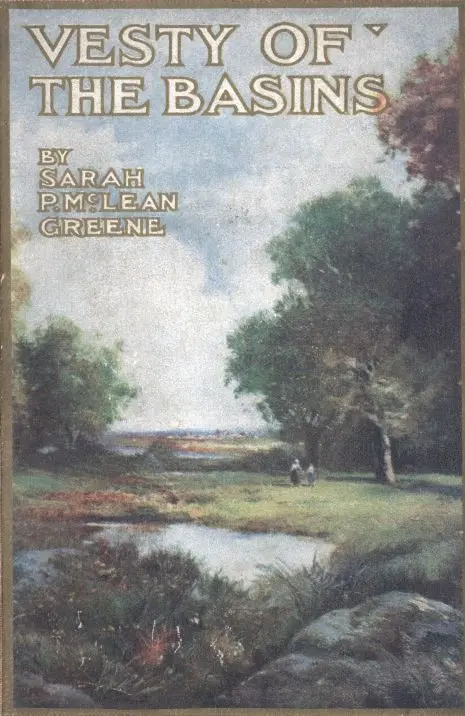
"Vesty of the Basins" by Sarah Pratt McLean Greene is a novel written in the late 19th century. The story is set in a small, coastal community and revolves around Vesty Kirtland, a young woman who plays a significant role in her community, dealing with themes of love, social class, and personal duty. The narrative captures the dynamics between the residents of the Basin and their attempts to navigate life in the face of external social pressures. The opening of the novel introduces readers to the quaint yet challenging life of the Basin's inhabitants on a Sunday afternoon. Vesty has an important social meeting to attend, during which the local people gather for worship, conversations, and camaraderie despite their humble circumstances. Through lively dialogues and introspective monologues, the narrator reflects on the characters, the weather, and the close-knit nature of the community, particularly highlighting Vesty's modesty and strength. As the story unfolds, it teases the interplay of a love interest with Notely Garrison, hinting at the complexities of their relationship amid societal expectations and personal desires.
Introduction adapted from the source catalogue; source summaries may be automatically generated.
Free to read · English · 61,698 words · No account needed
MAKE TIME FOR A GOOD BOOK
On by default. Untick to stop anonymous reading totals. Each page counts after 10 seconds in view. How this works.
Anonymous counting is on unless you have switched it off.
Uncle Coffin gave me an irresistible but a loving and true, not a
malicious, wink.
"Speakin' o' women folks, Leezur," said he, "is there any news from
Lot's wife?"
Captain Leezur cleared the mellow symphonies of those organs through which he intoned his speech; and was about to reply, fully and sweetly, when Captain Pharo made his appearance at the door.
Uncle Coffin sprang from his chair, and with a grave face, which only later broke out into those beams of affection which were storming his bosom, shook him violently by the collar, dragged him across the floor, and set him in a chair by the fireplace with a loud, conclusive thump.
"Dodrabbit ye, man!" said he, "I hain't heered your voice since I was a
baby."
Captain Pharo, with a countenance full of delight and sympathy, pulled his ruffled jacket down nearer to the waist line, and lit his pipe.
"Dodrabbit ye, Pharo!" continued Uncle Coffin, and turned from his pet to me with another wink, "what are yer days like now? They ain't like the grass, are they? I b'lieve they are, jest like the same old grass, or like the morning flower, the blighting wind sweeps o'er. She withers in an'--why don't ye never finish on 'er out, Pharo? Why don't ye never ring the last note on 'er--eh?"
"Because, Coffin," said Captain Pharo, with a smile of deep meaning, "because thar's so many things that when they're onct finished they 're completely done for in this world; eat a meal o' vittles and thar 's the end on't; smoke a pipe an' she runs dead; I like t' have one thing left over. I like to feel, Coffin, by clam! 't thar's somethin' 't thar ain't go'n' to be no end on!"
Uncle Coffin had been studying him attentively, with his hands on his
knees.
"Kobbe," said he, "you're a philosoffarer."
Captain Pharo wiggled uneasily.
"I don't say hippopotamar nor rhinosossarer," said Uncle Coffin; "I say
philosoffarer."
Captain Pharo drew a strange breath of relief.
"Mebbe we're a little alike in that respec'," Captain Leezur assured him deliciously; "'cept 't he ain't nigh so ongodly as I use' ter be."
"I don' know," said Captain Pharo. "I have worked sometimes, Sundays--poo! poo! hohum!--but not 'less 'twas somethin' 'mportant, gettin' in hay or somethin' like that. And I have--poo! poo! hohum! Wal, wal--hauled out my lobster car sometimes Sundays waitin' for the smack--hohum!"
"Pharo," said Uncle Coffin, holding up his finger, "no more! I know ye. Thar ain't an ongodly bone in yer body--'cept maybe when ye've lost yer pipe an' cussed a little."
Your reading position is saved on this browser. Take it to another device with a library code. Reading pages adapt to text, rather than matching a printed edition.
Sarah Pratt McLean Greene
BEHIND THE BOOK
This eBook is for the use of anyone anywhere in the United States and most other parts of the world at no cost and with almost no restrictions whatsoever. You may copy it, give it away or re-use it under the terms of the Project Gutenberg License included with this eBook or online at www.gutenberg.org. If you are not located in the United States, you will have to check the laws of the country where you are located before using this eBook. Read the source licence.
The original source file, including credits and licence, is retained by this library. Request an original-format copy at no charge. Please include the book title and Project Gutenberg identifier #21443.
KEEP YOUR CURIOSITY GOING
Coulson Kernahan

Maurice Baring
Frances Wright
Cécile Tormay

Frederic Jesup Stimson

W. H. P. (William Henry Pope) Jarvis