READ · DISCOVER · ENJOYClassic literature · Always free
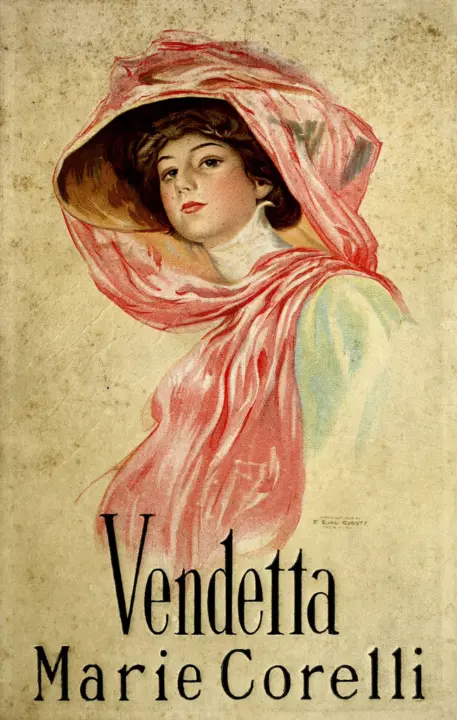
Vendetta: A Story of One Forgotten — digital edition cover

THE CLASSIC COLLECTION · 1886

Vendetta: A Story of One Forgotten

"Vendetta: A Story of One Forgotten" by Marie Corelli is a romance novel published in 1886. After being mistakenly declared dead during a cholera outbreak, Italian Count Fabio Romani escapes his tomb and discovers his wife and best friend have been conducting an affair. Adopting a new identity as wealthy bachelor Cesare Oliva, the count orchestrates an elaborate scheme of revenge against those who betrayed him. Corelli's second novel became a popular success despite receiving mixed critical reviews.

Introduction adapted from the source catalogue; source summaries may be automatically generated.

Start reading ↓

Free to read · English · 144,830 words · No account needed

MAKE TIME FOR A GOOD BOOK

Vendetta: A Story of One Forgotten

On by default. Untick to stop anonymous reading totals. Each page counts after 10 seconds in view. How this works.

Anonymous counting is on unless you have switched it off.

Vendetta: A Story of One Forgotten

“True to him? Ah, Dio! but the signor does not know her. There was one of Carmelo’s own band, as bold and handsome a cut-throat as ever lived—he was mad for Teresa—he followed her everywhere like a beaten cur. One day he found her alone; he tried to embrace her—she snatched a knife from his own girdle and stabbed him with it, like a little fury! She did not kill him then, but Carmelo did afterward. To think of a little woman like that with such a devil in her! It is her boast that no man, save Carmelo, has ever touched so much as a ringlet of her hair. Ay; she is true to him—more’s the pity.”

“Why—you would not have her false?” I asked.

“Nay, nay—for a false woman deserves death—but still it is a pity Teresa should have fixed her love on Carmelo. Such a man! One day the gendarmes will have him, then he will be in the galleys for life, and she will die. Yes—you may be sure of that! If grief does not kill her quickly enough, then she will kill herself, that is certain! She is slight and frail to look at as a flower, but her soul is strong as iron. She, will have her own way in death as well as in love—some women are made so, and it is generally the weakest-looking among them who have the most courage.”

Our conversation was here interrupted by one of the sailors who came for his master’s orders. The talkative skipper, with an apologetic smile and bow, placed his box of cigarettes beside me where I sat, and left me to my own reflections.

I was not sorry to be alone. I needed a little breathing time—a rest in which to think, though my thoughts, like a new solar system, revolved round the red planet of one central idea, vengeance. “A false woman deserves death.” Even this simple Sicilian mariner said so. “Go and kill her, go and kill her!” These words reiterated themselves over and over again in my ears, till I found myself almost uttering them aloud. My soul sickened at the contemplation of the woman Teresa—the mistress of a wretched brigand whose name was fraught with horror—whose looks were terrific—she, even she could keep herself sacred from the profaning touch of other men’s caresses—she was proud of being faithful to her wolf of the mountains, whose temper was uncertain and treacherous—she could make lawful boast of her fidelity to her blood-stained lover—while Nina—the wedded wife of a noble whose descent was lofty and unsullied, could tear off the fair crown of honorable marriage and cast it in the dust—could take the dignity of an ancient family and trample upon it—could make herself so low and vile that even this common Teresa, knowing all, might and most probably would, refuse to touch her hand, considering it polluted. Just God! what had Carmelo Neri done to deserve the priceless jewel of a true woman’s heart? what had I done to merit such foul deception as that which I was now called upon to avenge? Suddenly I thought of my child. Her memory came upon me like a ray of light—I had almost forgotten her. Poor little blossom!—the slow hot tears forced themselves between my eyelids, as I called up before my fancy the picture of the soft baby face—the young untroubled eyes—the little coaxing mouth always budding into innocent kisses! What should I do with her? When the plan of punishment I had matured in my brain was carried out to its utmost, should I take her with me far, far away into some quiet corner of the world, and devote my life to hers? Alas! alas! she, too, would be a woman and beautiful—she was a flower born of a poisoned tree, who could say that there might not be a canker-worm hidden even in her heart, which waited but for the touch of maturity to commence its work of destruction! Oh, men! you that have serpents coiled round your lives in the shape of fair false women—if God has given you children by them, the curse descends upon you doubly! Hide it as you will under the society masks we are all forced to wear, you know there is nothing more keenly torturing than to see innocent babes look trustingly in the deceitful eyes of an unfaithful wife, and call her by the sacred name of “Mother.” Eat ashes and drink wormwood, you shall find them sweet in comparison to that nauseating bitterness! For the rest of the day I was very much alone. The captain of the brig spoke cheerily to me now and then, but we were met by light contrary winds that necessitated his giving most of his attention to the management of his vessel, so that he could not permit himself to yield to the love of gossip that was inherent in him. The weather was perfect, and notwithstanding our constant shifting and tacking about to catch the erratic breeze, the gay little brig made merry and rapid way over the sparkling Mediterranean, at a rate that promised our arrival at Palermo by the sunset of the following day. As the evening came on the wind freshened, and by the time the moon soared like a large blight bird into the sky, we were scudding along sideways, the edge of our vessel leaning over to kiss the waves that gleamed like silver and gold, flecked here and there with phosphorescent flame. We skimmed almost under the bows of a magnificent yacht—the English flag floated from her mast—her sails glittered purely white in the moonbeams, and she sprung over the water like a sea-gull. A man, whose tall athletic figure was shown off to advantage by the yachting costume he wore, stood on deck, his arm thrown round the waist of a girl beside him. We were but a minute or two passing the stately vessel, yet I saw plainly this loving group of two, and—I pitied the man! Why? He was English undoubtedly—the son of a country where the very soil is supposed to be odorous of virtue—therefore the woman beside him must be a perfect pearl of purity; an Englishman never makes a mistake in these things! Never? Are you sure? Ah, believe me, there is not much difference nowadays between women of opposite nations. Once there was—I am willing to admit that possibility. Once, from all accounts received, the English rose was the fitting emblem of the English woman, but now, since the world has grown so wise and made such progress in the art of running rapidly downhill, is even the aristocratic British peer quite easy in his mind regarding his fair peeress? Can he leave her to her own devices with safety? Are there not men, boastful too of their “blue blood,” who are perhaps ready to stoop to the thief’s trick of entering his house during his absence by means of private keys, and stealing away his wife’s affections?—and is not she, though a mother of three or four children, ready to receive with favor the mean robber of her husband’s rights and honor? Read the London newspapers any day and you will find that once “moral” England is running a neck and neck race with other less hypocritical nations in pursuit of social vice. The barriers that once existed are broken down; “professional beauties” are received in circles where their presence formerly would have been the signal for all respectable women instantly to retire; ladies of title are satisfied to caper on the boards of the theatrical stage, in costumes that display their shape as undisguisedly as possible to the eyes of the grinning public, or they sing in concert halls for the pleasure of showing themselves off, and actually accept the vulgar applause of unwashed crowds with a smile and a bow of gratitude! Ye gods! what has become of the superb pride of the old regime—the pride which disdained all ostentation and clung to honor more closely than life! What a striking sign of the times too, is this: let a woman taint her virtue BEFORE marriage, she is never forgiven—her sin is never forgotten; but let her do what she will when she has a husband’s name to screen her, and society winks its eyes at her crimes. Couple this fact with the general spirit of mockery that prevails in fashionable circles—mockery of religion, mockery of sentiment, mockery of all that is best and noblest in the human heart—add to it the general spread of “free-thought,” and therefore of conflicting and unstable opinions—let all these things together go on for a few years longer and England will stare at her sister nations like a bold woman in a domino—her features partly concealed from a pretense at shame, but her eyes glittering coldly through the mask, betraying to all who look at her how she secretly revels in her new code of lawlessness coupled with greed. For she will always be avaricious—and the worst of it is, that her nature being prosaic, there will be no redeeming grace to cast a glamour about her. France is unvirtuous enough, God knows, yet there is a sunshiny smile on her lips that cheers the heart. Italy is also unvirtuous, yet her voice is full of bird-like melody, and her face is a dream of perfect poetry! But England unvirtuous will be like a cautiously calculating, somewhat shrewish matron, possessed of unnatural and unbecoming friskiness, without either laugh, or song, or smile—her one god, Gold, and her one commandment, the suggested eleventh, “Thou shall not be found out!”

Your reading position is saved on this browser. Take it to another device with a library code. Reading pages adapt to text, rather than matching a printed edition.

More from this author

BEHIND THE WORDS

About Marie Corelli

Marie Corelli (1855–1924). Explore A Christmas greeting, The passing of the great Queen: A tribute to the noble life of Victoria Regina, The soul of Lilith and other works in this collection. These books span classic fiction, essays & ideas, poetry.

Explore this author’s books →

THE READERS’ VERDICT

How did this story stay with you?

Not rated yet
Your rating for Vendetta: A Story of One Forgotten

Be the first to share your verdict.

One rating per browser, which you can change or remove. A necessary browser identifier remembers your vote. How ratings work

A GOOD STORY DESERVES COMPANY

Pass this book along.

A great read is even better when it’s shared.

SEND A LITTLE INSPIRATION

Share this book

BEHIND THE BOOK

Edition & source details.

Title
Vendetta: A Story of One Forgotten
Author
Marie Corelli
First publication (Open Library catalogue match)
1886
Digital edition publisher
Project Gutenberg
Gutenberg release date
2003-08-01
Language
English
Source edition imprint
Not stated in source catalogue
Source identifier
Project Gutenberg #4360
Contributors
No additional named contributors in source metadata

Public-domain source & licence

This eBook is for the use of anyone anywhere in the United States and most other parts of the world at no cost and with almost no restrictions whatsoever. You may copy it, give it away or re-use it under the terms of the Project Gutenberg License included with this eBook or online at www.gutenberg.org. If you are not located in the United States, you will have to check the laws of the country where you are located before using this eBook. Read the source licence.

Full source licence and obtaining an original copy

The original source file, including credits and licence, is retained by this library. Request an original-format copy at no charge. Please include the book title and Project Gutenberg identifier #4360.

the full Project Gutenberg License must appear
prominently whenever any copy of a Project Gutenberg work (any work
on which the phrase “Project Gutenberg” appears, or with which the
phrase “Project Gutenberg” is associated) is accessed, displayed,
performed, viewed, copied or distributed:

This eBook is for the use of anyone anywhere in the United States and most
other parts of the world at no cost and with almost no restrictions
whatsoever. You may copy it, give it away or re-use it under the terms
of the Project Gutenberg™ License included with this eBook or online
at www.gutenberg.org. If you
are not located in the United States, you will have to check the laws
of the country where you are located before using this eBook.

1.E.2. If an individual Project Gutenberg electronic work is
derived from texts not protected by U.S. copyright law (does not
contain a notice indicating that it is posted with permission of the
copyright holder), the work can be copied and distributed to anyone in
the United States without paying any fees or charges. If you are
redistributing or providing access to a work with the phrase “Project
Gutenberg” associated with or appearing on the work, you must comply
either with the requirements of paragraphs 1.E.1 through 1.E.7 or
obtain permission for the use of the work and the Project Gutenberg
trademark as set forth in paragraphs 1.E.8 or 1.E.9.

1.E.3. If an individual Project Gutenberg electronic work is posted
with the permission of the copyright holder, your use and distribution
must comply with both paragraphs 1.E.1 through 1.E.7 and any
additional terms imposed by the copyright holder. Additional terms
will be linked to the Project Gutenberg License for all works
posted with the permission of the copyright holder found at the
beginning of this work.

1.E.4. Do not unlink or detach or remove the full Project Gutenberg
License terms from this work, or any files containing a part of this
work or any other work associated with Project Gutenberg.

1.E.5. Do not copy, display, perform, distribute or redistribute this
electronic work, or any part of this electronic work, without
prominently displaying the sentence set forth in paragraph 1.E.1 with
active links or immediate access to the full terms of the Project
Gutenberg License.

1.E.6. You may convert to and distribute this work in any binary,
compressed, marked up, nonproprietary or proprietary form, including
any word processing or hypertext form. However, if you provide access
to or distribute copies of a Project Gutenberg work in a format
other than “Plain Vanilla ASCII” or other format used in the official
version posted on the official Project Gutenberg website
(www.gutenberg.org), you must, at no additional cost, fee or expense
to the user, provide a copy, a means of exporting a copy, or a means
of obtaining a copy upon request, of the work in its original “Plain
Vanilla ASCII” or other form. Any alternate format must include the
full Project Gutenberg License as specified in paragraph 1.E.1.

1.E.7. Do not charge a fee for access to, viewing, displaying,
performing, copying or distributing any Project Gutenberg works
unless you comply with paragraph 1.E.8 or 1.E.9.

1.E.8. You may charge a reasonable fee for copies of or providing
access to or distributing Project Gutenberg electronic works
provided that:

• You pay a royalty fee of 20% of the gross profits you derive from
the use of Project Gutenberg works calculated using the method
you already use to calculate your applicable taxes. The fee is owed
to the owner of the Project Gutenberg trademark, but he has
agreed to donate royalties under this paragraph to the Project
Gutenberg Literary Archive Foundation. Royalty payments must be paid
within 60 days following each date on which you prepare (or are
legally required to prepare) your periodic tax returns. Royalty
payments should be clearly marked as such and sent to the Project
Gutenberg Literary Archive Foundation at the address specified in
Section 4, “Information about donations to the Project Gutenberg
Literary Archive Foundation.”

• You provide a full refund of any money paid by a user who notifies
you in writing (or by e-mail) within 30 days of receipt that s/he
does not agree to the terms of the full Project Gutenberg™
License. You must require such a user to return or destroy all
copies of the works possessed in a physical medium and discontinue
all use of and all access to other copies of Project Gutenberg™
works.

• You provide, in accordance with paragraph 1.F.3, a full refund of
any money paid for a work or a replacement copy, if a defect in the
electronic work is discovered and reported to you within 90 days of
receipt of the work.

• You comply with all other terms of this agreement for free
distribution of Project Gutenberg™ works.


1.E.9. If you wish to charge a fee or distribute a Project
Gutenberg™ electronic work or group of works on different terms than
are set forth in this agreement, you must obtain permission in writing
from the Project Gutenberg Literary Archive Foundation, the manager of
the Project Gutenberg™ trademark. Contact the Foundation as set
forth in Section 3 below.

1.F.

1.F.1. Project Gutenberg volunteers and employees expend considerable
effort to identify, do copyright research on, transcribe and proofread
works not protected by U.S. copyright law in creating the Project
Gutenberg™ collection. Despite these efforts, Project Gutenberg™
electronic works, and the medium on which they may be stored, may
contain “Defects,” such as, but not limited to, incomplete, inaccurate
or corrupt data, transcription errors, a copyright or other
intellectual property infringement, a defective or damaged disk or
other medium, a computer virus, or computer codes that damage or
cannot be read by your equipment.

1.F.2. LIMITED WARRANTY, DISCLAIMER OF DAMAGES - Except for the “Right
of Replacement or Refund” described in paragraph 1.F.3, the Project
Gutenberg Literary Archive Foundation, the owner of the Project
Gutenberg™ trademark, and any other party distributing a Project
Gutenberg™ electronic work under this agreement, disclaim all
liability to you for damages, costs and expenses, including legal
fees. YOU AGREE THAT YOU HAVE NO REMEDIES FOR NEGLIGENCE, STRICT
LIABILITY, BREACH OF WARRANTY OR BREACH OF CONTRACT EXCEPT THOSE
PROVIDED IN PARAGRAPH 1.F.3. YOU AGREE THAT THE FOUNDATION, THE
TRADEMARK OWNER, AND ANY DISTRIBUTOR UNDER THIS AGREEMENT WILL NOT BE
LIABLE TO YOU FOR ACTUAL, DIRECT, INDIRECT, CONSEQUENTIAL, PUNITIVE OR
INCIDENTAL DAMAGES EVEN IF YOU GIVE NOTICE OF THE POSSIBILITY OF SUCH
DAMAGE.

1.F.3. LIMITED RIGHT OF REPLACEMENT OR REFUND - If you discover a
defect in this electronic work within 90 days of receiving it, you can
receive a refund of the money (if any) you paid for it by sending a
written explanation to the person you received the work from. If you
received the work on a physical medium, you must return the medium
with your written explanation. The person or entity that provided you
with the defective work may elect to provide a replacement copy in
lieu of a refund. If you received the work electronically, the person
or entity providing it to you may choose to give you a second
opportunity to receive the work electronically in lieu of a refund. If
the second copy is also defective, you may demand a refund in writing
without further opportunities to fix the problem.

1.F.4. Except for the limited right of replacement or refund set forth
in paragraph 1.F.3, this work is provided to you ‘AS-IS’, WITH NO
OTHER WARRANTIES OF ANY KIND, EXPRESS OR IMPLIED, INCLUDING BUT NOT
LIMITED TO WARRANTIES OF MERCHANTABILITY OR FITNESS FOR ANY PURPOSE.

1.F.5. Some states do not allow disclaimers of certain implied
warranties or the exclusion or limitation of certain types of
damages. If any disclaimer or limitation set forth in this agreement
violates the law of the state applicable to this agreement, the
agreement shall be interpreted to make the maximum disclaimer or
limitation permitted by the applicable state law. The invalidity or
unenforceability of any provision of this agreement shall not void the
remaining provisions.

1.F.6. INDEMNITY - You agree to indemnify and hold the Foundation, the
trademark owner, any agent or employee of the Foundation, anyone
providing copies of Project Gutenberg™ electronic works in
accordance with this agreement, and any volunteers associated with the
production, promotion and distribution of Project Gutenberg™
electronic works, harmless from all liability, costs and expenses,
including legal fees, that arise directly or indirectly from any of
the following which you do or cause to occur: (a) distribution of this
or any Project Gutenberg work, (b) alteration, modification, or
additions or deletions to any Project Gutenberg work, and (c) any
Defect you cause.

Section 2. Information about the Mission of Project Gutenberg

Project Gutenberg is synonymous with the free distribution of
electronic works in formats readable by the widest variety of
computers including obsolete, old, middle-aged and new computers. It
exists because of the efforts of hundreds of volunteers and donations
from people in all walks of life.

Volunteers and financial support to provide volunteers with the
assistance they need are critical to reaching Project Gutenberg’s
goals and ensuring that the Project Gutenberg collection will
remain freely available for generations to come. In 2001, the Project
Gutenberg Literary Archive Foundation was created to provide a secure
and permanent future for Project Gutenberg and future
generations. To learn more about the Project Gutenberg Literary
Archive Foundation and how your efforts and donations can help, see
Sections 3 and 4 and the Foundation information page at www.gutenberg.org.

Section 3. Information about the Project Gutenberg Literary Archive Foundation

The Project Gutenberg Literary Archive Foundation is a non-profit
501(c)(3) educational corporation organized under the laws of the
state of Mississippi and granted tax exempt status by the Internal
Revenue Service. The Foundation’s EIN or federal tax identification
number is 64-6221541. Contributions to the Project Gutenberg Literary
Archive Foundation are tax deductible to the full extent permitted by
U.S. federal laws and your state’s laws.

The Foundation’s business office is located at 41 Watchung Plaza #516,
Montclair NJ 07042, USA, +1 (862) 621-9288. Email contact links and up
to date contact information can be found at the Foundation’s website
and official page at www.gutenberg.org/contact

Section 4. Information about Donations to the Project Gutenberg
Literary Archive Foundation

Project Gutenberg™ depends upon and cannot survive without widespread
public support and donations to carry out its mission of
increasing the number of public domain and licensed works that can be
freely distributed in machine-readable form accessible by the widest
array of equipment including outdated equipment. Many small donations
($1 to $5,000) are particularly important to maintaining tax exempt
status with the IRS.

The Foundation is committed to complying with the laws regulating
charities and charitable donations in all 50 states of the United
States. Compliance requirements are not uniform and it takes a
considerable effort, much paperwork and many fees to meet and keep up
with these requirements. We do not solicit donations in locations
where we have not received written confirmation of compliance. To SEND
DONATIONS or determine the status of compliance for any particular state
visit www.gutenberg.org/donate.

While we cannot and do not solicit contributions from states where we
have not met the solicitation requirements, we know of no prohibition
against accepting unsolicited donations from donors in such states who
approach us with offers to donate.

International donations are gratefully accepted, but we cannot make
any statements concerning tax treatment of donations received from
outside the United States. U.S. laws alone swamp our small staff.

Please check the Project Gutenberg web pages for current donation
methods and addresses. Donations are accepted in a number of other
ways including checks, online payments and credit card donations. To
donate, please visit: www.gutenberg.org/donate.

Section 5. General Information About Project Gutenberg electronic works

Professor Michael S. Hart was the originator of the Project
Gutenberg concept of a library of electronic works that could be
freely shared with anyone. For forty years, he produced and
distributed Project Gutenberg eBooks with only a loose network of
volunteer support.

Project Gutenberg eBooks are often created from several printed
editions, all of which are confirmed as not protected by copyright in
the U.S. unless a copyright notice is included. Thus, we do not
necessarily keep eBooks in compliance with any particular paper
edition.

Most people start at our website which has the main PG search
facility: www.gutenberg.org.

This website includes information about Project Gutenberg,
including how to make donations to the Project Gutenberg Literary
Archive Foundation, how to help produce our new eBooks, and how to
subscribe to our email newsletter to hear about new eBooks.


KEEP YOUR CURIOSITY GOING

Your next chapter awaits.