THE CLASSIC COLLECTION✦Vanished Halls and Cathedrals of FranceCLASSIC FREE BOOKS
Vanished Halls and Cathedrals of France
George Wharton Edwards
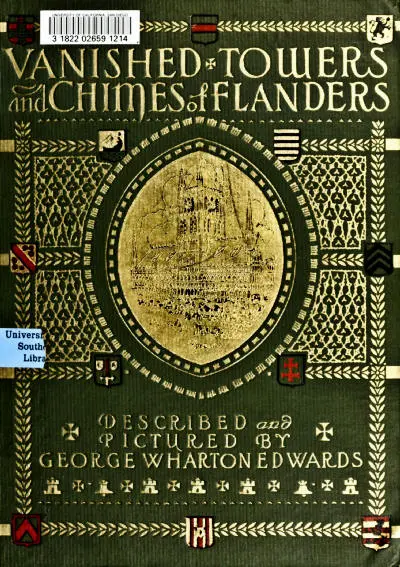
THE CLASSIC COLLECTION · 1916
"Vanished Towers and Chimes of Flanders" by George Wharton Edwards is a historical account written in the early 20th century. The focus of the text is on the once-vibrant region of Flanders, particularly its architectural marvels, the social landscape of its towns, and the melodious chimes from the bells that marked the lives of its people. The author reflects on the cultural significance of these towers and bells, especially in the light of the destruction they faced during the war. At the start of the work, Edwards provides a foreword that illustrates the plight of the Flemish people, their little-known heritage, and the beauty of their towns, especially the architectural grandeur of the belfries and cathedrals. He recounts his observations on the nature of the Flemish culture, characterized by their artistic achievements and deep-seated Catholic faith. The opening chapters not only highlight the historical richness of towns like Malines and Ypres but also introduce us to their iconic structures and the unique sounds of their bells, which poignantly resonate with the reader as symbols of a past now marred by war. The narrative sets a tone of nostalgia and loss, as the author laments the destruction of this exquisite heritage.
Introduction adapted from the source catalogue; source summaries may be automatically generated.
Free to read · English · 35,428 words · No account needed
MAKE TIME FOR A GOOD BOOK
On by default. Untick to stop anonymous reading totals. Each page counts after 10 seconds in view. How this works.
Anonymous counting is on unless you have switched it off.
The death of their son Prince Baldwin in 1891 was held to be a national calamity. This left the nephew of Leopold II, Prince Albert (the present King of Belgium), the heir presumptive to the throne. He married in 1900 the Princess Elizabeth of Bavaria; to them have been born three children, two boys and a girl. Both the King and Queen, the objects of intense devotion on the part of the Belgians, are very simple and democratic in their bearing toward the people. The Queen is a very beautiful woman, and a most devoted wife and mother.... Since the seat of government has been removed to Havre, the Queen divides her time between the little hamlet of La Panne, headquarters of the Belgian army, near the town of Furnes on the dunes of the north sea, and London, where the children are being cared for and educated.... May not one hope that brighter days are in store for this devoted and heroic King and Queen, for the once smiling and fertile land, and for the kindly, gentle, and law abiding Belgian people?[5]
Albert, King of Belgium, 102, 207
Alost, church of St. Martin's, 113, 114
Hotel de Ville, 111
Antwerp, carillon of, 52
cathedral of, 41, 44, 143
Archers of St. Sebastian, 66
Artists of Malines, list of the, 183-195
Aymon, legend of the four sons of, 133-136
Baldwin Bras-de-Fer, 55, 171
Baldwin the Ninth, Count of Flanders, 72, 121
Battle of the Dunes, the, 101
Battle of the Spurs, the, 120, 172
Battle of Waterloo, the, 206
Bayard, the horse, 133-138
Beguinage, the, Courtrai, 121
" " Malines, 23-24
" " Ypres, 82
Bell-founding, process of, 45-48
Berincx, Gregoire, 186
" Gregoire le Jeune, 186, 191
Bethune, Robert of, Count of Flanders, 75, 79
Biset, Charles Emmanuel, 191
" George, 191
Bol, Jean, 188
Bouts, Dierick, 48, 149
Broel Towers, the, Courtrai, 119, 123
Bruges, cathedral of, 41
library, 171
Brussels, cathedral of, 41
Museum of Decorative Arts, 76, 149
Burgundy, House of, 68
" Mary of, 165
Carillons of Antwerp, 52
" of Bruges, 52
" of Ghent, 52
" of Louvain, 52
" of Malines, 52
" of Tournai, 52
Carpreau, Jean, 187
Cathedral of Antwerp, 41
" of Bruges, 41
" of Brussels, 41
" of Ghent, 41
" of Malines, 18-19, 41, 42
" of Ypres, 69, 73
Charlemagne, 134-136
Charles the Bold, 25, 76, 81
Charles the Eleventh, 119
Charles the Fifth, 18, 130, 165
Cloth Hall, the, Ypres, 69, 72-75, 78, 80, 81
Commines, Philip of, 86
Cossiers, I., 24
Coxie, Jean, 185
" Jean Michel, 185
" Michel, 184
" Michel le Jeune, 184
" Michel the Third, 185
" Michel the Fourth, 185
" Raphael, 185
Counts' Chapel, the, Courtrai, 121
Courtrai, the Counts' Chapel, 121
the Hall of the Magistrates, 129
the Town Hall, 129
Cuyp, 36, 102
De Gruyter, Jean, 185
De Hornes, Jacques, 191, 193
Deklerk, 44, 45
De Poindre, Jacques, 187
De Vos, Lambert, 188
Douai, Hotel de Ville, 157, 160
Douai Bible, the, 158
Dyle, the river, 21, 26, 152
Elle, Ferdinand, 192
Franchoys, Luc, 189
" Luc le Jeune, 190, 192, 193
" Pierre, 190
Franco-Prussian War, the, 206
Furnes, Hotel de Ville, 173
Ghent, the carillons of, 52
Gild of St. Luke, the, 181
Gothic architecture, styles of, 90
Great Wars of Flanders, the, 86
Hall of the Magistrates, the, Courtrai, 129
Hals, Frans, 141, 190
Hanseatic League, the, 69
Your reading position is saved on this browser. Take it to another device with a library code. Reading pages adapt to text, rather than matching a printed edition.
BEHIND THE BOOK
This eBook is for the use of anyone anywhere in the United States and most other parts of the world at no cost and with almost no restrictions whatsoever. You may copy it, give it away or re-use it under the terms of the Project Gutenberg License included with this eBook or online at www.gutenberg.org. If you are not located in the United States, you will have to check the laws of the country where you are located before using this eBook. Read the source licence.
The original source file, including credits and licence, is retained by this library. Request an original-format copy at no charge. Please include the book title and Project Gutenberg identifier #28288.
KEEP YOUR CURIOSITY GOING
Wilfrid Scawen Blunt
Wilfrid Scawen Blunt

E. W. (Edgar Watson) Howe

David Patterson (Spirit) Hatch

David Patterson (Spirit) Hatch

David Patterson (Spirit) Hatch