
Love and liberty
Alexandre Dumas
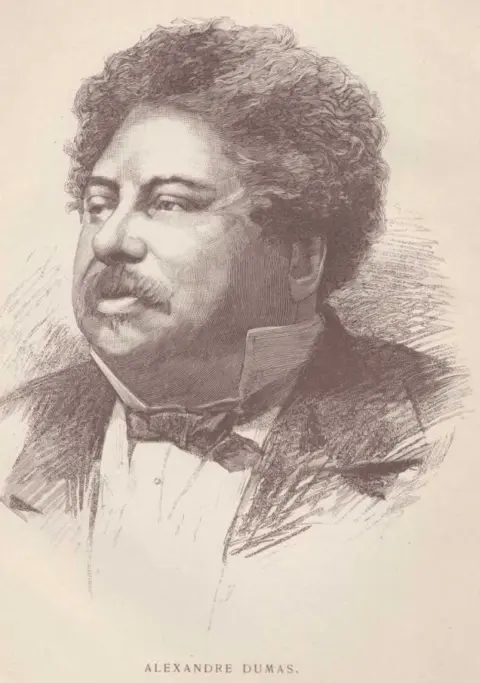
THE CLASSIC COLLECTION · 1841
"Vaninka" by Alexandre Dumas is a historical novel likely written in the early 19th century. The story unfolds during the reign of Emperor Paul I of Russia, focusing on themes of social status, power, and the complexities of love amidst the rigid hierarchy of the Russian nobility. The main character, Vaninka, is a proud and beautiful young woman who navigates her relationships with her father, General Count Tchermayloff, and her potential suitor, Foedor Romayloff, set against a backdrop of severe societal constraints and expectations. The opening of "Vaninka" presents a tense scene where a large crowd gathers to witness the public punishment of a serf, Gregory, in front of General Tchermayloff’s house. The grim atmosphere is underscored by the aide-de-camp, Foedor, who is eager to glimpse Vaninka from a window, signifying his deep and complicated feelings for her. As the punishment unfolds, the narrative introduces the complex dynamics between the characters—Foedor, torn between duty and desire, and Vaninka, whose pride and haughty demeanor shape her identity in a world where she enjoys considerable privilege yet harbors romantic aspirations. This powerful introduction sets the stage for Vaninka's tumultuous journey, woven through themes of love, authority, and rebellion against social norms.
Introduction adapted from the source catalogue; source summaries may be automatically generated.
Free to read · English · 20,654 words · No account needed
MAKE TIME FOR A GOOD BOOK
On by default. Untick to stop anonymous reading totals. Each page counts after 10 seconds in view. How this works.
Anonymous counting is on unless you have switched it off.
"You are mad!" said Gregory.
"He is mad!" repeated the other two slaves mechanically.
"Oh, I am mad?" said Ivan. "Well, will you take a wager?"
"What will you wager?"
"Two hundred roubles against a year of free drinking in your inn."
"Done!" said Gregory.
"Are your comrades included?" said the two moujiks.
"They are included," said Ivan, "and in consideration of them we will reduce the time to six months. Is that agreed?"
"It is agreed," said Gregory.
The two who were making the wager shook hands, and the agreement was perfected. Then, with an air of confidence, assumed to confound the witnesses of this strange scene, Ivan wrapped himself in the fur coat which, like a cautious man, he had spread on the stove, and went out.
At the end of half an hour he reappeared.
"Well!" cried Gregory and the two slaves together.
"She is following," said Ivan.
The three tipplers looked at one another in amazement, but Ivan quietly returned to his place in the middle of them, poured out a new bumper, and raising his glass, cried--
"To my lady's health! It is the least we can do when she is kind enough to come and join us on so cold a night, when the snow is falling fast."
"Annouschka," said a voice outside, "knock at this door and ask Gregory if he has not some of our servants with him."
Gregory and the two other slaves looked at one another, stupefied: they had recognised Vaninka's voice. As for Ivan, he flung himself back in his chair, balancing himself with marvellous impertinence.
Annouschka opened the door, and they could see, as Ivan had said, that the snow was falling heavily.
"Yes, madam," said the girl; "my brother is there, with Daniel and
Alexis."
Vaninka entered.
"My friends," said she, with a strange smile, "I am told that you were drinking my health, and I have come to bring you something to drink it again. Here is a bottle of old French brandy which I have chosen for you from my father's cellar. Hold out your glasses."
Gregory and the slaves obeyed with the slowness and hesitation of astonishment, while Ivan held out his glass with the utmost effrontery.
Vaninka filled them to the brim herself, and then, as they hesitated to drink, "Come, drink to my health, friends," said she.
"Hurrah!" cried the drinkers, reassured by the kind and familiar tone of their noble visitor, as they emptied their glasses at a draught.
Your reading position is saved on this browser. Take it to another device with a library code. Reading pages adapt to text, rather than matching a printed edition.
Alexandre Dumas
Alexandre Dumas & Auguste Maquet
Alexandre Dumas
Alexandre Dumas
BEHIND THE BOOK
This eBook is for the use of anyone anywhere in the United States and most other parts of the world at no cost and with almost no restrictions whatsoever. You may copy it, give it away or re-use it under the terms of the Project Gutenberg License included with this eBook or online at www.gutenberg.org. If you are not located in the United States, you will have to check the laws of the country where you are located before using this eBook. Read the source licence.
The original source file, including credits and licence, is retained by this library. Request an original-format copy at no charge. Please include the book title and Project Gutenberg identifier #2757.
KEEP YOUR CURIOSITY GOING
Cécile Tormay

Moritz Busch
Coulson Kernahan
John L. Ransom

Maurice Baring
Frances Wright