
Love and liberty
Alexandre Dumas
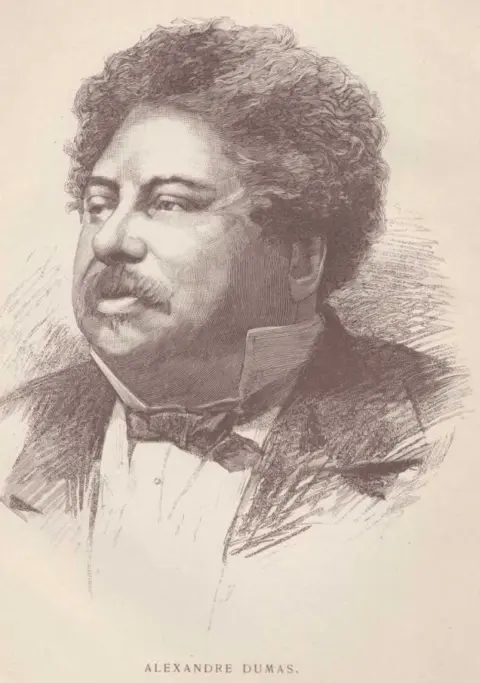
THE CLASSIC COLLECTION · 1841
"Vaninka" by Alexandre Dumas is a historical novel likely written in the early 19th century. The story unfolds during the reign of Emperor Paul I of Russia, focusing on themes of social status, power, and the complexities of love amidst the rigid hierarchy of the Russian nobility. The main character, Vaninka, is a proud and beautiful young woman who navigates her relationships with her father, General Count Tchermayloff, and her potential suitor, Foedor Romayloff, set against a backdrop of severe societal constraints and expectations. The opening of "Vaninka" presents a tense scene where a large crowd gathers to witness the public punishment of a serf, Gregory, in front of General Tchermayloff’s house. The grim atmosphere is underscored by the aide-de-camp, Foedor, who is eager to glimpse Vaninka from a window, signifying his deep and complicated feelings for her. As the punishment unfolds, the narrative introduces the complex dynamics between the characters—Foedor, torn between duty and desire, and Vaninka, whose pride and haughty demeanor shape her identity in a world where she enjoys considerable privilege yet harbors romantic aspirations. This powerful introduction sets the stage for Vaninka's tumultuous journey, woven through themes of love, authority, and rebellion against social norms.
Introduction adapted from the source catalogue; source summaries may be automatically generated.
Free to read · English · 20,654 words · No account needed
MAKE TIME FOR A GOOD BOOK
On by default. Untick to stop anonymous reading totals. Each page counts after 10 seconds in view. How this works.
Anonymous counting is on unless you have switched it off.
"All this is true," said Gregory, pouring him out another glass of brandy; "but, after all, you are not free."
"Free to do what?" asked Ivan.
"Free to go where you will and when you will."
"I am as free as the air," replied Ivan.
"Nonsense!" said Gregory.
"Free as air, I tell you; for I have good masters, and above all a good mistress," continued Ivan, with a significant smile, "and I have only to ask and it is done."
"What! if after having got drunk here to-day, you asked to come back to-morrow to get drunk again?" said Gregory, who in his challenge to Ivan did not forget his own interests,--"if you asked that?"
"I should come back again," said Ivan.
"To-morrow?" said Gregory.
"To-morrow, the day after, every day if I liked...."
"The fact is, Ivan is our young lady's favourite," said another of the count's slaves who was present, profiting by his comrade Ivan's liberality.
"It is all the same," said Gregory; "for supposing such permission were given you, money would soon run short."
"Never!" said Ivan, swallowing another glass of brandy, "never will Ivan want for money as long as there is a kopeck in my lady's purse."
"I did not find her so liberal," said Gregory bitterly.
"Oh, you forget, my friend; you know well she does not reckon with her friends: remember the strokes of the knout."
"I have no wish to speak about that," said Gregory. "I know that she is generous with blows, but her money is another thing. I have never seen the colour of that."
"Well, would you like to see the colour of mine?" said Ivan, getting more and more drunk. "See here, here are kopecks, sorok-kopecks, blue notes worth five roubles, red notes worth twenty five roubles, and to-morrow, if you like, I will show you white notes worth fifty roubles. A health to my lady Vaninka!" And Ivan held out his glass again, and Gregory filled it to the brim.
"But does money," said Gregory, pressing Ivan more and more,--"does
money make up for scorn?"
"Scorn!" said Ivan,--"scorn! Who scorns me? Do you, because you are free? Fine freedom! I would rather be a well-fed slave than a free man dying of hunger."
"I mean the scorn of our masters," replied Gregory.
"The scorn of our masters! Ask Alexis, ask Daniel there, if my lady
scorns me."
"The fact is," said the two slaves in reply, who both belonged to the general's household, "Ivan must certainly have a charm; for everyone talks to him as if to a master."
Your reading position is saved on this browser. Take it to another device with a library code. Reading pages adapt to text, rather than matching a printed edition.
Alexandre Dumas
Alexandre Dumas & Auguste Maquet
Alexandre Dumas
Alexandre Dumas
BEHIND THE BOOK
This eBook is for the use of anyone anywhere in the United States and most other parts of the world at no cost and with almost no restrictions whatsoever. You may copy it, give it away or re-use it under the terms of the Project Gutenberg License included with this eBook or online at www.gutenberg.org. If you are not located in the United States, you will have to check the laws of the country where you are located before using this eBook. Read the source licence.
The original source file, including credits and licence, is retained by this library. Request an original-format copy at no charge. Please include the book title and Project Gutenberg identifier #2757.
KEEP YOUR CURIOSITY GOING
Cécile Tormay

Moritz Busch
Coulson Kernahan
John L. Ransom

Maurice Baring
Frances Wright