
Love and liberty
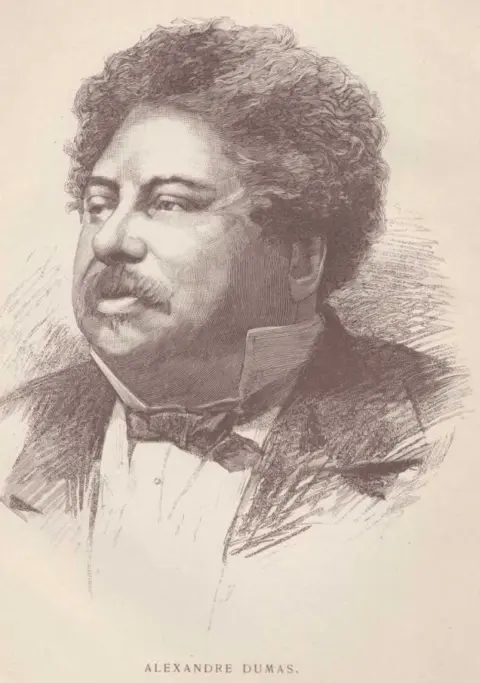
Alexandre Dumas
THE CLASSIC COLLECTION · 1841
"Vaninka" by Alexandre Dumas is a historical novel likely written in the early 19th century. The story unfolds during the reign of Emperor Paul I of Russia, focusing on themes of social status, power, and the complexities of love amidst the rigid hierarchy of the Russian nobility. The main character, Vaninka, is a proud and beautiful young woman who navigates her relationships with her father, General Count Tchermayloff, and her potential suitor, Foedor Romayloff, set against a backdrop of severe societal constraints and expectations. The opening of "Vaninka" presents a tense scene where a large crowd gathers to witness the public punishment of a serf, Gregory, in front of General Tchermayloff’s house. The grim atmosphere is underscored by the aide-de-camp, Foedor, who is eager to glimpse Vaninka from a window, signifying his deep and complicated feelings for her. As the punishment unfolds, the narrative introduces the complex dynamics between the characters—Foedor, torn between duty and desire, and Vaninka, whose pride and haughty demeanor shape her identity in a world where she enjoys considerable privilege yet harbors romantic aspirations. This powerful introduction sets the stage for Vaninka's tumultuous journey, woven through themes of love, authority, and rebellion against social norms.
Introduction adapted from the source catalogue; source summaries may be automatically generated.
Free to read · English · 20,654 words · No account needed
MAKE TIME FOR A GOOD BOOK
On by default. Untick to stop anonymous reading totals. Each page counts after 10 seconds in view. How this works.
Anonymous counting is on unless you have switched it off.
Two months went by in this way, without anybody having the least suspicion of what had happened, when one morning before the usual breakfast-hour the general begged his daughter to come down to his room. Vaninka trembled with fear, for since that fatal night everything terrified her. She obeyed her father, and collecting all her strength, made her way to his chamber, The count was alone, but at the first glance Vaninka saw she had nothing to fear from this interview: the general was waiting for her with that paternal smile which was the usual expression of his countenance when in his daughter's presence.
She approached, therefore, with her usual calmness, and, stooping down towards the general, gave him her forehead to kiss.
He motioned to her to sit down, and gave her an open letter. Vaninka
looked at him for a moment in surprise, then turned her eyes to the
letter.
It contained the news of the death of the man to whom her hand had been promised: he had been killed in a duel.
The general watched the effect of the letter on his daughter's face, and great as was Vaninka's self-control, so many different thoughts, such bitter regret, such poignant remorse assailed her when she learnt that she was now free again, that she could not entirely conceal her emotion. The general noticed it, and attributed it to the love which he had for a long time suspected his daughter felt for the young aide-de-camp.
"Well," he said, smiling, "I see it is all for the best."
"How is that, father?" asked Vaninka.
"Doubtless," said the general. "Did not Foedor leave because he loved
you?"
"Yes," murmured the young girl.
"Well, now he may return," said the general.
Vaninka remained silent, her eyes fixed, her lips trembling.
"Return!" she said, after a moment's silence.
"Yes, certainly return. We shall be most unfortunate," continued the general, smiling, "if we cannot find someone in the house who knows where he is. Come, Vaninka, tell me the place of his exile, and I will undertake the rest."
"Nobody knows where Foedor is," murmured Vaninka in a hollow voice;
"nobody but God, nobody!"
"What!" said the general, "he has sent you no news since the day he
left?"
Vaninka shook her head in denial. She was so heart-broken that she could
not speak.
The general in his turn became gloomy. "Do you fear some misfortune,
then?" said he.
"I fear that I shall never be happy again on earth," cried Vaninka, giving way under the pressure of her grief; then she continued at once, "Let me retire, father; I am ashamed of what I have said."
Your reading position is saved on this browser. Take it to another device with a library code. Reading pages adapt to text, rather than matching a printed edition.
Alexandre Dumas
Alexandre Dumas & Auguste Maquet
Alexandre Dumas
Alexandre Dumas
BEHIND THE BOOK
This eBook is for the use of anyone anywhere in the United States and most other parts of the world at no cost and with almost no restrictions whatsoever. You may copy it, give it away or re-use it under the terms of the Project Gutenberg License included with this eBook or online at www.gutenberg.org. If you are not located in the United States, you will have to check the laws of the country where you are located before using this eBook. Read the source licence.
The original source file, including credits and licence, is retained by this library. Request an original-format copy at no charge. Please include the book title and Project Gutenberg identifier #2757.
KEEP YOUR CURIOSITY GOING
Cécile Tormay

Moritz Busch
Coulson Kernahan
John L. Ransom

Maurice Baring
Frances Wright