THE CLASSIC COLLECTION✦Sunshine and snowCLASSIC FREE BOOKS
Sunshine and snow
Harold Bindloss
THE CLASSIC COLLECTION · 1911
"Vane of the Timberlands" by Harold Bindloss is a novel likely written in the early 20th century. The narrative centers around Wallace Vane, a young man who has spent several years living and working in the rugged and untamed wilderness of British Columbia. The story begins with Vane enjoying a canoe trip with his companion Carroll, reflecting on their recent prosperity related to mining ventures, while hinting at Vane's past and the unfolding connection with women, hinting at the emotional and social challenges that await them in the civilized world. The opening of the book introduces us to the natural beauty of British Columbia, characterized by the lush forests and the lifestyle of men like Vane and Carroll, who have thrived in the wilderness through hard work and perseverance. As the two friends prepare for a new chapter in their lives, they encounter Kitty Blake, a young woman in distress, which leads Vane to offer assistance that sparks a change in his previously solitary life. Their interactions set the stage for Vane's internal struggles, hinting at themes of compassion, societal expectations, and the complexities of relationships that will deepen as the narrative unfolds. The character-driven plot promises a blend of adventure, personal growth, and emotional exploration against the backdrop of the Canadian wilderness and its transition into the more structured societal norms of the early 20th century.
Introduction adapted from the source catalogue; source summaries may be automatically generated.
Free to read · English · 95,728 words · No account needed
MAKE TIME FOR A GOOD BOOK
On by default. Untick to stop anonymous reading totals. Each page counts after 10 seconds in view. How this works.
Anonymous counting is on unless you have switched it off.
Drayton owned that it might be advisable to hurry, and they set off for the business quarter of the city.
During the remainder of the day Vane was busy on board the sloop, but in the evening he walked over to Horsfield's house with Mrs. Nairn and found Jessy and her brother at home. Horsfield presently took Vane to his smoking-room.
"About that smelter," he began. "Haven't you made up your mind yet? The thing's been hanging fire a long while."
"Isn't it a matter for the board?" Vane asked suggestively. "There are
several directors."
Horsfield laughed.
"We'll face the fact: they'll do what you decide on."
Vane did not reply to this.
"Well," he said, "at present we couldn't keep a smelter big enough to be economical going, and I'm doubtful whether we would get much ore from the other properties you were talking about to Nairn."
"Did he say it was my idea?"
"He didn't; I'd reasons for assuming it. Those properties, however, are
of no account."
Horsfield made no comment but waited expectantly, and Vane went on:
"If it seems possible that we can profitably increase our output later on, by means of further capital, we'll put up a smelter. But in that case it might be economical to do the work ourselves."
"Who would superintend it?"
"I would, if necessary, with the assistance of an engineer used to
such plant."
Horsfield smiled in a significant manner.
"Aren't you inclined to take hold of too much? When you have plenty in your hands, it's good policy to leave a little for somebody else. Sometimes the person who benefits is willing to reciprocate."
The hint was plain, and Nairn had said sufficient on another occasion to make it clearer; but Vane did not respond.
"If we gave the work out, it would be on an open tender," he declared. "There would be no reason why you shouldn't make a bid."
Horsfield found it difficult to conceal his disgust. He had no desire to bid on an open tender, which would prevent his obtaining anything beyond the market price.
"The question must stand over until I come back," Vane went on. "I'm going up the west coast shortly and may be away some time."
They left the smoking-room shortly afterward, and when they strolled back to the others, Vane sat down near Jessy.
"I hear you are going away," she began.
"Yes. I'm going to look for pulping timber."
"But what do you want with pulping timber?"
"It can sometimes be converted into money."
"Isn't there every prospect of your obtaining a good deal already? Are
you never satisfied?"
Your reading position is saved on this browser. Take it to another device with a library code. Reading pages adapt to text, rather than matching a printed edition.
Harold Bindloss
Harold Bindloss
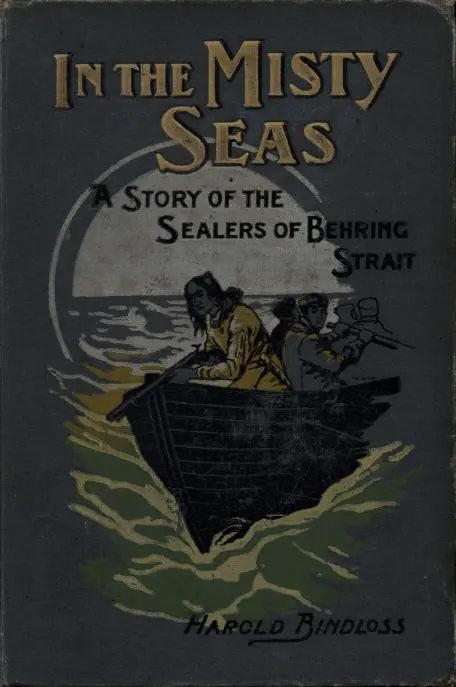
Harold Bindloss
Harold Bindloss
BEHIND THE BOOK
This eBook is for the use of anyone anywhere in the United States and most other parts of the world at no cost and with almost no restrictions whatsoever. You may copy it, give it away or re-use it under the terms of the Project Gutenberg License included with this eBook or online at www.gutenberg.org. If you are not located in the United States, you will have to check the laws of the country where you are located before using this eBook. Read the source licence.
The original source file, including credits and licence, is retained by this library. Request an original-format copy at no charge. Please include the book title and Project Gutenberg identifier #9778.
KEEP YOUR CURIOSITY GOING
Coulson Kernahan

Maurice Baring
Frances Wright
Cécile Tormay

Frederic Jesup Stimson

W. H. P. (William Henry Pope) Jarvis