THE CLASSIC COLLECTION✦The Andes and the Amazon; Or, Across the Continent of South AmericaCLASSIC FREE BOOKS
The Andes and the Amazon; Or, Across the Continent of South America
James Orton
THE CLASSIC COLLECTION · 1872
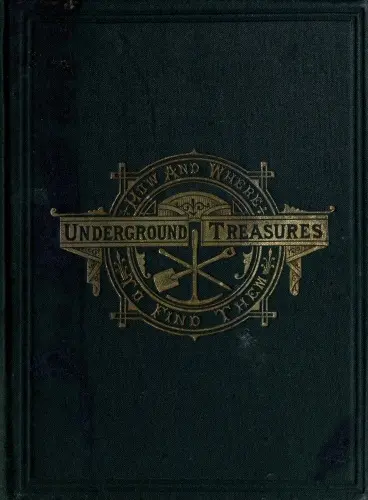
"Underground Treasures: How and Where to Find Them" by James Orton is a resourceful manual focused on mineralogy and prospecting, written in the late 19th century. The book addresses the practical identification and extraction of valuable minerals found in the United States, equipping readers with the knowledge to discern between useful minerals and their look-alikes, thereby highlighting the hidden wealth beneath the American landscape. Orton's aim is to make this vital information accessible to non-scientists such as farmers, mechanics, and laborers. The opening of the book introduces the concept of the immense mineral wealth of the United States, emphasizing how much remains undiscovered or misidentified. It outlines the fundamental premise that various minerals can be misrepresented, leading individuals to miss out on valuable resources. The author stresses the importance of practical knowledge for identifying useful minerals and sets the tone for the work's instructional nature with a promise of simplified guidelines and a metaphorical "key" that allows the layperson to unlock the monetary potential of the rocks and soils they encounter. This introductory chapter serves as a call to action for readers to actively engage in mineral exploration.
Introduction adapted from the source catalogue; source summaries may be automatically generated.
Free to read · English · 18,546 words · No account needed
MAKE TIME FOR A GOOD BOOK
On by default. Untick to stop anonymous reading totals. Each page counts after 10 seconds in view. How this works.
Anonymous counting is on unless you have switched it off.
The most famous iron springs are at Saratoga, Sandlake and Catskill, N. Y.; West Bethel, Fryeburg, Eberne and Bethel, Me.; Schooley’s Mountain in Washington, N. J.; Bedford, Pittsburg, Frankfort and York, Pa.; Brandywine Springs, Del.; Red Sweet Springs in Monroe County, Rawley’s Spring in Rockingham County, and Huguenot Springs in Powhattan County, Va.; in Bath County, Ky.; Yellow Springs, O.; twenty miles east of Knoxville, Tenn.; Madison County, Geo.; Raymond and Lynchburg, Miss.; near Ogden City, Utah; near Mt. Shasta, Col.
SULPHUR SPRINGS.--These are easily recognized by their unpleasant odor, resembling that of rotten eggs. The water blackens silver and a solution of sugar of lead.
Sulphur springs are very numerous. The best known are at Saratoga, Sharon, Clifton, Avon, Manlius, Chittenango, Dryden and Richfield, N. Y.; Highgate and Newburg, Vt.; Togus, Bethel and West Newfield, Me.; Shover’s Valley, Carlisle and Doubling Gap, Pa.; Winchester and Warrenton, Va.; Greenbrier and Monroe Counties, W. Va.; Bath County, Ky.; White’s Creek near Nashville and in Granger County, Tenn.; Spartanburg, S. C.; Butts County, Geo.; Tallahatta, Ala.; Tampa, Fla.; near Bitter Creek and Great Salt Lake, Utah; along the Yellowstone River, Mont.; Jackson, Cal.
ACID OR ALUM SPRINGS.--These waters have a more or less sour taste and
redden blue litmus-paper.
They are found at Byron and Oak Orchard, N. Y.; Blossburg, Pa.; Bath, Richmond and Rockbridge, Va.
MAGNESIAN OR EPSOM SPRINGS.--These have a bitter taste. To test any water for magnesia, add to a glass of it a solution of phosphate of soda and some hartshorn; if magnesia is present, the liquid first becomes turbid, and finally minute crystals fall to the bottom.
There are Epsom springs at Harrodsburg and Perryville, Ky.; Westport, O.; Raymond, Miss.; Orange County, Ind.; Scott County, W. Va.
SALINE OR SALT SPRINGS.--These contain a large percentage of common salt, and are recognized by their taste. They generally contain many ingredients, (generally seven or eight,) but the salt predominates. A well should contain at least ten per cent. of salt to pay for working. The Syracuse spring yields a bushel of salt to every thirty-three gallons; while the Great Salt Lake contains 22 per cent. Among the most important salt wells are those at Syracuse, Salina and Liverpool, N. Y.; Lubec, Me.; Shannondale, Va.; Bath County, Ky.; Athens County, O.; Hartford, Ind.; Saginaw, Mich.; Oneida, Idaho.
Your reading position is saved on this browser. Take it to another device with a library code. Reading pages adapt to text, rather than matching a printed edition.
BEHIND THE BOOK
This eBook is for the use of anyone anywhere in the United States and most other parts of the world at no cost and with almost no restrictions whatsoever. You may copy it, give it away or re-use it under the terms of the Project Gutenberg License included with this eBook or online at www.gutenberg.org. If you are not located in the United States, you will have to check the laws of the country where you are located before using this eBook. Read the source licence.
The original source file, including credits and licence, is retained by this library. Request an original-format copy at no charge. Please include the book title and Project Gutenberg identifier #53562.
KEEP YOUR CURIOSITY GOING

John Muir

Asa Gray
Asa Gray

Florence Nightingale
Elizabeth Robins Pennell
Denison Olmsted