THE CLASSIC COLLECTION✦The Andes and the Amazon; Or, Across the Continent of South AmericaCLASSIC FREE BOOKS
The Andes and the Amazon; Or, Across the Continent of South America
James Orton
THE CLASSIC COLLECTION · 1872
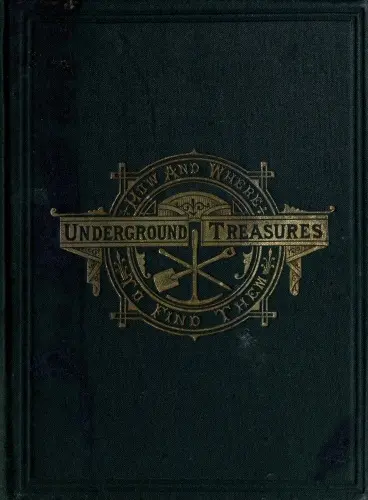
"Underground Treasures: How and Where to Find Them" by James Orton is a resourceful manual focused on mineralogy and prospecting, written in the late 19th century. The book addresses the practical identification and extraction of valuable minerals found in the United States, equipping readers with the knowledge to discern between useful minerals and their look-alikes, thereby highlighting the hidden wealth beneath the American landscape. Orton's aim is to make this vital information accessible to non-scientists such as farmers, mechanics, and laborers. The opening of the book introduces the concept of the immense mineral wealth of the United States, emphasizing how much remains undiscovered or misidentified. It outlines the fundamental premise that various minerals can be misrepresented, leading individuals to miss out on valuable resources. The author stresses the importance of practical knowledge for identifying useful minerals and sets the tone for the work's instructional nature with a promise of simplified guidelines and a metaphorical "key" that allows the layperson to unlock the monetary potential of the rocks and soils they encounter. This introductory chapter serves as a call to action for readers to actively engage in mineral exploration.
Introduction adapted from the source catalogue; source summaries may be automatically generated.
Free to read · English · 18,546 words · No account needed
MAKE TIME FOR A GOOD BOOK
On by default. Untick to stop anonymous reading totals. Each page counts after 10 seconds in view. How this works.
Anonymous counting is on unless you have switched it off.
VALUE.--If of a fine yellow hue, it is a valuable copper ore (yielding from twelve to forty per cent.) and source of blue vitriol.
LOCALITIES.--Found in mountainous or granite regions with other ores. Lubec and Dexter, Me.; Franconia, Unity, Warren, Eaton, Lyme, Haverhill and Shelburne, N. H.; Corinth, Waterbury and Strafford, Vt.; Southampton, Turner’s Falls, Hatfield and Sterling, Mass.; Bristol and Middletown, Conn.; Ancram, Rossie, Wurtzboro’ and Ellenville, N. Y.; Phœnixville and Pottstown, Pa.; Bare Hills, Catoctin Mountains, near Newmarket and Finksbury, Md.; Phœnix and Walton Mines, Va.; Greensboro, Charlotte and Phœnix Mines, N. C.; Hiwassee Mines, Tenn; Cherokee, Rabun and Habersham Counties, Ga.; Presque Island, Lake Superior; Mineral Point, Wis.; Union, Keystone, Empire and other mines, Calaveras County, La Victoire and Haskell claims in Mariposa County, Amador and Plumas Counties, Cal.; near Virginia City, Mont.
Occurs in crystals and irregular angular masses; cannot be scratched by any other mineral or the file; brilliant lustre; feels cold to the touch; when rubbed on the sleeve exhibits electricity for hours; retains the breath but a short time; often tinged yellow, red, or green; gravity 3.5.
VALUE.--Used for jewelry, lenses and for cutting glass.
LOCALITIES.--Found in gold-regions, in river-washings of sand and pebbles; usually with coarse gold, but deeper down. Rutherford, Cabarras, Franklin and Lincoln Counties, N. C.; Hall County, Ga.; Manchester, Va.; Cherokee Ravine, N. San Juan, French Canal, Forrest Hill, Placerville and Fiddletown, Cal.
Occurs in granular masses, sometimes with bluish crystals; looks like fine grained iron ore; breaks with uneven surface; scratches quartz easily; very tough; brittle; gravity 4.
VALUE.--Used extensively as a cutting and polishing material.
LOCALITIES.--Found generally in limestone or granite with Magnetic Iron Ore. Chester, Mass.; Newlin and Unionville, Penn.; Macon and Guilford Counties, N. C.
Occurs in square crystals and in masses; glassy lustre; powder white; brittle; crackles when heated and then shines in the dark; does not effervesce with acids; is not scratched by marble; gravity 3.
VALUE.--Used as flux in glass and iron works.
LOCALITIES.--Found in limestone, granite, slate, etc., often at lead-mines. Blue Hill Bay, Me.; Westmoreland, N. H.; Putney, Vt.; Southampton, Mass.; Trumbull, Plymouth, Middletown and Willimantic, Conn.; Muscolonge Lake, Rossie and Johnsburg, N. Y.; near Franklin, N. J.; near Woodstock and Shepardstown, Va.; Smith County, Tenn.; Mercer County, Ky.; Gallatin County, along the Ohio, Ill. Castle Dome District, Ariz.
Occurs crystallized and in masses; generally made of coarse grains; brittle; powder dark reddish-brown; heated with soda turns bluish-green; dissolves in muriatic acid; gravity 5.
VALUE.--An ore of zinc.
LOCALITIES.--Found in limestone with Garnet and Zincite. Hamburg and
Stirling Hill, N. J.
Your reading position is saved on this browser. Take it to another device with a library code. Reading pages adapt to text, rather than matching a printed edition.
BEHIND THE BOOK
This eBook is for the use of anyone anywhere in the United States and most other parts of the world at no cost and with almost no restrictions whatsoever. You may copy it, give it away or re-use it under the terms of the Project Gutenberg License included with this eBook or online at www.gutenberg.org. If you are not located in the United States, you will have to check the laws of the country where you are located before using this eBook. Read the source licence.
The original source file, including credits and licence, is retained by this library. Request an original-format copy at no charge. Please include the book title and Project Gutenberg identifier #53562.
KEEP YOUR CURIOSITY GOING

John Muir

Asa Gray
Asa Gray

Florence Nightingale
Elizabeth Robins Pennell
Denison Olmsted