THE CLASSIC COLLECTION✦The Andes and the Amazon; Or, Across the Continent of South AmericaCLASSIC FREE BOOKS
The Andes and the Amazon; Or, Across the Continent of South America
James Orton
THE CLASSIC COLLECTION · 1872
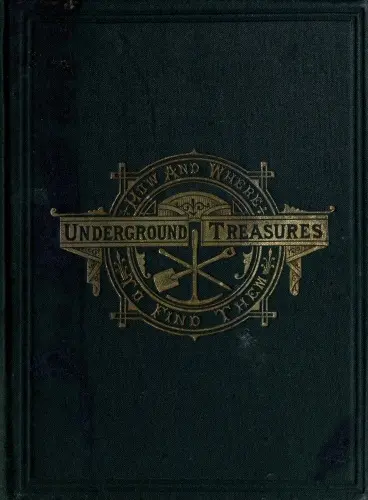
"Underground Treasures: How and Where to Find Them" by James Orton is a resourceful manual focused on mineralogy and prospecting, written in the late 19th century. The book addresses the practical identification and extraction of valuable minerals found in the United States, equipping readers with the knowledge to discern between useful minerals and their look-alikes, thereby highlighting the hidden wealth beneath the American landscape. Orton's aim is to make this vital information accessible to non-scientists such as farmers, mechanics, and laborers. The opening of the book introduces the concept of the immense mineral wealth of the United States, emphasizing how much remains undiscovered or misidentified. It outlines the fundamental premise that various minerals can be misrepresented, leading individuals to miss out on valuable resources. The author stresses the importance of practical knowledge for identifying useful minerals and sets the tone for the work's instructional nature with a promise of simplified guidelines and a metaphorical "key" that allows the layperson to unlock the monetary potential of the rocks and soils they encounter. This introductory chapter serves as a call to action for readers to actively engage in mineral exploration.
Introduction adapted from the source catalogue; source summaries may be automatically generated.
Free to read · English · 18,546 words · No account needed
MAKE TIME FOR A GOOD BOOK
On by default. Untick to stop anonymous reading totals. Each page counts after 10 seconds in view. How this works.
Anonymous counting is on unless you have switched it off.
LOCALITIES.--Found in thin veins or elliptical masses, never in extensive layers like Pennsylvania coal. Near Richmond, Va.; Deep River, N. C.; Michigan, Missouri, Texas; Evanston, Utah; Coal Creek and Bellmonte, Col.; Boreman, Dearborn River and Greenhorn Gulch, Mont.
Occurs in crystals and masses; glossy lustre; harder than marble; brittle; heated it swells up, becomes opaque and emits a green light; dissolves, when powdered, in hot sulphuric acid without effervescence; gravity 3.4.
VALUE.--An ore of zinc yielding from forty to sixty per cent.
LOCALITIES.--Found in limestone rock with other ores. Friedensville, Perkiomen, Phœnixville, Lancaster and Selin’s Grove, Pa.; Austin’s Mines in Wythe County, Va.; Claiborne County, Tenn.; Jefferson County, Mo.
Occurs in compact masses; dull lustre; brittle, breaking with a curved surface; burns readily but does not melt; does not soil the fingers; gravity about 1.2.
VALUE.--Used for fuel and for making gas, oil and ornaments.
LOCALITIES.--Found in the Mississippi Valley; Kentucky; Lick, Ohio; Illinois; Moniteau County, Mo.; Kenawha County, Va.; Beaver County, Pa.
Occurs in masses or pebbles; at first grayish, but by exposure to the sun becomes uniform flesh, red or brown, never striped,--although Carnelian may form one of the bands of an Agate; brittle, breaking with a curved surface; very hard; takes a fine polish; glassy or resinous lustre; gravity 2.6.
VALUE.--Used for jewelry. When of two layers, white and red, (properly called sardonyx,) it is used for cameos.
LOCALITIES.--Same as Agate.
Occurs crystallized, fibrous and massive; color white, often faint bluish; glassy lustre; very brittle; under the blow-pipe crackles and melts, tinging the flame red; does not dissolve in acids; gravity 4.
VALUE.--The source of nitrate of strontia, used in fire-works.
LOCALITIES.--Found in limestone, gypsum and sandstone. Rossie, Schoharie, Chaumont Bay, Depauville and Stark, N. Y.; Frankstown, Pa.; Strontian and Put-in-Bay Islands, Lake Erie; near Nashville, Tenn.; Fort Dodge, Iowa.
Occurs in crystals, in powder or masses; glassy lustre; brittle; dissolves in nitric acid with effervescence; heated strongly on charcoal crackles and fuses, giving a globule of lead; gravity 6.4.
VALUE.--A rich ore of lead yielding seventy-five per cent.
LOCALITIES.--Found in lead mines. Southampton, Mass.; Perkiomen, Phœnixville, Charlestown and Schuylkill, Pa.; Wythe County, Va.; Washington Mine, N. C.; Valle’s Diggings, Mine-la-Motte and Mine-a-Burton, Mo.; Davies and Rock Counties, Ill.; Blue Mounds, Wis.; Ingo County, Cal.
Occurs in compact masses; powder dark brown; small pieces sometimes attracted by the magnet; brittle, breaking with uneven surface; with borax melts into a green globule; not acted upon by acids; little lustre; gravity 4.4.
VALUE.--Used in making the chrome pigments.
Your reading position is saved on this browser. Take it to another device with a library code. Reading pages adapt to text, rather than matching a printed edition.
BEHIND THE BOOK
This eBook is for the use of anyone anywhere in the United States and most other parts of the world at no cost and with almost no restrictions whatsoever. You may copy it, give it away or re-use it under the terms of the Project Gutenberg License included with this eBook or online at www.gutenberg.org. If you are not located in the United States, you will have to check the laws of the country where you are located before using this eBook. Read the source licence.
The original source file, including credits and licence, is retained by this library. Request an original-format copy at no charge. Please include the book title and Project Gutenberg identifier #53562.
KEEP YOUR CURIOSITY GOING

John Muir

Asa Gray
Asa Gray

Florence Nightingale
Elizabeth Robins Pennell
Denison Olmsted