THE CLASSIC COLLECTION✦The Andes and the Amazon; Or, Across the Continent of South AmericaCLASSIC FREE BOOKS
The Andes and the Amazon; Or, Across the Continent of South America
James Orton
THE CLASSIC COLLECTION · 1872
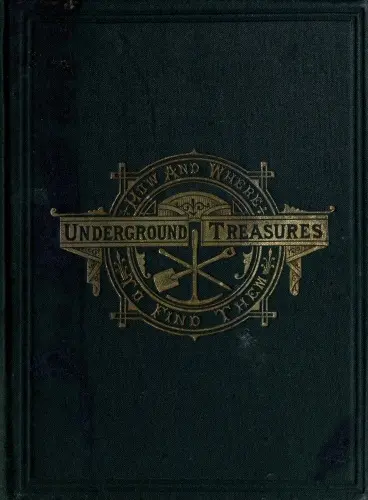
"Underground Treasures: How and Where to Find Them" by James Orton is a resourceful manual focused on mineralogy and prospecting, written in the late 19th century. The book addresses the practical identification and extraction of valuable minerals found in the United States, equipping readers with the knowledge to discern between useful minerals and their look-alikes, thereby highlighting the hidden wealth beneath the American landscape. Orton's aim is to make this vital information accessible to non-scientists such as farmers, mechanics, and laborers. The opening of the book introduces the concept of the immense mineral wealth of the United States, emphasizing how much remains undiscovered or misidentified. It outlines the fundamental premise that various minerals can be misrepresented, leading individuals to miss out on valuable resources. The author stresses the importance of practical knowledge for identifying useful minerals and sets the tone for the work's instructional nature with a promise of simplified guidelines and a metaphorical "key" that allows the layperson to unlock the monetary potential of the rocks and soils they encounter. This introductory chapter serves as a call to action for readers to actively engage in mineral exploration.
Introduction adapted from the source catalogue; source summaries may be automatically generated.
Free to read · English · 18,546 words · No account needed
MAKE TIME FOR A GOOD BOOK
On by default. Untick to stop anonymous reading totals. Each page counts after 10 seconds in view. How this works.
Anonymous counting is on unless you have switched it off.
LOCALITIES.--Found associated with Silver, Spathic Iron, Blende, Baryta and Quartz. Carmel, Me.; Lyme, N. H.; Soldier’s Delight, Md.; Aurora, Nev.; San Amedio Cañon and Tulare County, Cal.
Occurs finely fibrous, flax-like; flexible, not elastic; silky lustre, sometimes greenish; gravity 3.
VALUE.--Used for lining safes and steam-packing, and for making incombustible cloth, lamp-wicks, etc.
LOCALITIES.--Found in granite-regions east of the Alleghanies; often with Serpentine. Brighton, Dedham, Newbury, Pelham and Sheffield, Mass.; Milford, West Farms, Winchester and Wilton, Conn.; Chester, Mt. Holly and Cavendish, Vt.; Patterson, Phillipstown, Monroe and Staten Island, N. Y.; Brunswick, N. J.; East Nottingham, Goshen and Aston, Penn.; Bare Hills and Cooptown, Md.; Barnet’s Mills, Va.
Occurs massive; brittle; breaking with high lustre like hardened tar, and with curved surface; melts and burns readily with flame and smoke; gravity 1.2, sometimes floats on water.
VALUE.--Used for cements and varnishes.
LOCALITIES.--Found generally near the surface. Near the coast of Santa Barbara, Cal.; West Virginia, twenty miles south of Parkersburg.
Occurs in crystals and masses with glassy lustre, or earthy and dull; brittle; crackles and blackens, and finally fuses by heat; dissolves with effervescence in nitric acid; gravity 3.5.
VALUE.--A valuable ore of copper, containing sixty per cent.
LOCALITIES.--Found chiefly in lead and copper mines. Perkiomen lead mine, Cornwall, Phoenixville and Nicholson’s Gap, Pa; near New Brunswick, N. J.; near Mineral Point, Wis.; Polk County, Tenn.; Calaveras and Mariposa Counties, Cal.; near Virginia City, Mont.
Occurs in crystals, plates and masses; powder white; brittle; crackles when strongly heated; not dissolved in acids; easily distinguished by its weight; gravity 4.5, or twice as heavy as Gypsum.
VALUE.--Used extensively as white paint and in pottery.
LOCALITIES.--Found in mining districts, often with lead, copper and iron ores, and in limestone. Piermont, N. H.; Hatfield, Southampton and Leverett, Mass.; Cheshire and Berlin, Conn.; Pillar Point, Rossie, Carlisle, Scoharie, De Kalb, Gouverneur, N. Y.; Fauquier and Buckingham Counties, Va.; Union, Gaston and Orange Counties, N. C.; near Paris, and in Anderson, Fayette, Mercer and Owen Counties, Ky.; on Brown’s Creek and Haysboro, Tenn.; Bainbridge, O.; Scales Mound, Ill.; Prince Vein, Lake Superior; Mine-a-Barton, Mo.; near Fort Wallace, N. M.; Ingo County, Cal.
Occurs in masses, beds or seams; softer and duller than Anthracite; often a bright pitchy lustre; brittle, showing a slaty or jointed structure rather than curved surface; powder black; burns readily with yellow flame; by roasting forms coke; gravity 1.5 or less.
VALUE.--Used for fuel and the production of gas, coke, carbolic acid and
aniline.
Your reading position is saved on this browser. Take it to another device with a library code. Reading pages adapt to text, rather than matching a printed edition.
BEHIND THE BOOK
This eBook is for the use of anyone anywhere in the United States and most other parts of the world at no cost and with almost no restrictions whatsoever. You may copy it, give it away or re-use it under the terms of the Project Gutenberg License included with this eBook or online at www.gutenberg.org. If you are not located in the United States, you will have to check the laws of the country where you are located before using this eBook. Read the source licence.
The original source file, including credits and licence, is retained by this library. Request an original-format copy at no charge. Please include the book title and Project Gutenberg identifier #53562.
KEEP YOUR CURIOSITY GOING

John Muir

Asa Gray
Asa Gray

Florence Nightingale
Elizabeth Robins Pennell
Denison Olmsted