Poison: A Farce
George M. (George Melville) Baker
THE CLASSIC COLLECTION · 1876
"Under a Veil: A Comedietta in One Act" by Sir Randal H. Roberts and George M. Baker is a comedic play written during the late 19th century. This work is characterized as a one-act play or comedietta, focusing on the playful interactions between characters in an intimate setting, likely capturing the lighthearted spirit of its time. The narrative revolves around themes of mistaken identities, romance, and the comedic misunderstandings that ensue in social encounters. The story unfolds in a hotel where Charles Devereaux, a bachelor, finds himself unintentionally caught up in a mix-up when his room is exchanged with that of a lady named Lucy Mortimer. As their rooms are adjacent, humorous interactions occur through a door that separates them. The play highlights their witty exchanges and misunderstandings, particularly stemming from Charles's unfinished letter, which Lucy reads. The interactions culminate in a veiled meeting and an exploration of relationships and assumptions, bringing to light their feelings and the transformative power of love, as Charles realizes a romantic interest in Lucy despite his previous apathy. The play concludes with a humorous yet earnest reflection on love and the whimsical nature of life.
Introduction adapted from the source catalogue; source summaries may be automatically generated.
Free to read · English · 8,591 words · No account needed
MAKE TIME FOR A GOOD BOOK
On by default. Untick to stop anonymous reading totals. Each page counts after 10 seconds in view. How this works.
Anonymous counting is on unless you have switched it off.
Luc. (aside). I suppose I’d better alter my dress a little for the
occasion.
[Exit L. 1 E.
Cha. (coming down stage). He has absolutely condescended to hear me,—this landlord. Upon my word, I’m rather pleased with this little adventure; if I’d gone to the ball, at any rate, I should never have heard so sweet a voice.
Enter PRICHARD, slightly intoxicated.
Pri. For nobody else but you, sir, would I have disturbed myself upon the auspicious occasion. To-day! yesterday! did I tell you that my daughter was married? Yes, sir, to make—
Cha. You couldn’t do better, my dear White Horse, if you intended giving your daughter a husband. Just listen to me for a moment; you will oblige me by going up—yourself, mind—into that lady’s room next door.
Pri. Marrying one’s daughter, sir, when one is a father, is a grave responsibility; my emotions—
Cha. Of course you feel as a father; you will be good enough to take up plenty of candles, some flowers—
Pri. So long as she’s happy, so long as—(CHARLES, movement of impatience)—candles, sir, yes, sir, and flowers; yes, sir.
Cha. Afterwards you will bring up some refreshments; tea, for
instance.
Pri. Tea, sir?
Cha. Yes; tea, tea, tea.
Pri. Senna tea?
Cha. No, confound you, ordinary tea!
Pri. Ordin— ordmorary— onding (Charles impatient)—You’re not ill, I
hope, sir?
Cha. Not in the least, thanks. (Going, Charles stops him.) Ah, by the way, landlord, that lady in the next room—what sort of a person is she?
Pri. Char—ming, sir; be-a-u-ti-ful. Oh! she’s much handsomer than her father; but if hereafter he should betray her, if he should—
Cha. Who the devil are you talking about?
Pri. My shon-in-law.
Cha. Confound your son-in-law!
Pri. Yes, sir, certainly, sir: that’s what I say, and—
Cha. Be off, and do what I told you.
Pri. Yes, sir, directly; but you’ll understand that on such an
auspicious—
Cha. There, there—be off; Red Lion—he’s gone.
Pri. (turning at door). White Horse Hotel, sir, please.
[Exit.
Cha. (alone). I suppose he’ll do what I’ve told him. I ought to change my coat too. Upon my honor (dressing himself), I’m delighted with my evening; and somehow or another, oddly enough, I feel quite curious to see this woman; in fact, I begin to be interested. It’s so long since I’ve been in the least interested—yes, it’s six months since any thing of the kind has happened. And my heart is, after all, but human: it detests a void.
[Goes on dressing.
Your reading position is saved on this browser. Take it to another device with a library code. Reading pages adapt to text, rather than matching a printed edition.
George M. (George Melville) Baker
George M. (George Melville) Baker
Rachel Baker Gale & George M. (George Melville) Baker
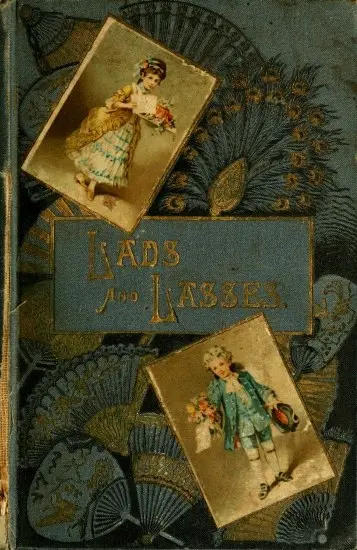
George M. (George Melville) Baker
BEHIND THE BOOK
This eBook is for the use of anyone anywhere in the United States and most other parts of the world at no cost and with almost no restrictions whatsoever. You may copy it, give it away or re-use it under the terms of the Project Gutenberg License included with this eBook or online at www.gutenberg.org. If you are not located in the United States, you will have to check the laws of the country where you are located before using this eBook. Read the source licence.
The original source file, including credits and licence, is retained by this library. Request an original-format copy at no charge. Please include the book title and Project Gutenberg identifier #52764.
KEEP YOUR CURIOSITY GOING

Frederic Jesup Stimson

Laurence Sterne
Maurice Baring

Isabel Anderson

Eric Mackay
King of England Henry VIII