THE CLASSIC COLLECTION✦A dead man’s diaryCLASSIC FREE BOOKS
A dead man’s diary
Coulson Kernahan
THE CLASSIC COLLECTION · 1888
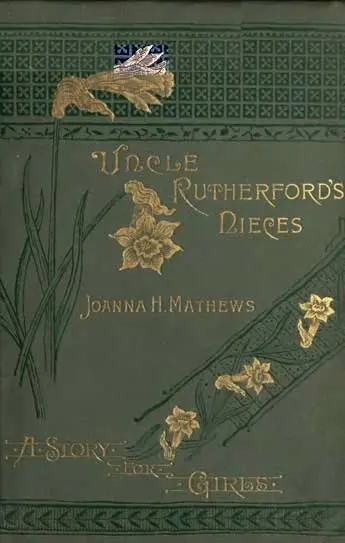
"Uncle Rutherford's Nieces: A Story for Girls" by Joanna H. Mathews is a novel written in the late 19th century. This story centers around a group of children—particularly, two sisters named Allie and Daisy, along with their friend Jim, who is a young boy with aspirations of helping others and becoming a lawyer. The narrative explores their youthful adventures, including Jim's plans to run a peanut business to help another pair of disabled children, showcasing themes of kindness, ambition, and the challenges of childhood. At the start of the book, readers are introduced to the children at their summer home, tackling an arithmetic problem that stumps them. This light-hearted scene sets the tone for their playful interactions, highlighting Jim's ambitious dreams for the future, particularly his desire to own a business that aids disabled friends. The opening captures the innocence and camaraderie of childhood while foreshadowing the social lessons and adventures that will unfold throughout their summer days. Meanwhile, the arrival of Uncle Rutherford and Aunt Emily hints at broader family dynamics and potential story developments involving mentorship and guidance.
Introduction adapted from the source catalogue; source summaries may be automatically generated.
Free to read · English · 62,542 words · No account needed
MAKE TIME FOR A GOOD BOOK
On by default. Untick to stop anonymous reading totals. Each page counts after 10 seconds in view. How this works.
Anonymous counting is on unless you have switched it off.
"It isn't so much reading," murmured Allie, rather hurt, for she was an over-sensitive child, prone to imagine slights, and, as we know, given to ready tears. "I'll tell you, people;" and she proceeded to give the amount made by Jim since he had established the peanut-stand, with its various divisions for the separate objects of his benevolence and ambition. The latter figured under the head of "For to be President;" and if her accounts, or, rather, Jim's as set down by her, were to be trusted, he had really done very well in the stand business.
"We know two deforms," quoth Daisy, solemnly, as Allie closed; "one deform is very nice and good, and the ofer is horrid and scratching. One is Captain Yorke's, and the ofer is Jim's peanut-stand girl. But we have to be good to the cross deform, 'cause God made her that way. Allie and I are going to try and make her nice and pleasant, too."
"She thinks we're proud, and only like to go to see her, and show her our nice dolls and things, to make her feel sorry," said Allie; "Tony said so. And she turns her hump at us, and makes faces at us, and won't think we want to be good to her. She thinks we're proud at her, 'cause she has to sell peanuts."
"You go and sell peanuts, then, and show her you're not too proud to do it," said Douglas, carelessly, and certainly with no thought that the suggestion would ever be acted upon.
"We needn't to have been afraid about Mrs. Yorke's fit-to-be-seenedness," said Allie, hopping delightedly around on one foot, the day after the arrival of the Yorkes, and on her return from her first visit to them. "Why, she does look so nice; just as nice as mammy in her Sunday clothes. She looks almost lady."
"Yes, she does, and it don't make any dif'ence, if she behaves lady," said Daisy; "and I fink she always behaves very lady. Mamma," with a sudden and startling change of subject, "if somebody told you you could do somefing to help somebody, oughtn't you to do it?"
"Yes, my darling, if you can," answered mother, rather oblivious, to tell the truth, of the child's earnestness in putting the question; for she was at the moment writing an answer to a note which had been just brought in.
"And it's very nice to do the kind fing, and not speak about it, isn't
it?" questioned Daisy.
"Very, dear," answered mother, still only half hearing the little one, and far from thinking that she was supposed to be giving her sanction to a most unheard of proceeding.
Your reading position is saved on this browser. Take it to another device with a library code. Reading pages adapt to text, rather than matching a printed edition.
BEHIND THE BOOK
This eBook is for the use of anyone anywhere in the United States and most other parts of the world at no cost and with almost no restrictions whatsoever. You may copy it, give it away or re-use it under the terms of the Project Gutenberg License included with this eBook or online at www.gutenberg.org. If you are not located in the United States, you will have to check the laws of the country where you are located before using this eBook. Read the source licence.
The original source file, including credits and licence, is retained by this library. Request an original-format copy at no charge. Please include the book title and Project Gutenberg identifier #21666.
KEEP YOUR CURIOSITY GOING
Coulson Kernahan

Maurice Baring
Frances Wright
Cécile Tormay

Frederic Jesup Stimson

W. H. P. (William Henry Pope) Jarvis