THE CLASSIC COLLECTION✦A dead man’s diaryCLASSIC FREE BOOKS
A dead man’s diary
Coulson Kernahan
THE CLASSIC COLLECTION · 1888
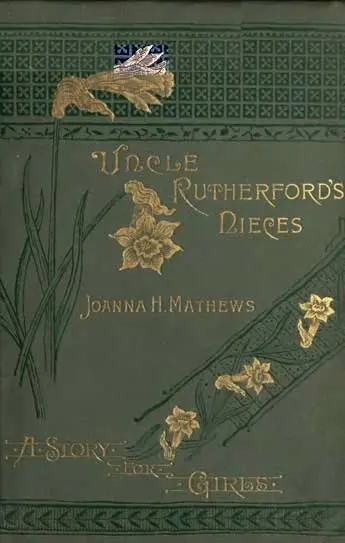
"Uncle Rutherford's Nieces: A Story for Girls" by Joanna H. Mathews is a novel written in the late 19th century. This story centers around a group of children—particularly, two sisters named Allie and Daisy, along with their friend Jim, who is a young boy with aspirations of helping others and becoming a lawyer. The narrative explores their youthful adventures, including Jim's plans to run a peanut business to help another pair of disabled children, showcasing themes of kindness, ambition, and the challenges of childhood. At the start of the book, readers are introduced to the children at their summer home, tackling an arithmetic problem that stumps them. This light-hearted scene sets the tone for their playful interactions, highlighting Jim's ambitious dreams for the future, particularly his desire to own a business that aids disabled friends. The opening captures the innocence and camaraderie of childhood while foreshadowing the social lessons and adventures that will unfold throughout their summer days. Meanwhile, the arrival of Uncle Rutherford and Aunt Emily hints at broader family dynamics and potential story developments involving mentorship and guidance.
Introduction adapted from the source catalogue; source summaries may be automatically generated.
Free to read · English · 62,542 words · No account needed
MAKE TIME FOR A GOOD BOOK
On by default. Untick to stop anonymous reading totals. Each page counts after 10 seconds in view. How this works.
Anonymous counting is on unless you have switched it off.
"I don' know what you're goin' to think of me, miss," he answered with
a very shamed face.
"If you have done wrong, Jim, and are ready to confess it now, I shall not be very severe with you,--you know that, Jim," said Milly. "You are in some trouble. I have seen for a long time that you had something on your mind; if you tell me, I may be able to help you out of it."
"I ain't in no scrape, Miss Milly, if that's what you mean," said the boy; "only--only--it's a mean kind of a thing, an' I've got to tell. 'Tain't fair for me to keep it to myself any longer. Bill's the only other feller knows. It's going to take my chance, for sure; but all the same, I've got to tell. I ain't so afraid of you as of--some others." He paused again, and again Milly had to re-assure and encourage him, bidding him remember that others as well as herself had his good and interest at heart, and that he had already tested these and not found them wanting.
"I know, Miss Milly," he answered, "but I can't bear for you or none of the family to think me a sneak, an' that's what I feel I've been now. 'Twasn't fair, an' now I know it. I did know it all along, on'y I wouldn't let on."
"Well, come, Jim," said Milly, determined to bring him to the point without any more of this shilly-shallying which was exceedingly unlike Jim; "you must tell me at once if you wish to do so, for I have an engagement, and shall have to leave you very soon."
"Well, miss," he replied, thus urged, "I found out--don't you be ashamed of me, Miss Milly--I found out about how Mr. Rutherford was goin' to give a big thing, some kind of a thing in the way of eddication, to me or Theodore Yorke, whichever turned out best this year at school, an' how he thought Theodore was a sneak, an' me too hot-tempered, an' always ready for a fight,--an' how he was goin' to see which did the best, not on'y in his learnin', but in his conduck, quite without us knowin' about what was afore us, an' then give that one this big thing. And, Miss Milly, you an' Mr. Rutherford, an' the rest of the fam'ly, maybe, thought me doin' well, an' takin' care of my temper. An' maybe so I was; but it was 'cause I was bound to beat Theodore, an' not let him get that prize. I felt awful mean all along; but now Theodore's cut up so, an' got sent off, an' he never knew nothin' about it, or maybe he'd done better, an' I don't feel it's fair in me. I knew, an' he didn't. I stood a lot from Theodore, an' didn't fly out at him on'y once or twice that you know about; but I wouldn't ha' stood it, an' there's many a time I would ha' fought him an' the other boys, too, on'y for thinkin' of that. So, you see, I did get more chance at the beginning than him, an' 'tain't fair in me. An' I thought to myself, If you're goin' to do a mean thing like this to get a hitch in life, how you goin' to get fit to be President? If you see somebody doin' a sneaky or dishonest thing, you can't have the face to pull him up an' send him to prison,"--as may be seen, Jim's ideas of the Presidential authority were that it was unlimited and autocratic,--"when you know you got there yourself on the sly; an' I wouldn't feel fit for it. So there wasn't no comfort in it one way or another; an' I made up my mind I'd tell you, an' you can tell Mr. Rutherford; an' anyhow I'll come out fair an' even chances with Theodore. Mr. Rutherford will maybe think this is worse than fightin' an' blowin' out?" interrogatively and wistfully.
Your reading position is saved on this browser. Take it to another device with a library code. Reading pages adapt to text, rather than matching a printed edition.
BEHIND THE BOOK
This eBook is for the use of anyone anywhere in the United States and most other parts of the world at no cost and with almost no restrictions whatsoever. You may copy it, give it away or re-use it under the terms of the Project Gutenberg License included with this eBook or online at www.gutenberg.org. If you are not located in the United States, you will have to check the laws of the country where you are located before using this eBook. Read the source licence.
The original source file, including credits and licence, is retained by this library. Request an original-format copy at no charge. Please include the book title and Project Gutenberg identifier #21666.
KEEP YOUR CURIOSITY GOING
Coulson Kernahan

Maurice Baring
Frances Wright
Cécile Tormay

Frederic Jesup Stimson

W. H. P. (William Henry Pope) Jarvis