THE CLASSIC COLLECTION✦A dead man’s diaryCLASSIC FREE BOOKS
A dead man’s diary
Coulson Kernahan
THE CLASSIC COLLECTION · 1888
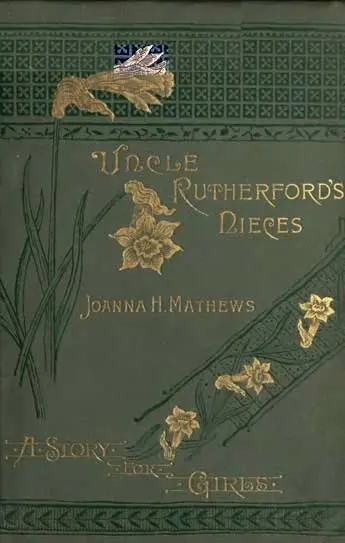
"Uncle Rutherford's Nieces: A Story for Girls" by Joanna H. Mathews is a novel written in the late 19th century. This story centers around a group of children—particularly, two sisters named Allie and Daisy, along with their friend Jim, who is a young boy with aspirations of helping others and becoming a lawyer. The narrative explores their youthful adventures, including Jim's plans to run a peanut business to help another pair of disabled children, showcasing themes of kindness, ambition, and the challenges of childhood. At the start of the book, readers are introduced to the children at their summer home, tackling an arithmetic problem that stumps them. This light-hearted scene sets the tone for their playful interactions, highlighting Jim's ambitious dreams for the future, particularly his desire to own a business that aids disabled friends. The opening captures the innocence and camaraderie of childhood while foreshadowing the social lessons and adventures that will unfold throughout their summer days. Meanwhile, the arrival of Uncle Rutherford and Aunt Emily hints at broader family dynamics and potential story developments involving mentorship and guidance.
Introduction adapted from the source catalogue; source summaries may be automatically generated.
Free to read · English · 62,542 words · No account needed
MAKE TIME FOR A GOOD BOOK
On by default. Untick to stop anonymous reading totals. Each page counts after 10 seconds in view. How this works.
Anonymous counting is on unless you have switched it off.
"There was a feller--one of the freight-hands--a pitchin' of the things outer the cars; an' one of them bags hit against a barrow stood there, an' got cut right through, the bag did,--an' what do you s'pose come a pourin' outer that bag, Jim?"
"Think I can guess that riddle. Peanuts," answered Jim.
"Yes, peanuts," said the captain; "an' it was a lucky thing for Sam Bates, to who they was consigned, that there wasn't a raft of youngsters roun' that freight-house as there is most times of the day. There's a Sunday-school clam-bake comin' off up to the Pint to-day, an' I reckon most of the Millville boys was gettin' ready for to go to that, so they wasn't on hand. Sam himself was there, though, an' it beat all, the takin' he was in over them peanuts; an', to be sure, it was enough to make any creetur' mad, to see them good peanuts go rollin' an' hoppin' over the platform, an' Sam he in a' awful hurry to load up an' go home, for he's a darter gettin' married this arternoon. Ye didn't never hear about Sam Bates' darter, an' her city young man, did ye? Well, ye see, Sam Bates' darter, her that is called----"
"But the peanuts; tell us what became of the peanuts first, Cap," interrupted Jim, determined to check the old sailor's wanderings, and keep him to the "pint."
"Why, ye see," meandered on the captain, "when I see them peanuts a-rollin' round, an' Sam in that takin', I says to myself, Sam ain't got no time to lose a-pickin' up of them peanuts, an' maybe he'd be glad to get rid of 'em for what he give for 'em an' no profits, an' let Jim have the profits, an' no freight to pay on 'em but me to get 'em picked up. 'Sam,' says I, as he was fussin' round, 'the Scriptur' says,'--Sam's a deacon in the church, an' I thought mebbe a little Scriptur' would fetch him, and keep the price down,--'the Scriptur' says, Whatever a man can get, therewith let him be content; an' I take it the moral of that is, make the best of a bad bargain. An' there's another teks that says, Don't ye fret over spilt milk; an', bein' a pillar of the church, I reckon you'd like to practise 'em, an' let your light shine afore men.' Now if there's one thing more'n another that Sam prides himself on, its bein' a deacon, an' livin' up to it; an' my speakin' Scriptur' to him was jest a word in season, for he quiets down an' falls to reckonin'. 'Give 'em to me for what you give by the lot, an' throw in the freight,' says I, seein' he meant to make on 'em, 'an' I'll take 'em an' see to the pickin' 'em up, an' you can load up the cart an' start off home.' He jes' took to it at once, for, with the lot he had, one bag didn't make so much differ out half a dozen--he buys 'em that way mostly, for ye know he keeps a' eatin' house; temperance strict it is, up to Stony Beach, where there's lots of clambakes an' picnics holdin' all the time, an' the folks eats heaps of peanuts. So Sam came to my terms, an' I made thirty cents on the bag of nuts, an' the freight throwed in for ye, Jim; an' me an' Taylor an' Shepherd picked up all the nuts, an' I brought 'em along in a basket Taylor lent me."
Your reading position is saved on this browser. Take it to another device with a library code. Reading pages adapt to text, rather than matching a printed edition.
BEHIND THE BOOK
This eBook is for the use of anyone anywhere in the United States and most other parts of the world at no cost and with almost no restrictions whatsoever. You may copy it, give it away or re-use it under the terms of the Project Gutenberg License included with this eBook or online at www.gutenberg.org. If you are not located in the United States, you will have to check the laws of the country where you are located before using this eBook. Read the source licence.
The original source file, including credits and licence, is retained by this library. Request an original-format copy at no charge. Please include the book title and Project Gutenberg identifier #21666.
KEEP YOUR CURIOSITY GOING
Coulson Kernahan

Maurice Baring
Frances Wright
Cécile Tormay

Frederic Jesup Stimson

W. H. P. (William Henry Pope) Jarvis