The Story of a Governess
Mrs. (Margaret) Oliphant
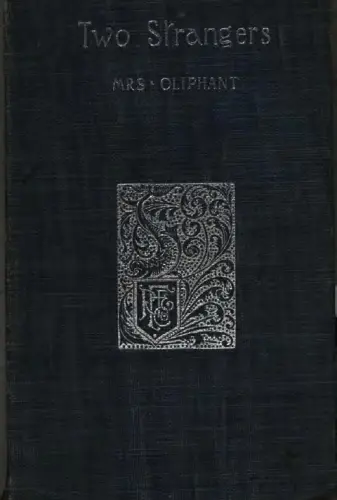
THE CLASSIC COLLECTION · 1895
"Two Strangers" by Mrs. Oliphant is a novel written in the late 19th century. The narrative revolves around the Wradisley family—a mother, her two sons, and their interactions with a young widow, Mrs. Nugent, who has recently become part of their community. The story hints at themes of familial relationships, societal expectations, and the dynamics of friendship and love, particularly as the family navigates their feelings toward the enigmatic widow. The opening of the novel introduces us to the Wradisley household, particularly focusing on the interactions between the mother, Mrs. Wradisley, and her children, Ralph and Lucy, as they discuss the newcomer in their lives, Mrs. Nugent. Lucy is described as affectionate and enthusiastic about her friendship with Mrs. Nugent, who is portrayed as charming and delightful. The scene sets a picturesque backdrop that captures the essence of rural life while laying the groundwork for developing relationships and potential romantic entanglements. As Ralph and Bertram—his friend—converse, they reveal their differing perceptions of society and women, foreshadowing the complexities that may arise as the story unfolds.
Introduction adapted from the source catalogue; source summaries may be automatically generated.
Free to read · English · 26,194 words · No account needed
MAKE TIME FOR A GOOD BOOK
On by default. Untick to stop anonymous reading totals. Each page counts after 10 seconds in view. How this works.
Anonymous counting is on unless you have switched it off.
“Oh, if Raaf were only a little less rough!” his mother breathed in her heart. Lucy, I think, was most critical of Bertram, finding in him, on the whole, something which neither of her brothers possessed, though he must have been forty at the very least, and therefore capable of exciting but little interest in a girl’s heart.
“I have been showing your friend my treasures,” said Mr. Wradisley, with a slight turn of his head toward his brother, “and I am delighted to find we have a great many tastes in common. There is a charm in sympathy, especially when it is so rare, on these subjects.”
“You could not expect Raaf to know about your casts and things, Reginald,” said Mrs. Wradisley, precipitately. “He has been living among such very different scenes.”
“Raaf!” said Mr. Wradisley, slightly elevating his eyebrows. “My dear mother, could you imagine I was referring in any way to Raaf?”
“Never mind, Reg, I don’t take it amiss,” said the big sportsman, with a laugh out of his beard.
There was, however, a faint color on his browned cheeks. It is well that a woman’s perceptions should be quick, no doubt, but if Mrs. Wradisley had not been jealous for her younger son this very small household jar need not have occurred. Mr. Wradisley put it right with his natural blandness.
“We all have our pet subjects,” he said; “you too, mother, as much as the worst of us. Is the time of tea over, or may I have some?”
“Mr. Wradisley’s casts are magnificent,” cried the stranger. “I should have known nothing about them but for a wild year or two I spent in Greece and the islands. A traveler gets a sniff of everything. Don’t you recollect, Wradisley, the Arabs and their images at--”
The name was not to be spelt by mere British faculties, and I refrain.
“Funny lot of notions,” said Raaf, “I remember; pretty little thing or two, however, I should like to have brought for Lucy--just the things a girl would like--but Bertram there snapped them all up before I had a chance--confounded knowing fellow, always got before me. You come down on him, Lucy; it’s his fault if I have so few pretty things for you.”
“I am very well contented, Raaf,” said Lucy, prettily. As a matter of fact the curiosities Ralph had brought home had been chiefly hideous ivory carvings of truly African type, which Lucy, shuddering, had put away in a drawer, thanking him effusively, but with averted eyes.
Your reading position is saved on this browser. Take it to another device with a library code. Reading pages adapt to text, rather than matching a printed edition.
Mrs. (Margaret) Oliphant
Mrs. (Margaret) Oliphant
Mrs. (Margaret) Oliphant
Mrs. (Margaret) Oliphant
BEHIND THE BOOK
This eBook is for the use of anyone anywhere in the United States and most other parts of the world at no cost and with almost no restrictions whatsoever. You may copy it, give it away or re-use it under the terms of the Project Gutenberg License included with this eBook or online at www.gutenberg.org. If you are not located in the United States, you will have to check the laws of the country where you are located before using this eBook. Read the source licence.
The original source file, including credits and licence, is retained by this library. Request an original-format copy at no charge. Please include the book title and Project Gutenberg identifier #55784.
KEEP YOUR CURIOSITY GOING
Coulson Kernahan

Maurice Baring
Frances Wright
Cécile Tormay

Frederic Jesup Stimson

W. H. P. (William Henry Pope) Jarvis