THE CLASSIC COLLECTION✦Among the campsCLASSIC FREE BOOKS
Among the camps
Thomas Nelson Page
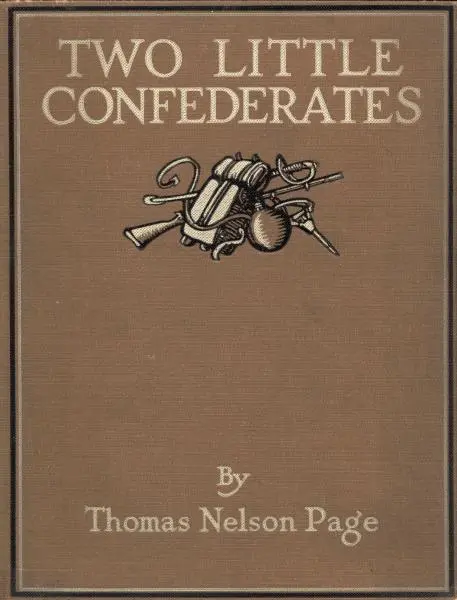
THE CLASSIC COLLECTION · 1888
"Two Little Confederates" by Thomas Nelson Page is a children's novel written in the late 19th century. Set against the backdrop of the American Civil War, the story revolves around two boys, Frank and Willy, who live on a plantation in Virginia. As the war unfolds around them, they experience the excitement and challenges of growing up in a tumultuous time, often viewing the conflict through the innocent eyes of childhood. The opening of the narrative introduces readers to Oakland, the boys' home, characterized as one of the prominent plantations in the area. We meet Frank and Willy, whose lives are filled with play, adventure, and a burgeoning awareness of the war's presence as they grapple with their fears and misconceptions about it. They drift between youthful innocence and the harsh realities of their world, with their fantasies of war contrasting sharply with the concerns of their family, especially as their loved ones enlist. The chapters unfold with their initial reactions to the war, displaying a mix of enthusiasm and confusion as they navigate their new reality and the changes it brings to their lives and relationships.
Introduction adapted from the source catalogue; source summaries may be automatically generated.
Free to read · English · 32,573 words · No account needed
MAKE TIME FOR A GOOD BOOK
On by default. Untick to stop anonymous reading totals. Each page counts after 10 seconds in view. How this works.
Anonymous counting is on unless you have switched it off.
When they got outdoors the yard was full of soldiers. They were upon the porches, in the entry, and in the house. The smoke-house was open and so were the doors of all the other outhouses, and now and then a man passed, carrying some article which the boys recognized.
In a little while the soldiers had taken everything they could carry conveniently, and even things which must have caused them some inconvenience. They had secured all the bacon that had been left in the smoke-house, as well as all other eatables they could find. It was a queer sight, to see the fellows sitting on their horses with a ham or a pair of fowls tied to one side of the saddle and an engraving or a package of books, or some ornament, to the other.
A new party of men had by this time come up from the direction of the
stables.
"Old man, come here!" called some of them to Balla, who was standing near expostulating with the men who were about the fire.
"Who?--me?" asked Balla.
"B'ain't you the carriage driver?"
"Ain't I the keridge driver?"
"Yes, you; we know you are, so you need not be lying about it."
"Hi! yes; I the keridge driver. Who say I ain't?"
"Well, where have you hid those horses? Come, we want to know, quick," said the fellow roughly, taking out his pistol in a threatening way.
The old man's eyes grew wide. "Hi! befo' de Lord! Marster, how I know anything of the horses ef they ain't in the stable,--there's where we keep horses!"
"Here, you come with us. We won't have no foolin' 'bout this," said his questioner, seizing him by the shoulder and jerking him angrily around. "If you don't show us pretty quick where those horses are, we'll put a bullet or two into you. March off there!"
He was backed by a half-a-dozen more, but the pistol, which was at old Balla's head, was his most efficient ally.
"Hi! Marster, don't pint dat thing at me that way. I ain't ready to die yit--an' I ain' like dem things, no-ways," protested Balla.
There is no telling how much further his courage could have withstood their threats, for the boys' mother made her appearance. She was about to bid Balla show where the horses were, when a party rode into the yard leading them.
"Hi! there are Bill and John, now," exclaimed the boys, recognizing the black carriage-horses which were being led along.
"Well, ef dee ain't got 'em, sho' 'nough!" exclaimed the old driver, forgetting his fear of the cocked pistols.
Your reading position is saved on this browser. Take it to another device with a library code. Reading pages adapt to text, rather than matching a printed edition.
Thomas Nelson Page
Thomas Nelson Page
Thomas Nelson Page
Thomas Nelson Page
BEHIND THE BOOK
This eBook is for the use of anyone anywhere in the United States and most other parts of the world at no cost and with almost no restrictions whatsoever. You may copy it, give it away or re-use it under the terms of the Project Gutenberg License included with this eBook or online at www.gutenberg.org. If you are not located in the United States, you will have to check the laws of the country where you are located before using this eBook. Read the source licence.
The original source file, including credits and licence, is retained by this library. Request an original-format copy at no charge. Please include the book title and Project Gutenberg identifier #26725.
KEEP YOUR CURIOSITY GOING
Cécile Tormay

Moritz Busch
Coulson Kernahan
John L. Ransom

Maurice Baring
Frances Wright