THE CLASSIC COLLECTION✦My diaries, being a personal narrative of events 1888-1914, Part 2 (1900-1914)CLASSIC FREE BOOKS
My diaries, being a personal narrative of events 1888-1914, Part 2 (1900-1914)
Wilfrid Scawen Blunt
THE CLASSIC COLLECTION · 1893
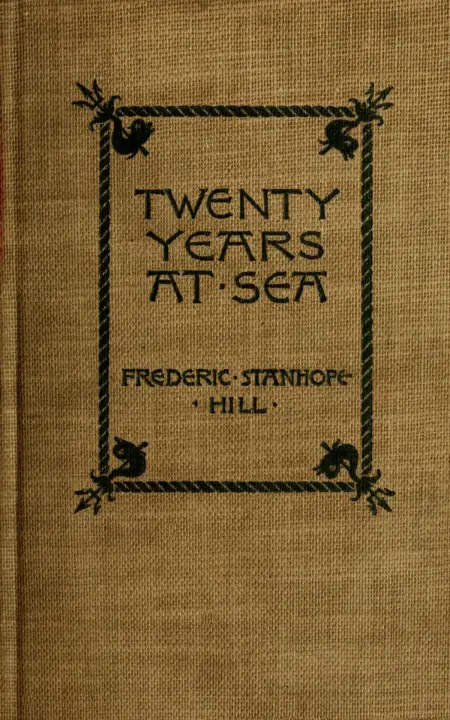
"Twenty Years at Sea: Leaves from My Old Log-Books" by Frederic Stanhope Hill is a memoir written in the late 19th century. This account chronicles the author’s experiences as a sailor over two decades, providing a vivid portrayal of life aboard ships during the mid-19th century, including both the merchant navy and naval service. The memoir details various adventures and challenges encountered at sea, offering readers a glimpse into the hardships and camaraderie among sailors. At the start of the memoir, Hill reflects on his early fascination with the sea, spurred by tales of old sailors and his own reading. He recounts his decision to embark on a maritime career and his subsequent first voyage aboard the ship Bombay. The opening segments vividly depict the hustle and bustle of 1842 Brooklyn and Hill's preparations for departure, including purchasing his sea gear and emotional farewells to family. The account sets the stage for his adventures, marked by a mixture of excitement and trepidation as he grapples with the realities of a sailor's life, including seasickness and harsh conditions, highlighting both the challenges and the romantic allure of life at sea.
Introduction adapted from the source catalogue; source summaries may be automatically generated.
Free to read · English · 52,701 words · No account needed
MAKE TIME FOR A GOOD BOOK
On by default. Untick to stop anonymous reading totals. Each page counts after 10 seconds in view. How this works.
Anonymous counting is on unless you have switched it off.
“Who, he? Oh no, sir; he been takin’ lil’ drop too much dis evenin’, but he be ol’ right ’fore mawnin’. Oh, he sober fust-class sailor man. ’Sure you of dat, Mis’ Ackley!”
At this moment our towboat gave an impatient whistle, and Captain Gay came up from the cabin, two steps at a time.
“Mr. Ackley, what are we waiting for? The tow has been made up for an hour, and we ought to have been a dozen miles down the river by this time!”
“The last man has just come on board, sir,” replied the mate, “and I shall cast off at once.”
“Be sharp about it then, sir!”
“Aye, aye, sir. Go forward, Mr. Kelson, and see to those head lines; take the cook, steward, and carpenter with you to haul them in. You, Joe, tumble that man of yours into the forecastle and get ashore yourself, or you’ll have a chance to take a trip down to the Southwest Pass! Let go the breast lines! Stand by forward!”
We cast off, the tugboat steamed ahead, the strong current struck us on the starboard bow, we slowly turned, and went on our way down the river, leaving the long line of twinkling lights of the Crescent City behind us.
The next morning at daylight the chief mate and I, after serious difficulties, succeeded in “rousing out” our befuddled crew, and then commenced clearing up decks and getting ready for making sail, for we were nearly abreast of Pilot Town, and would soon be over the bar.
Thirteen hard-looking subjects presented themselves from the forecastle, after some little time, but where was the fourteenth? A diligent search of the men’s quarters was at last rewarded by the discovery of the missing man--but such a man! A wretched-looking, frowsy-headed little creature, bandy-legged and narrow chested, a most unmistakable landsman, dressed in thin, blue cottonade trousers with a long-skirted, threadbare alpaca coat, buttoned over a calico shirt; with no waistcoat, or hat, and with well-worn lasting shoes on his feet. Trembling, blear-eyed, wild with evident astonishment at his surroundings, this unfortunate wretch was haled up before the mate by the carpenter, who had found him still asleep under one of the berths, hidden behind a large sea chest.
“Who the devil are you?” said Mr. Ackley roughly, looking contemptuously at the man, shivering in the chill of the early morning.
“Vere you vos takin’ me?” inconsequently replied the man, staring about him. “I want to go by my home. Lisbeth must ogspect me. Please stop the boat, lieber Herr; I must go home!”
Your reading position is saved on this browser. Take it to another device with a library code. Reading pages adapt to text, rather than matching a printed edition.
BEHIND THE BOOK
This eBook is for the use of anyone anywhere in the United States and most other parts of the world at no cost and with almost no restrictions whatsoever. You may copy it, give it away or re-use it under the terms of the Project Gutenberg License included with this eBook or online at www.gutenberg.org. If you are not located in the United States, you will have to check the laws of the country where you are located before using this eBook. Read the source licence.
The original source file, including credits and licence, is retained by this library. Request an original-format copy at no charge. Please include the book title and Project Gutenberg identifier #68103.
KEEP YOUR CURIOSITY GOING
Wilfrid Scawen Blunt
Wilfrid Scawen Blunt

E. W. (Edgar Watson) Howe
Cécile Tormay

Moritz Busch
John L. Ransom