THE CLASSIC COLLECTION✦My diaries, being a personal narrative of events 1888-1914, Part 2 (1900-1914)CLASSIC FREE BOOKS
My diaries, being a personal narrative of events 1888-1914, Part 2 (1900-1914)
Wilfrid Scawen Blunt
THE CLASSIC COLLECTION · 1893
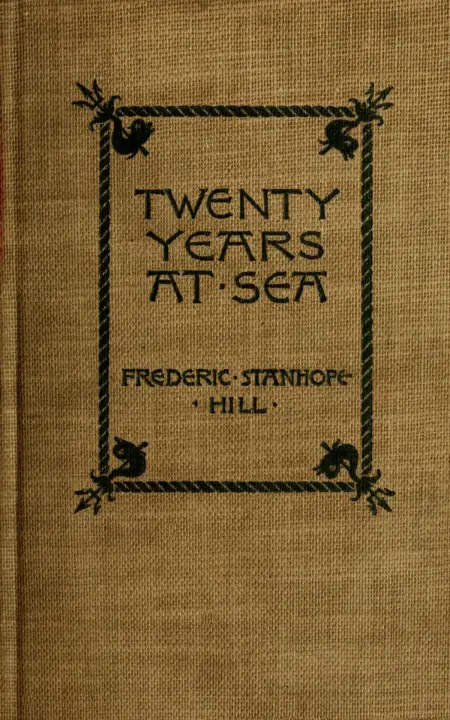
"Twenty Years at Sea: Leaves from My Old Log-Books" by Frederic Stanhope Hill is a memoir written in the late 19th century. This account chronicles the author’s experiences as a sailor over two decades, providing a vivid portrayal of life aboard ships during the mid-19th century, including both the merchant navy and naval service. The memoir details various adventures and challenges encountered at sea, offering readers a glimpse into the hardships and camaraderie among sailors. At the start of the memoir, Hill reflects on his early fascination with the sea, spurred by tales of old sailors and his own reading. He recounts his decision to embark on a maritime career and his subsequent first voyage aboard the ship Bombay. The opening segments vividly depict the hustle and bustle of 1842 Brooklyn and Hill's preparations for departure, including purchasing his sea gear and emotional farewells to family. The account sets the stage for his adventures, marked by a mixture of excitement and trepidation as he grapples with the realities of a sailor's life, including seasickness and harsh conditions, highlighting both the challenges and the romantic allure of life at sea.
Introduction adapted from the source catalogue; source summaries may be automatically generated.
Free to read · English · 52,701 words · No account needed
MAKE TIME FOR A GOOD BOOK
On by default. Untick to stop anonymous reading totals. Each page counts after 10 seconds in view. How this works.
Anonymous counting is on unless you have switched it off.
As I sat in the port smoking and dreaming of home, my orderly came up and said the officer of the deck reported that a tug was steaming up the river, and that she had signaled, “I wish to communicate.”
I at once went on deck, and by that time the tug was within hail.
“Tug ahoy!”
“Aye, aye, sir!”
“What tug is that? Don’t come any nearer at present!”
“This is the Rover, sir. I have special orders for you from Commodore Morris from New Orleans.”
“Very well; steam up under my quarter and come on board!”
The tug came near, and as she touched our overhang we lowered a side ladder, and an officer in uniform came on board and handed me an official document.
I went down to my cabin, opened the letter, and read:--
A. V. LIEUT. ROBERT KELSON, Commanding U. S. S. Benton:
Sir,--Upon the receipt of this order you will at once detach your executive officer and order him to proceed immediately, without any delay, in the tug Rover up the river to the U. S. S. Brilliant, where he will take command of that vessel, putting her commanding officer, Acting Master Daniel Glenny, in close confinement.
When this duty is accomplished send the Rover back to me here.
Very Respt’y,
Yr. Obt. Servant,
(Signed) HENRY W. MORRIS,
Commodore Commanding West Gulf Squadron.
Here was a pretty kettle of fish! And what did it all mean? I touched my bell. “Orderly, send the captain of the Rover down here to me.”
The ensign in command of the tug came down to my cabin. “Captain,” said I, “do you know what duty you are on?”
“No, sir; except that I was to give you a letter and then follow your
instructions.”
“You have no idea of the contents of this letter?”
“I haven’t the least idea, sir.”
“Very well, I shall send an officer up the river with you to-night to the Brilliant. You will find her not far below Skipwith’s, I fancy. Go on board your tug, sir, and be all ready to proceed up the river within an hour.”
The officer bowed and retired. Then I sent for my executive, Mr. Willetts, feeling as though I were in a dream. He was a plain, straightforward man with no more imagination in his composition than a boarding pike. When I read the commodore’s orders to him, he merely said, “Shall I put Captain Glenny in irons, sir?”
I had never thought of that unpleasant detail in the affair, and could have beaten Willetts for the suggestion.
“The commodore says ‘close confinement,’ sir,” he added.
Your reading position is saved on this browser. Take it to another device with a library code. Reading pages adapt to text, rather than matching a printed edition.
BEHIND THE BOOK
This eBook is for the use of anyone anywhere in the United States and most other parts of the world at no cost and with almost no restrictions whatsoever. You may copy it, give it away or re-use it under the terms of the Project Gutenberg License included with this eBook or online at www.gutenberg.org. If you are not located in the United States, you will have to check the laws of the country where you are located before using this eBook. Read the source licence.
The original source file, including credits and licence, is retained by this library. Request an original-format copy at no charge. Please include the book title and Project Gutenberg identifier #68103.
KEEP YOUR CURIOSITY GOING
Wilfrid Scawen Blunt
Wilfrid Scawen Blunt

E. W. (Edgar Watson) Howe
Cécile Tormay

Moritz Busch
John L. Ransom