THE CLASSIC COLLECTION✦The sprightly romance of MarsacCLASSIC FREE BOOKS
The sprightly romance of Marsac
Molly Elliot Seawell
THE CLASSIC COLLECTION · 1897
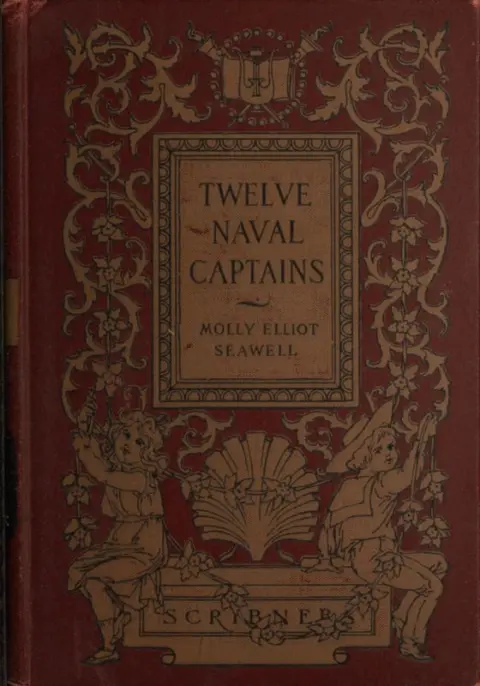
"Twelve Naval Captains" by Molly Elliot Seawell is a historical account written in the early 20th century. This work chronicling the lives of notable American naval leaders showcases the courage, exploits, and legacies of these figures, possibly focusing on their navigational and military contributions during iconic naval battles. Among these captains, Paul Jones stands out for his remarkable rise from humble beginnings to becoming a celebrated naval commander during the American Revolutionary War. The opening of "Twelve Naval Captains" introduces Paul Jones as a captivating character whose adventures and exploits painted him as a legendary figure in American history. Born into modest circumstances in Scotland, Jones demonstrated an early affinity for the sea, leading to a career filled with daring naval encounters. The narrative outlines his transition from a gardener's son to the commander of the American navy, emphasizing his tenacity and ambition. Jones's journey is marked by notable friendships with figures like Benjamin Franklin and Thomas Jefferson, setting the stage for an engaging exploration of his distinguished yet complex legacy as he navigates the tumultuous waters of war and honor in the late 18th century.
Introduction adapted from the source catalogue; source summaries may be automatically generated.
Free to read · English · 54,099 words · No account needed
MAKE TIME FOR A GOOD BOOK
On by default. Untick to stop anonymous reading totals. Each page counts after 10 seconds in view. How this works.
Anonymous counting is on unless you have switched it off.
"It is peace."
Bainbridge is said to have thought, after the event happened, that the Bashaw had no real intention of withstanding another bombardment, and his hesitation and final yielding to the advocates of peace was a preconcerted arrangement.
As soon as the treaty was signed, the forts and castle saluted the American flag, and the squadron returned the salute. Next day the American prisoners were released. A Neapolitan who had been held in slavery for years by the Tripolitans had been very kind to the sailors and marines, and they asked Bainbridge if he would authorize the purser to advance them seven hundred dollars out of their pay to buy the Neapolitan's freedom. This was done, and the man was restored to his country by these grateful men.
The squadron sailed for Syracuse, where a court of inquiry into the loss of the Philadelphia was held, and Bainbridge was honorably acquitted. On his return to the United States he was received with much kindness by his companions in arms, by the government, and the people, all of whom regarded him as a brave and capable officer who had lost his ship by one of those fateful accidents against which neither courage nor capacity can prevail.
It seems singular that on the heels of the splendid successes of the navy before Tripoli and with the rest of the Barbary powers, the government and the people showed very little understanding of the value of the naval service. As soon as hostilities were over with the corsairs, a reduction of the navy took place, although at that very time aggressions of Great Britain upon American merchant ships were continuing at a rate which was bound to provoke war in the end. Bainbridge, like many others, found himself without a ship, and on half-pay; and he asked and obtained leave, during the intervals when he was without a naval command, to make voyages in the merchant service. He was absent on one of these voyages for profit in the autumn of 1811, when at St. Petersburg he heard of the probability of a declaration of war with Great Britain. He started instantly on his return to the United States, and reached Washington in February, 1812. He found there one of Commodore Preble's captains, Charles Stewart,[3] and to his rage and mortification was told that the government thought it vain and foolhardy to give battle on the sea to the mightiest naval power on earth, which had then vanquished the navies of Europe and kept them skulking in their own harbors. Such over-prudence ill suited the ardent and determined natures of Bainbridge and Stewart. They heard that the government had concluded to lay up such ships as it had, and to prosecute the fight entirely on land. They went together to President Madison, and besought him to change this cowardly and unwise policy, and succeeded in persuading him to do it. For this one act the country is forever indebted to Bainbridge and Stewart. While nothing could eventually stop the progress of the United States toward being a great and powerful nation, yet, had it not been for the victories gained at sea during the War of 1812-15, the dignity and prestige of the United States would have suffered an eclipse for fifty years. The success of the Americans in the ship duels on the ocean during the war of 1812 did more to make the United States respected abroad than any event of our history after the Revolution. The great question of the right of search in neutral vessels was settled by the achievements of a few smart vessels with great and daring captains, belonging to a young and hitherto feeble power in America,--a right which had been vainly contested by all the powers of Europe. The British navy had been for more than a hundred years practically invincible, and there can be no doubt that many of its earlier losses in 1812-15 came from absolute rashness, fostered by a long and glorious career of conquest. What was of more value to the United States than the respect of continental Europe was the respect earned from the English themselves. The United States of 1812 was chiefly populated by those only a few generations from an English ancestry, and the people of the two countries were alike in their willingness to make a square, stand-up fight, and then to shake hands afterward. From the hour that the first British frigate struck to an American ship, the British navy highly esteemed the American navy, and the British government realized that at last there was a sea power equal in skill, daring, and resource to Great Britain. The ships lost by the British were scarcely missed from their huge fleets; but Great Britain, like America, promptly recognized the new and tremendous force which the taking of those few ships implied. It was one of the most fortunate hours that ever dawned for the United States when the advice of Bainbridge and Stewart was taken, and within six months they were amply justified.
Your reading position is saved on this browser. Take it to another device with a library code. Reading pages adapt to text, rather than matching a printed edition.
Molly Elliot Seawell

Molly Elliot Seawell
Molly Elliot Seawell
Molly Elliot Seawell
BEHIND THE BOOK
This eBook is for the use of anyone anywhere in the United States and most other parts of the world at no cost and with almost no restrictions whatsoever. You may copy it, give it away or re-use it under the terms of the Project Gutenberg License included with this eBook or online at www.gutenberg.org. If you are not located in the United States, you will have to check the laws of the country where you are located before using this eBook. Read the source licence.
The original source file, including credits and licence, is retained by this library. Request an original-format copy at no charge. Please include the book title and Project Gutenberg identifier #46406.
KEEP YOUR CURIOSITY GOING
Cécile Tormay

Moritz Busch
John L. Ransom
Frances Wright
Cécile Tormay

Mabel Potter Daggett