THE CLASSIC COLLECTION✦An American tragedy, v. 2CLASSIC FREE BOOKS
An American tragedy, v. 2
Theodore Dreiser
THE CLASSIC COLLECTION · 1919
"Twelve Men" by Theodore Dreiser is a collection of character sketches written in the early 20th century. The book showcases various individuals, primarily focusing on Peter, who stands out for his unique understanding of life and humanity. Through his interactions and observations, Dreiser explores themes of artistic expression, spirituality, and the nature of existence. The opening of "Twelve Men" revolves around Peter, a compelling and eccentric character who embodies a profound appreciation for life in all its facets. Dreiser introduces Peter as someone who embraces internal freedom, cherishing both the absurdity and beauty of his surroundings. In his early encounters in St. Louis, the narrator, presumably Dreiser himself, portrays Peter's lively spirit, artistic tendencies, and curiosity for the world around him. Their friendship develops against a backdrop of diverse personalities and societal norms, as they navigate through elements of humor, camaraderie, and the human experience. Through Peter’s character, the foundation is laid for a deeper exploration of the complexities of life, art, and human connections in the subsequent chapters.
Introduction adapted from the source catalogue; source summaries may be automatically generated.
Free to read · English · 120,188 words · No account needed
MAKE TIME FOR A GOOD BOOK
On by default. Untick to stop anonymous reading totals. Each page counts after 10 seconds in view. How this works.
Anonymous counting is on unless you have switched it off.
"What about it! Why, he give his rubber boots away, like a darned fool, to old drunken Jimmy Harper, and him loafin' around half the year drunk, and worked around on the ice without any shoes himself. He might 'a' took cold and died."
"Why did he do it?" I queried, very much interested by now.
"Oh, Charlie's naturally big-hearted," put in the little old man who sold cunners. "He believes in the Lord and the Bible. Stands right square on it, only he don't belong to no church like. He's got the biggest heart I ever saw in a livin' being."
"Course the other fellow didn't have any shoes for to wear," put in the boat-maker explanatorily, "but he never would work, anyhow."
They lapsed into silence while the latter returned to his measuring, and then out of the drift of thought came this from the helper in the corner:
"Yes, and look at the way Bailey used to sponge on him. Get his money Saturday night and drink it all up, and then Sunday morning, when his wife and children were hungry, go cryin' around Potter. Dinged if I'd 'a' helped him. But Potter'd take the food right off his breakfast table and give it to him. I saw him do it! I don't think that's right. Not when he's got four or five orphans of his own to care for."
"His own children?" I interrupted, trying to get the thing straight.
"No, sir; just children he picked up around, here and there."
Here is a curious character, sure enough, I thought--one well worth
looking into.
Another lull, and then as I was leaving the room to give the matter a little quiet attention, I remarked to the boat-maker:
"Outside of his foolish giving, you haven't anything against Charlie
Potter, have you?"
"Not a thing," he replied, in apparent astonishment. "Charlie Potter's one of the best men that ever lived. He's a good man."
I smiled at the inconsistency and went my way.
A day or two later the loft of the sail-maker, instead of the shed of the boat-builder, happened to be my lounging place, and thinking of this theme, now uppermost in my mind, I said to him:
"Do you know a man around here by the name of Charlie Potter?"
"Well, I might say that I do. He lived here for over fifteen years."
"What sort of a man is he?"
He stopped in his stitching a moment to look at me, and then said:
"How d'ye mean? By trade, so to speak, or religious-like?"
Your reading position is saved on this browser. Take it to another device with a library code. Reading pages adapt to text, rather than matching a printed edition.
Theodore Dreiser
Theodore Dreiser
Theodore Dreiser
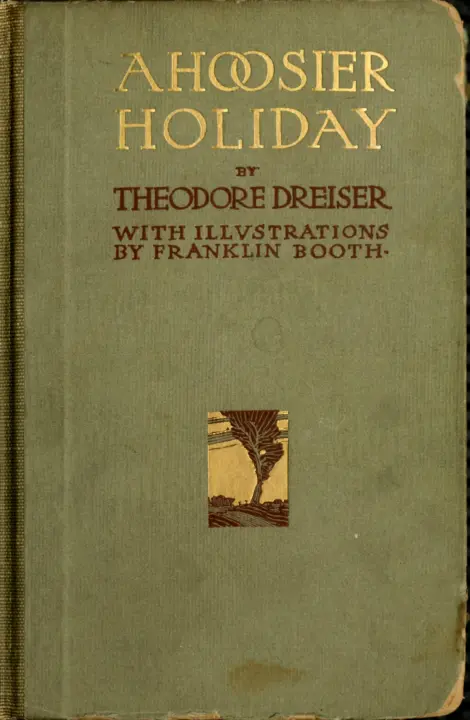
Theodore Dreiser
BEHIND THE BOOK
This eBook is for the use of anyone anywhere in the United States and most other parts of the world at no cost and with almost no restrictions whatsoever. You may copy it, give it away or re-use it under the terms of the Project Gutenberg License included with this eBook or online at www.gutenberg.org. If you are not located in the United States, you will have to check the laws of the country where you are located before using this eBook. Read the source licence.
The original source file, including credits and licence, is retained by this library. Request an original-format copy at no charge. Please include the book title and Project Gutenberg identifier #14717.
KEEP YOUR CURIOSITY GOING
Coulson Kernahan
John L. Ransom

Maurice Baring
Frances Wright
Cécile Tormay

Frederic Jesup Stimson