THE CLASSIC COLLECTION✦An American tragedy, v. 2CLASSIC FREE BOOKS
An American tragedy, v. 2
Theodore Dreiser
THE CLASSIC COLLECTION · 1919
"Twelve Men" by Theodore Dreiser is a collection of character sketches written in the early 20th century. The book showcases various individuals, primarily focusing on Peter, who stands out for his unique understanding of life and humanity. Through his interactions and observations, Dreiser explores themes of artistic expression, spirituality, and the nature of existence. The opening of "Twelve Men" revolves around Peter, a compelling and eccentric character who embodies a profound appreciation for life in all its facets. Dreiser introduces Peter as someone who embraces internal freedom, cherishing both the absurdity and beauty of his surroundings. In his early encounters in St. Louis, the narrator, presumably Dreiser himself, portrays Peter's lively spirit, artistic tendencies, and curiosity for the world around him. Their friendship develops against a backdrop of diverse personalities and societal norms, as they navigate through elements of humor, camaraderie, and the human experience. Through Peter’s character, the foundation is laid for a deeper exploration of the complexities of life, art, and human connections in the subsequent chapters.
Introduction adapted from the source catalogue; source summaries may be automatically generated.
Free to read · English · 120,188 words · No account needed
MAKE TIME FOR A GOOD BOOK
On by default. Untick to stop anonymous reading totals. Each page counts after 10 seconds in view. How this works.
Anonymous counting is on unless you have switched it off.
"But if you don't forgive them, even before they repent," I said,
"aren't you harboring enmity?"
"No, sir, I'm not treasuring up enmity. I only refuse to forgive them."
I looked at the man, a little astonished, but he looked so sincere and earnest that I could not help smiling.
"How do you reconcile that with the command, 'Love one another?' You surely can't love and refuse to forgive them at the same time?"
"I don't refuse to forgive them," he repeated. "If John there," indicating an old man in a sun-tanned coat who happened to be passing through the store at the time, "should do me a wrong--I don't care what it was, how great or how vile--if he should come to me and say, 'Burridge, I'm sorry,'" he executed a flashing oratorical move in emphasis, and throwing back his head, exclaimed: "It's gone! It's gone! There ain't any more of it! All gone!"
I stood there quite dumbfounded by his virility, as the air vibrated with his force and feeling. So manifestly was his reading of the Bible colored by the grief of his own heart that it was almost painful to tangle him with it. Goodness and mercy colored all his ideas, except in relation to his one-time followers, those who had formerly been his friends and now left him to himself.
"Do you still visit the poor and the afflicted, as you once did?" I
asked him once.
"I'd rather not say anything about that," he replied sternly.
"But do you?"
"Yes, sir."
"Still make your annual New Year round?"
"Yes, sir."
"Well, you'll get your reward for that, whatever you believe."
"I've had my reward," he said slowly.
"Had it?"
"Yes, sir, had it. Every hand that's been lifted to receive the little I had to offer has been my reward."
He smiled, and then said in seemingly the most untimely way:
"I remember once going to a lonely woman here on New Year's Day and taking her a little something--basket of grapes or fruit of some kind it was. I was stopping a minute--never stay long, you know; just run in and say 'Happy New Year!' leave what I have and get out--and so said, 'Good morning, Aunt Mary!'
"'Good morning, Elihu,' says she.
"'Can't stay long, Aunt Mary,' I said. 'Just want to leave you these.
Happy New Year!'
"Well, sir, you know I was just turning around and starting when she caught hold of my sleeve and says:
Your reading position is saved on this browser. Take it to another device with a library code. Reading pages adapt to text, rather than matching a printed edition.
Theodore Dreiser
Theodore Dreiser
Theodore Dreiser
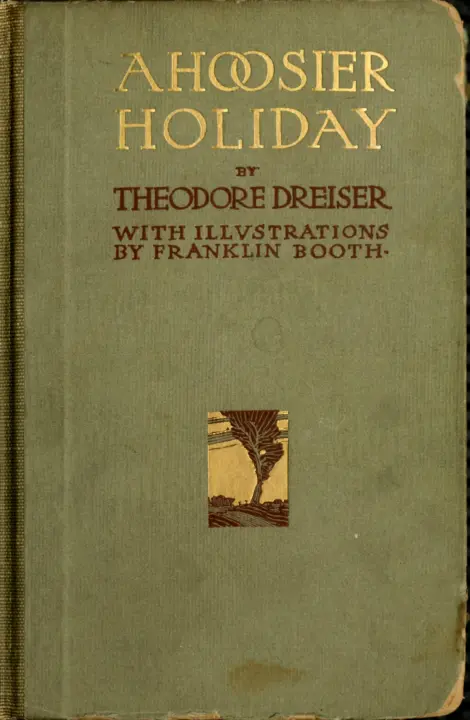
Theodore Dreiser
BEHIND THE BOOK
This eBook is for the use of anyone anywhere in the United States and most other parts of the world at no cost and with almost no restrictions whatsoever. You may copy it, give it away or re-use it under the terms of the Project Gutenberg License included with this eBook or online at www.gutenberg.org. If you are not located in the United States, you will have to check the laws of the country where you are located before using this eBook. Read the source licence.
The original source file, including credits and licence, is retained by this library. Request an original-format copy at no charge. Please include the book title and Project Gutenberg identifier #14717.
KEEP YOUR CURIOSITY GOING
Coulson Kernahan
John L. Ransom

Maurice Baring
Frances Wright
Cécile Tormay

Frederic Jesup Stimson