THE CLASSIC COLLECTION✦An outlaw’s diary: the CommuneCLASSIC FREE BOOKS
An outlaw’s diary: the Commune
Cécile Tormay
THE CLASSIC COLLECTION · 1923
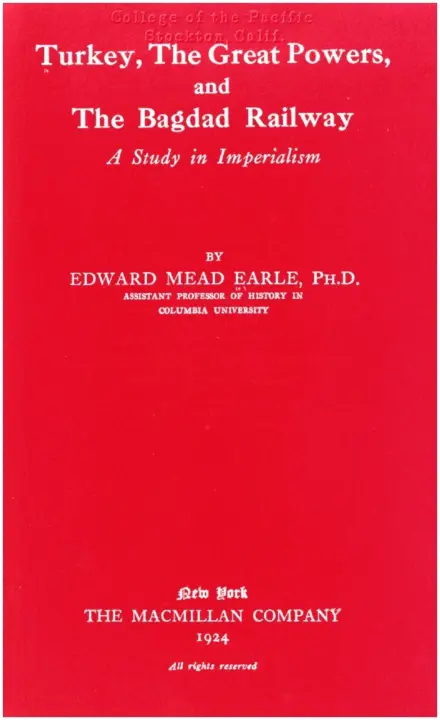
"Turkey, the Great Powers, and the Bagdad Railway: A Study in Imperialism" by Edward Mead Earle is a historical account written in the early 20th century. The book explores the intricate dynamics of imperialism as they relate to the rise of the Bagdad Railway project and its implications on Turkey and its global significance. Through meticulous analysis, it examines how various great powers engaged with the Ottoman Empire’s resources and strategic position. The opening of the book details the historical context leading to the significance of the Bagdad Railway, introducing it as an essential link reviving ancient trade routes during the 19th century. Earle outlines the broader implications of rail development on the economic and political stability of Turkey, emphasizing both the hopes tied to modernization and the inherent dangers posed by international rivalries. The narrative sets the stage for a deeper discussion on how this railway project emerged in a landscape fraught with imperial aspirations and the challenges the Ottoman Empire faced in asserting its sovereignty amidst foreign interests. Overall, the initial chapters lay a foundation for understanding the complexities that surrounded the construction of the Bagdad Railway as a symbol of both progress and contention in modern imperialism.
Introduction adapted from the source catalogue; source summaries may be automatically generated.
Free to read · English · 109,189 words · No account needed
MAKE TIME FOR A GOOD BOOK
On by default. Untick to stop anonymous reading totals. Each page counts after 10 seconds in view. How this works.
Anonymous counting is on unless you have switched it off.
Railways, military value of, 22, 176. (See Abdul Hamid, Anatolia, Cilicia, Syria, Mesopotamia, Anatolian Railway, Bagdad Railway, etc.)
Ras el Ain, 114.
Rathmore, Lord, 260.
Rechnitzer, Ernest, 60, 85–86, 87.
Reparation Commission, 301–302.
Repington, Colonel, 283.
Revelstoke, Lord, 184, 209.
Reventlow, Count zu, 140–141.
Rhodes, Cecil, 67, 178.
Richelieu, 295.
Rohrbach, Dr. Paul, 15, 16, 27, 120, 125, 127, 128, 136, 213, 218,
287.
Roosevelt, Theodore, 243.
Rosenberg, Baron von, 249.
Rouvier, M., 157, 167, 169.
Royal Dutch Petroleum Company, 261.
Russia, Near Eastern policies, 7, 11, 23, 42, 147–153, 239–244, 315–318; attitude toward Bagdad Railway, 65–66, 147–153; Potsdam Agreement with Germany, 199, 239–244; entente with Great Britain and France, 153, 158–159, 168, 204; imperialism, 7, 9, 15, 23, 61, 65, 127, 151–153, 166–168, 177, 183, 212, 240–241, 269, 276, 278–279; spheres of interest defined by secret treaties, 285, 293; Soviet Republic and the Near East, 315–318.
Russo-Japanese War, 3, 153.
Russo-Turkish War of 1877, 150, 152.
Sadijeh, 73, 75, 114, 240.
Samarra, 73, 297.
Samsun, 31, 246, 339.
Sanders, Field Marshal Liman von, 269, 278, 299.
San Remo Conference, 320.
San Remo Oil Agreement, 321.
Sarolea, Charles, 131.
Sazonov, 239.
Sazonov-Paléologue Treaty, 293.
Scheidemann, Philip, 130, 137, 214.
Schoen, Baron von, 93, 101–102, 120, 125, 130–131.
Seljuk Turks, 72.
Sericulture. (See Silk.)
Shatt-el-Arab, 2, 74, 81, 264.
Sherif of Mecca, 87, 284.
Siemens, Carl von, 141.
Siemens, George von, 31, 41, 68, 121.
Silk, 20, 158, 294.
Simplon-Orient Express, 300.
Sinai Peninsula, 4, 21, 27, 285.
Sivas, 31, 246, 303, 339, 340.
Slav Peril, 242.
Smith, Sir Henry Babington, 188, 209, 227.
Smyrna, 4, 19, 110, 302, 303, 306, 324.
Smyrna-Aidin Railway, 30, 84, 189, 260, 264.
Smyrna-Cassaba Railway, 30, 34, 53, 59–60, 245.
Société d’exploitation des chemins de fer de Cilicie-Nord Syrie,
326.
Société du chemin de fer de Damas-Hama et prolongements, 34, 246.
Société du chemin de fer ottomane d’Anatolie. (See Anatolian
Railway.)
Société française de Heraclée, 14.
Société impériale ottomane du chemin de fer de Bagdad. (See
Bagdad Railway Company.)
Société pour la construction et l’exploitation du réseau de la Mer Noire. (See Black Sea Railways.)
Société pour enterprises électriques en Orient, 99.
Soma, 30, 245.
Soma-Panderma Railway, 221, 245.
Speyer, Edward B. von, 141.
Spheres of influence, 277, 294, 295, 302.
St. Jean de Maurienne Agreement, 295, 302, 311.
Stahlwerksverband, 103.
Standard Oil Company, 15, 232.
Stemrich, Herr, 34.
Sublime Porte, 43, 55, 149, 247, 252, 261.
Subsidies, railroad, 75–80.
Suez Canal, 2, 3, 4, 21, 27–28, 177, 178, 192, 195, 204, 259, 277,
282, 283, 285, 290.
Suleiman the Magnificent, 7.
Suleimanieh, 340.
Sykes, Sir Mark, 251, 272–273, 295.
Sykes-Picot Treaty, 293–294, 310.
Syria, 2, 11, 280, 288, 302, 320, 323, 328;
railways of, 30, 34, 245–246, 248–249, 326;
military campaigns, 299;
French sphere of interest, 293–294;
French mandate, 302, 320, 325.
Tardieu, André, 169–170, 203, 214, 267–268.
Taurus Mountains, 72, 94, 113, 149, 288.
Tchoban Bey, 327.
Teheran, 75, 240.
Tekrit, 73, 294.
Thrace, 305, 306, 324.
Tigris River, 2, 74, 81.
(See also Lynch Brothers.)
Tireboli, 239.
Townshend, General Sir Charles, 286, 287, 289, 290.
Trade routes, 2, 71.
Trans-Caspian Railway, 2, 150.
Trans-Caucasian Railways, 2, 150.
Trans-Persian Railway, 2, 147.
Trans-Siberian Railway, 2, 3, 4, 147, 150.
Treaty of Berlin (1878), 149, 162–163.
Treaty of Bucharest (1913), 246.
Treaty of Lausanne (1912), 267.
Treaty of London (1915), 285, 302.
Treaty of Sèvres (1920), 301, 305, 306.
Treaty of Versailles (1919), 301.
Trebizond, 246, 339.
Tripartite Agreement (Great Britain, France, Italy, 1920), 301.
Triple Alliance, 107, 271.
Triple Entente, 275.
Tripoli-in-Syria, 72, 246.
Tripolitan War, 246.
Turco-Italian Treaty (March, 1921), 324.
Turkey, agricultural conditions, 5, 12, 13, 15–16, 18, 20, 230–232; industrial backwardness, 12–13; general economic conditions, 12–17, 233–234; finances (see Ottoman Public Debt Administration); mineral resources, 13–15, 50–51, 280, 340; foreign trade, 36, 104–107, 339; alliance with Germany and Austria, 271; entry into Great War, 275–278; as spoils of war, 280–281, 285, 292–295, 301–302; military campaigns of 1920–1922, 305–306; a republic, 306. (See also Ottoman Empire, Anatolia, Cilicia, Syria, Mesopotamia, Grand National Assembly, Angora Treaty, Lausanne Conferences, etc.)
Turkish Petroleum Company, 261, 321, 353.
Union and Progress, Committee of, 217, 219.
United States of America, railroad subsidies, 79; economic changes since the Great War, 337–338; American interests in the Near East, 336, 337–338 (see also Chester concessions); naval activity in Near East, 346–347; outlook for American imperialism, 337–338, 347–350.
Van, 246, 340.
Wangenheim, Baron von, 43, 270, 278, 282.
Washington Conference (1921), 329.
Weygand, General, 333.
Wilhelmstrasse, 121, 133, 142, 201, 236, 247, 254.
Willcocks, Sir William, 16, 205, 214–215, 220–221.
Your reading position is saved on this browser. Take it to another device with a library code. Reading pages adapt to text, rather than matching a printed edition.
BEHIND THE BOOK
This eBook is for the use of anyone anywhere in the United States and most other parts of the world at no cost and with almost no restrictions whatsoever. You may copy it, give it away or re-use it under the terms of the Project Gutenberg License included with this eBook or online at www.gutenberg.org. If you are not located in the United States, you will have to check the laws of the country where you are located before using this eBook. Read the source licence.
The original source file, including credits and licence, is retained by this library. Request an original-format copy at no charge. Please include the book title and Project Gutenberg identifier #66221.
KEEP YOUR CURIOSITY GOING
Cécile Tormay

Moritz Busch
John L. Ransom
Frances Wright
Cécile Tormay

Mabel Potter Daggett