THE CLASSIC COLLECTION✦An outlaw’s diary: the CommuneCLASSIC FREE BOOKS
An outlaw’s diary: the Commune
Cécile Tormay
THE CLASSIC COLLECTION · 1899
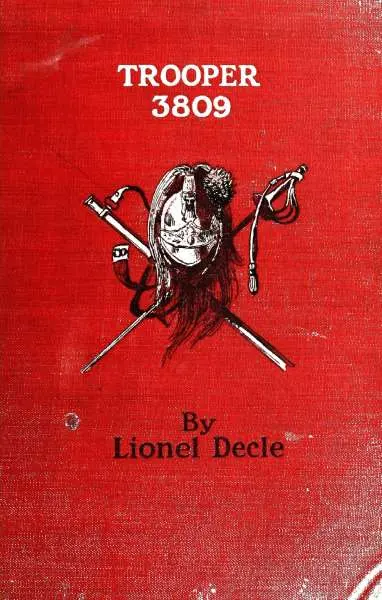
"Trooper 3809: A Private Soldier of the Third Republic" by Lionel Decle is an autobiographical account written in the late 19th century. The book presents the experiences of a young soldier during his conscription in the French cavalry, particularly highlighting his service in the 9th Dragoons. It provides insights into military life, the hardships faced by soldiers, and critiques the broader system of the French army amidst the backdrop of societal tensions, particularly those stemming from the Dreyfus Affair. The opening of the narrative introduces Lionel Decle as he prepares to join the military, detailing the recruitment process and the varied social backgrounds of his fellow soldiers. He humorously recounts the challenges he faces with ill-fitting uniforms and the ridicule he endures from superiors, while revealing the harsh realities of military discipline and the inequality within the ranks. Through his observations, Decle hints at the systemic issues within the French army that prey on inexperienced recruits and illuminate the decorum of military life, setting the stage for a deeper exploration of his personal military experiences and the institutional critiques that follow.
Introduction adapted from the source catalogue; source summaries may be automatically generated.
Free to read · English · 93,412 words · No account needed
MAKE TIME FOR A GOOD BOOK
On by default. Untick to stop anonymous reading totals. Each page counts after 10 seconds in view. How this works.
Anonymous counting is on unless you have switched it off.
I well remember the appearance one day of a young infantry Lieutenant putting any amount of "side" on, and adorned by a resplendent pair of patent leather top-boots.
"I say, Dragoon," he said quietly, slipping a two-franc piece into my hand, "that looks rather a nice little horse you're holding there."
"It isn't a horse, sir," I replied.
He looked much astonished, and said: "What! You don't call it a mule, I
suppose?"
"No, sir," I replied; "I call it a mare."
"Oh--ah--yes!" he said. "A mare, of course. Fact is, I'd hardly looked at her. Is she lively?" he added. "I don't like a beast with the paces of a donkey!"
"Yes, sir," I said; "you'll find her quite lively enough."
"But she's not vicious--not vicious?" he asked anxiously.
"Vice!" I replied. "She doesn't know what vice means. She likes to show
off a bit, that's all."
"Just what I like," said the Lieutenant. He asked me to get on her back, and after I had made her prance about a bit, I dropped the reins on her neck, and pulling a bit of sugar from my pocket I made her turn her head to eat it from my hand--a trick I had taught her.
"What a jolly little beast!" said the Lieutenant, as I dismounted; "mind," he added, "that you do not let anybody else ride her." "No fear, sir," I answered, upon which he tipped me another franc. I was careful to bring the mare last of all into the riding-school, having purposely put the stirrup-straps three holes too long for my man. The Lieutenant walked up to me. He looked at the girths as if he knew everything about a saddle, and then measured the stirrups, asking me if I thought they were right. "It's not for me, sir," I replied, "to presume to advise a gentleman like you, who probably has horses of his own." "Of course--of course," he replied, highly flattered. "I should say you're a rare 'un with horses," I again said. "How do you know?" he asked proudly. "I can tell a gentleman when I see one," I answered. "Just so," he went on patronisingly. "I suppose you've been in good houses before?" "That's just it, sir," I innocently replied. Just then our Capitaine Instructeur, who gave the lesson to the infantry officers, rode into the riding-school and ordered the officers to mount. We had to hold our charger's head and the off-stirrup, and the Lieutenant having got on to the mare remarked that the stirrups were rather long. "How many holes, sir?" "Just shorten those two holes," he said. Purposely I went on slowly shortening one of the stirrups, holding the mare's head at the same time, and, as I fully expected, before I had time to touch the second stirrup our Captain commanded the Lieutenants to fall in, and I let go at once the mare's head, and she began to prance about. Her rider, who knew nothing of riding, foolishly pulled on the bit and pressed his legs to keep his equilibrium. My mare, greatly resenting such treatment, darted forward into the middle of the riding-school, plunging and rearing. In a second or two the officer was landed on the ground, while our Captain coolly asked him what he was doing there? He replied that it had all happened because his stirrups were not right. In the meantime I had rushed to catch the mare, and as the Lieutenant came to remount, our Captain told me to put the stirrups to their proper length. While I was doing so the poor young Lieutenant whispered to me: "Mais c'est une bête terrible que cet animal."[40] I advised him not to use the curb, and not to touch her with his heels, as she did not like it. "It is very difficult not to use the heels," he replied, with dismay, "I wish I had never seen that beast."
Your reading position is saved on this browser. Take it to another device with a library code. Reading pages adapt to text, rather than matching a printed edition.
BEHIND THE BOOK
This eBook is for the use of anyone anywhere in the United States and most other parts of the world at no cost and with almost no restrictions whatsoever. You may copy it, give it away or re-use it under the terms of the Project Gutenberg License included with this eBook or online at www.gutenberg.org. If you are not located in the United States, you will have to check the laws of the country where you are located before using this eBook. Read the source licence.
The original source file, including credits and licence, is retained by this library. Request an original-format copy at no charge. Please include the book title and Project Gutenberg identifier #44470.
KEEP YOUR CURIOSITY GOING
Cécile Tormay

Moritz Busch
John L. Ransom
Frances Wright
Cécile Tormay

Mabel Potter Daggett