
Tropical nature, and other essays
Alfred Russel Wallace
THE CLASSIC COLLECTION · 1889
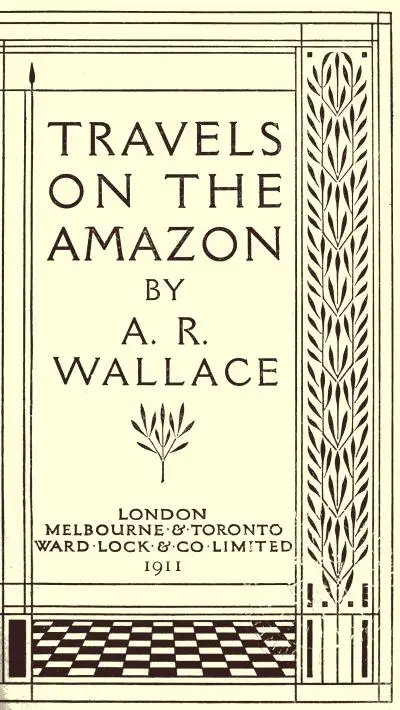
"Travels on the Amazon" by Alfred Russel Wallace is a scientific travelogue written in the mid-19th century. The narrative details Wallace's adventurous journey through the Amazon region, focusing on the natural history, geography, and diverse cultures he encounters. It aims to provide a vivid portrayal of both the splendor and complexities of this largely unexplored area of South America through Wallace’s observations and experiences. At the start of the narrative, Wallace recounts his arrival in the bustling city of Pará, where he is struck by the city's unique blend of cultures and its surrounding lush tropical environment. He describes the vibrancy of the local life, including the city's architecture and the variety of people inhabiting it. As he begins to explore further into the Amazon, he reveals his initial disappointment at not finding the exotic wonders he had imagined, only to later realize that the region's charm unfolds gradually with deeper exploration into its natural and cultural landscapes. The narrative beautifully captures his evolving understanding of the Amazon's ecology, biodiversity, and the daily life of its inhabitants, setting the stage for further discoveries throughout his travels.
Introduction adapted from the source catalogue; source summaries may be automatically generated.
Free to read · English · 150,649 words · No account needed
MAKE TIME FOR A GOOD BOOK
On by default. Untick to stop anonymous reading totals. Each page counts after 10 seconds in view. How this works.
Anonymous counting is on unless you have switched it off.
I have already stated that the natural productions of the tropics did not at first realise my expectations. This is principally owing to the accounts of picture-drawing travellers, who, by only describing the beautiful, the picturesque, and the magnificent, would almost lead a person to believe that nothing of a different character could exist under a tropical sun. Our having arrived at Pará at the end of the wet season, may also explain why we did not at first see all the glories of the vegetation. The beauty of the palm-trees can scarcely be too highly drawn; they are peculiarly characteristic of the tropics, and their varied and elegant forms, their beautiful foliage, and their fruits, often useful to man, give them a never-failing interest to the naturalist, and to all who are familiar with descriptions of the countries where they most abound. The rest of the vegetation was hardly what I expected. We found many beautiful flowers and climbing plants, but there are also many places which are just as weedy in their appearance as in our own bleak climate. But very few of the forest-trees were in flower, and most of them had nothing very peculiar in their appearance. The eye of the botanist, indeed, detects numerous tropical forms in the structure of the stems, and the form and arrangement of the leaves; but most of them produce an effect in the landscape remarkably similar to that of our own oaks, elms, and beeches. These remarks apply only to the immediate vicinity of the city, where the whole surface has been cleared, and the present vegetation is a second growth. On proceeding a few miles out of the town into the forest which everywhere surrounds it, a very different scene is beheld. Trees of an enormous height rise on every side. The foliage varies from the most light and airy to the darkest and most massive. Climbing and parasitic plants, with large shining leaves, run up the trunks, and often mount even to the highest branches, while others, with fantastic stems, hang like ropes and cables from their summits. Many curious seeds and fruits are here seen scattered on the ground; and there is enough to engage the wonder and admiration of every lover of nature. But even here there is something wanting that we expected to find. The splendid Orchideous plants, so much sought after in Europe, we had thought must abound in every luxuriant tropical forest; yet here are none but a few small species with dull brown or yellow flowers. Most of the parasitic plants which clothe the stems of every old or fallen tree with verdure, are of quite a different character, being ferns, Tillandsias, and species of Pothos and Caladium, plants resembling the Ethiopian lily so commonly cultivated in houses. Among the shrubs near the city that immediately attracted our attention were several Solanums, which are allied to our potato. One of these grows from eight to twelve feet high, with large woolly leaves, spines on both leaves and stem, and handsome purple flowers larger than those of the potato. Some other species have white flowers, and one much resembles our bitter-sweet (Solanum Dulcamara). Many handsome convolvuluses climb over the hedges, as well as several most beautiful Bignonias or trumpet-flowers, with yellow, orange, or purple blossoms. But most striking of all are the passion-flowers, which are abundant on the skirts of the forest, and are of various colours,--purple, scarlet, or pale pink: the purple ones have an exquisite perfume, and they all produce an agreeable fruit--the grenadilla of the West Indies. There are besides many other elegant flowers, and numbers of less conspicuous ones. The papilionaceous flowers, or peas, are common; cassias are very numerous, some being mere weeds, others handsome trees, having a profusion of bright yellow blossoms. Then there are the curious sensitive plants (Mimosa), looked upon with such interest in our greenhouses, but which here abound as common wayside weeds. Most of them have purple or white globular heads of flowers. Some are very sensitive, a gentle touch causing many leaves to drop and fold up; others require a ruder hand to make them exhibit their peculiar properties; while others again will scarcely show any signs of feeling, though ever so roughly treated. They are all more or less armed with sharp prickles, which may partly answer the purpose of guarding their delicate frames from some of the numerous shocks they would otherwise receive.
Your reading position is saved on this browser. Take it to another device with a library code. Reading pages adapt to text, rather than matching a printed edition.
Alfred Russel Wallace
Alfred Russel Wallace

Alfred Russel Wallace
Alfred Russel Wallace
BEHIND THE BOOK
This eBook is for the use of anyone anywhere in the United States and most other parts of the world at no cost and with almost no restrictions whatsoever. You may copy it, give it away or re-use it under the terms of the Project Gutenberg License included with this eBook or online at www.gutenberg.org. If you are not located in the United States, you will have to check the laws of the country where you are located before using this eBook. Read the source licence.
The original source file, including credits and licence, is retained by this library. Request an original-format copy at no charge. Please include the book title and Project Gutenberg identifier #53177.
KEEP YOUR CURIOSITY GOING
Wilfrid Scawen Blunt
Wilfrid Scawen Blunt

E. W. (Edgar Watson) Howe
Cécile Tormay

Moritz Busch
John L. Ransom