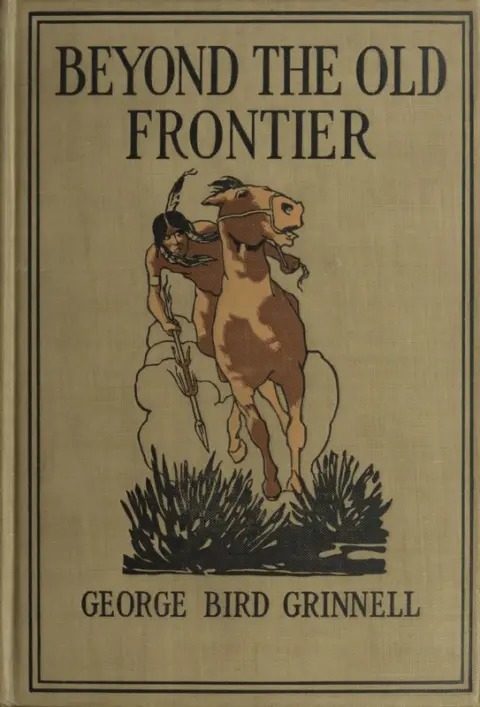
Beyond the Old Frontier: Adventures of Indian-Fighters, Hunters, and Fur-Traders
George Bird Grinnell
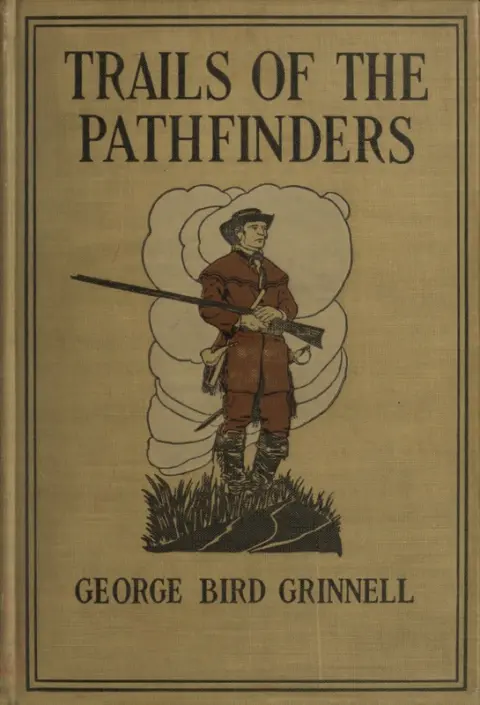
THE CLASSIC COLLECTION · 1911
"Trails of the Pathfinders" by George Bird Grinnell is a historical account written in the early 20th century. The book explores the adventures of early explorers and fur traders in North America during the 18th and 19th centuries, examining the challenges they faced as they ventured into uncharted territories. It also reflects on the impact these journeys had on the westward expansion and the interactions between European settlers and Indigenous tribes. The opening of the work introduces the time when much of the American West was still a vast unknown, populated only by Indigenous peoples and wildlife. Describing the historical and geographical context, Grinnell outlines the progress of settlers pushing westward, the significance of key figures such as Lewis and Clark, and the fur trade’s role in shaping American history. Through specific instances and narratives of various explorers, the text sets the stage for delving deeper into the lives, struggles, and contributions of these pathfinders who played pivotal roles in the unfolding story of the American Frontier.
Introduction adapted from the source catalogue; source summaries may be automatically generated.
Free to read · English · 121,207 words · No account needed
MAKE TIME FOR A GOOD BOOK
On by default. Untick to stop anonymous reading totals. Each page counts after 10 seconds in view. How this works.
Anonymous counting is on unless you have switched it off.
Toward the end of July the party camped at the mouth of the Walla Walla River, and met a number of Indians of that tribe. Twenty horses were purchased for Robert Stewart’s party, and its eleven members left the next day for St. Louis. The Walla Wallas were kind and gentle, yet dignified; as were also the Indians of the Pierced-Nose tribe, then called by the French Les Nez Percés, a name which they still retain. Their houses were large; some square, others oblong, and some conical; they were covered with mats fixed on poles, and varied from twenty to seventy feet in length. These people seemed well to do, and owned many horses, twenty-five of which the traders bought; and from this time on some of them proceeded by land, while the others dragged, paddled, or poled the canoes up the stream. It was at a Pierced-Nose village, at no very great distance from the Columbia, on Lewis River, that the party left their boats and canoes, cacheing them in the willow brush, and leaving them in charge of the chief. Here they secured about fifty horses for pack animals, and a few for riding, but not nearly enough to give a horse to each man. Travelling along up the stream, the thirty-two men who were in Cox’s company started for the country of the Spokanes. They had the usual incidents of travel--trouble with pack-horses, lack of grass for their animals, often lack of water for themselves; but before they had gone very far an adventure happened to the author which made it impossible for him to chronicle the doings of his party.
On the 17th of August they stopped for noon, and turned their horses out to graze in very good feed. Cox went apart some distance, and after feasting on the fruit that grew here, lay down and went to sleep. When he awoke, the sun was low and no sound was to be heard. His companions had vanished. It afterward appeared that they had started in three sections, at a little distance from one another, and that each division of the command supposed Cox to be with one of the other divisions. It was not until toward night that his absence was discovered; and in the meantime he had awakened and set off in pursuit of the party, but soon lost the trail. He was lightly clad in a shirt and pair of cotton trousers and moccasins. He had no arms, no knife, no means of making a fire. The first night out he plucked a quantity of grass, covered himself with that, and slept through the night. On the following day he journeyed eastward, and late in the evening saw, only a mile from him, two horsemen rapidly riding to the east. They were near enough so that he could see that they belonged to his party. He raced after them, shouted, waved his shirt, and did everything possible to attract their attention, but they did not see him. By this time his moccasins had absolutely gone to pieces, and this night the labor of pulling the grass cut his hands. It was two days since he had eaten. Birds and deer were numerous, and close to him fish were seen in the waters, but he could not catch them. That night, however, he found an abundant supply of cherries, which gave him a hearty supper; but the howling of wolves and “growling of bears” kept him awake much of the night. The following day he looked for horse tracks, and at night returned to the place where he had slept before. His feet were now so much lacerated by prickly-pears and the stones over which he had walked, that he was obliged to make bandages for them from the legs of his trousers. His fear of wolves and bears grew; and perhaps the man’s weak condition tempted the animals, for he tells us that they came quite close to him. As he wandered on, he occasionally saw horse tracks, but always old, yet showing that there were people in the country. On the night of the 25th, he found no water, and as he was about to lie down to sleep, he found that he was surrounded by snakes of every kind. “This was a peculiarly, soul-trying moment,” he tells us. “I had tasted no fruit since the morning before, and after a painful day’s march under a burning sun, could not procure a drop of water to allay my feverish thirst. I was surrounded by a murderous brood of serpents, and ferocious beasts of prey; and without even the consolation of knowing when such misery might have a probable termination. I might truly say with the royal psalmist that ‘the snares of death compassed me round about.’” But he lived through it. All the next day he travelled without water, and when at night he came to a stream, he was so weak that he fell into it, and was almost carried away, but caught himself by an overhanging bough and regained the shore. Here he found food and ate it eagerly. “On looking about for a place to sleep, I observed lying on the ground the hollow trunk of a large pine, which had been destroyed by lightning. I retreated into the cavity; and having covered myself completely with large pieces of loose bark, quickly fell asleep. My repose was not of long duration; for at the end of about two hours I was awakened by the growling of a bear, which had removed part of the bark covering and was leaning over me with his snout, hesitating as to the means he should adopt to dislodge me; the narrow limits of the trunk which confined my body prevented him from making the attack with advantage. I instantly sprang up, seized my stick, and uttered a loud cry, which startled him, and caused him to recede a few steps; when he stopped and turned about apparently doubtful whether he would commence an attack. He determined on an assault; but feeling that I had not sufficient strength to meet such an unequal enemy, I thought it prudent to retreat, and accordingly scrambled up an adjoining tree. My flight gave fresh impulse to his courage, and he commenced ascending after me. I succeeded, however, in gaining a branch, which gave me a decided advantage over him; and from which I was enabled to annoy his muzzle and claws in such a manner with my stick as effectually to check his progress. After scraping the bark some time with rage and disappointment, he gave up the task, and retired to my late dormitory, of which he took possession. The fear of falling off, in case I was overcome by sleep, induced me to make several attempts to descend; but each attempt aroused my ursine sentinel; and, after many ineffectual efforts, I was obliged to remain there during the rest of the night. I fixed myself in that part of the trunk from which the principal grand branches forked, and which prevented me from falling during my fitful slumbers. A little after sunrise, the bear quitted the trunk, shook himself, ‘cast a longing, lingering look’ toward me, and slowly disappeared in search of his morning repast. After waiting some time, apprehensive of his return, I descended and resumed my journey through the woods.”
Your reading position is saved on this browser. Take it to another device with a library code. Reading pages adapt to text, rather than matching a printed edition.
George Bird Grinnell

Caspar Whitney & George Bird Grinnell & Owen Wister
George Bird Grinnell
George Bird Grinnell
BEHIND THE BOOK
This eBook is for the use of anyone anywhere in the United States and most other parts of the world at no cost and with almost no restrictions whatsoever. You may copy it, give it away or re-use it under the terms of the Project Gutenberg License included with this eBook or online at www.gutenberg.org. If you are not located in the United States, you will have to check the laws of the country where you are located before using this eBook. Read the source licence.
The original source file, including credits and licence, is retained by this library. Request an original-format copy at no charge. Please include the book title and Project Gutenberg identifier #53897.
KEEP YOUR CURIOSITY GOING
Wilfrid Scawen Blunt
Wilfrid Scawen Blunt

E. W. (Edgar Watson) Howe
Cécile Tormay

Moritz Busch
John L. Ransom