
Transplanted
Gertrude Franklin Horn Atherton
THE CLASSIC COLLECTION · 1910
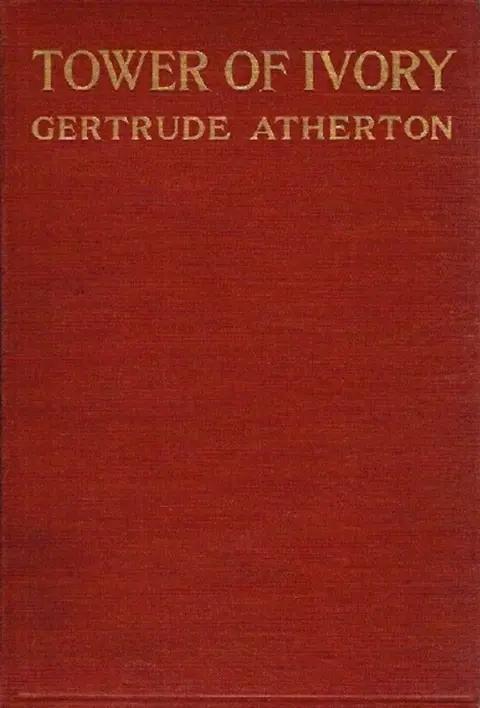
"Tower of Ivory: A Novel" by Gertrude Franklin Horn Atherton is a fictional narrative likely written in the early 20th century. The work appears to revolve around the intrigues of love and ambition in a richly described European setting, focusing on the lives of its main characters, John Ordham and Margarethe Styr, juxtaposed against the backdrop of an artistically vibrant Munich. Through the exploration of art and identity, the book seems to delve into themes of societal expectations, personal aspirations, and the complexities of relationships. At the start of the novel, we meet John Ordham, a young Englishman immersed in the cultural life of Munich, where he idolizes the talented singer Margarethe Styr, a figure of both allure and mystery. Ordham navigates the vibrant yet tumultuous world of society, attending operatic performances and social events while grappling with the distractions of his youth. Intrigued by both Margarethe's talents and her secrets, he is drawn to her, yet he hesitates to engage directly. Margarethe, on the other hand, presents herself as a formidable artist, marked by an enigmatic past and driven by an intense dedication to her craft. The opening chapters set the stage for a potential encounter between these two characters, hinting at deeper themes of ambition, love, and the desire for connection amid the complexities of their lives.
Introduction adapted from the source catalogue; source summaries may be automatically generated.
Free to read · English · 160,961 words · No account needed
MAKE TIME FOR A GOOD BOOK
On by default. Untick to stop anonymous reading totals. Each page counts after 10 seconds in view. How this works.
Anonymous counting is on unless you have switched it off.
Not the least of the causes which contributed to the waters of his bitterness, of his agitation and disgust, was the amusement of “the world” at his patent infatuation for a famous woman who had no time to waste on men, young or old. Styr no longer encouraged him to come to the opera house during rehearsals, no longer made the slightest effort to give him an occasional moment alone. He was unable to determine whether this final act of cruelty were due to fear or to a real pleasure in meeting so many of the distinguished and really important men of England; to whom, at all events, she gave her spare moments. Of coquetry he was sane enough to acquit her; he had faith in her honesty; but she could have taken no surer means to fan a passion now so fully recognized that he sometimes wondered grimly how much he would stake on ambition when the race came off. He was able to laugh, however, at the diabolical irony of his position. Of all the men that pursued her, he alone had been given the opportunity to look ridiculous, he alone suffered, was wounded in more than vanity. For the first time the source of the lavish expenditures which had given Styr the greatest of her triumphs occurred to him, and he reflected that did the Cuttings and “Bobby” know the truth and were permitted to turn the pages of his mind, they might justly exult. This did not mean that he felt the least compunction or even regret, merely that he was beginning to look life more squarely in the face, give more than a lofty casual glance to cause and effect.
But he had himself well in hand. He had never been more indolent of manner, more alert in conversation. When he discovered that he was pitied as an object of hopeless passion, he ceased to be seen constantly in the wake of the prima donna, deliberately devoted himself to other women. Puppy love had pinched his face, ruined his manners, bereft him of pride and self-control; but this slow and complete awakening of his masculinity matured his character, which his brain had outstripped, and substituted the sharp violent desires of the man, the arrogance of the conquering male, for the thin timid blades of spring. To two people only did he look older, his wife and Styr. From the minds of neither was he long absent. Styr understood, and for the first time in her knowledge of him was frightened. There was something portentous in his cool smiling self-control, like that of a soft-footed tiger biding his time. Mabel half understood and was terrified but resolute. She believed that he was infatuated and unfaithful, but knew the power of the wife over the mistress if able to keep her head and wait, believed that when separated from Styr he would forget like other men. Her mind was now alert; she would be amiable and tactful, and she would stand her ground and fight to the last ditch. She was in no condition to enter upon such an engagement, and had it not been for the good streak of Dutch obstinacy in her nature, she might not have proved equal even to spurts of determination to win or die. When overcome by a physical weariness which compelled her to lie down for hours instead of pacing the room revolving plans, she could only reflect bitterly upon the disabilities which made the game so pitifully uneven. Were she well and beautiful, she would not have hesitated to feign interest in the most notoriously “successful” of her admirers,—in royalty itself,—and bring Ordham to terms through his vanity, and, no doubt, through reawakened passion. Then she wept bitterly, not only at her present impotence but for her lost ideals. She might win back her husband, but her love for him would never again be quite free of that resentment and antagonism, even hatred, inevitable when the woman has been forced in one way or another to recognize the remorseless might of sex. Above all, she felt it to be monstrous that she, with youth and beauty and virtue, wealth and position, the fitness and the wish to be a good wife and an ornament to society, should be pitted in a death struggle with a waif from the streets, whose life had been unprintable, and who had left youth behind her. Such injustice terrified her, confused her standards. At first she prayed wildly, then she ceased to pray at all.
Your reading position is saved on this browser. Take it to another device with a library code. Reading pages adapt to text, rather than matching a printed edition.
Gertrude Franklin Horn Atherton
Gertrude Franklin Horn Atherton
Gertrude Franklin Horn Atherton
Gertrude Franklin Horn Atherton
BEHIND THE BOOK
This eBook is for the use of anyone anywhere in the United States and most other parts of the world at no cost and with almost no restrictions whatsoever. You may copy it, give it away or re-use it under the terms of the Project Gutenberg License included with this eBook or online at www.gutenberg.org. If you are not located in the United States, you will have to check the laws of the country where you are located before using this eBook. Read the source licence.
The original source file, including credits and licence, is retained by this library. Request an original-format copy at no charge. Please include the book title and Project Gutenberg identifier #56340.
KEEP YOUR CURIOSITY GOING
Coulson Kernahan

Maurice Baring
Frances Wright
Cécile Tormay

Frederic Jesup Stimson

W. H. P. (William Henry Pope) Jarvis