THE CLASSIC COLLECTION✦Sir Jasper Carew: His Life and ExperienceCLASSIC FREE BOOKS
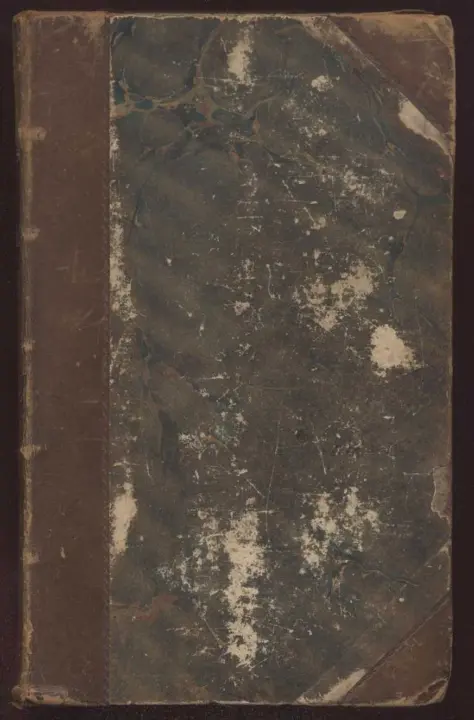
Sir Jasper Carew: His Life and Experience
Charles Lever
THE CLASSIC COLLECTION · 1896
"Tony Butler" by Charles James Lever is a novel written in the late 19th century. The story revolves around the life of Tony Butler, a young man who comes from a modest background, living with his widowed mother in a secluded cottage in Northern Ireland. As Tony grapples with his own limitations and aspirations, the narrative explores themes of identity, class, and ambition in a society with rigid social structures. The opening of the novel sets up the picturesque yet isolating setting of the Butler cottage, highlighting the close bond between Tony and his mother as she dedicates herself to his education. Despite her optimism, Tony struggles with learning and feels a deep sense of inadequacy, wondering how to carve out a meaningful career in a world that seems beyond his reach. The narrative introduces several secondary characters, including the influential Lyle family and the looming expectations they place upon Tony. As he prepares to venture to Liverpool for an uncertain future, the family dynamics and societal pressures become central to understanding Tony's ambitions, fears, and the complex world he must navigate.
Introduction adapted from the source catalogue; source summaries may be automatically generated.
Free to read · English · 199,606 words · No account needed
MAKE TIME FOR A GOOD BOOK
On by default. Untick to stop anonymous reading totals. Each page counts after 10 seconds in view. How this works.
Anonymous counting is on unless you have switched it off.
“I 'll have to ask Mrs. Butler's leave before I present you,” said she,
suddenly.
“Of course, I 'll await her permission.”
“The chances are she'll say no; indeed, it is all but certain she will.”
“Then I must resign myself to patience and a cigar till you come out again,” said he, calmly.
“Shall I say that there's any reason for your visit? Do you know any Butlers, or have you any relationship, real or pretended, with the family, that would make a pretext for coming to see her?”
Had Miss Graham only glanced as keenly at Maitland's features now as she had a few moments back, she might have seen a faint, a very faint, flush cross his cheek, and then give way to a deep paleness. “No,” said he, coldly, “I cannot pretend the shadow of a claim to her acquaintance, and I can scarcely presume to ask you to present me as a friend of your own, except in the common acceptation given to the word.”
“Oh, I'll do that readily enough. Bless your heart, if there was anything to be gained by it, I 'd call you my cousin, and address you as Norman all the time of the visit.”
“If you but knew how the familiarity would flatter me, particularly were
I to return it!”
“And call me Becky,--I hope! Well, you are a cool hand!”
“My friends are in the habit of amusing themselves with my diffidence
and my timidity.”
“They must be very ill off for a pastime, then. I used to think Mark Lyle bad enough, but his is a blushing bash-fulness compared to yours.”
“You only see me in my struggle to overcome a natural defect. Miss Graham,--just as a coward assumes the bully to conceal his poltroonery; you regard in me the mock audacity that strives to shroud a most painful modesty.”
She looked full at him for an instant, and then burst into a loud and joyful fit of laughter, in which he joined without the faintest show of displeasure. “Well, I believe you are good-tempered,” said she, frankly.
“The best in the world; I am very seldom angry; I never bear malice.”
“Have you any other good qualities?” asked she, with a slight mockery in
her voice.
“Yes,--many; I am trustful to the verge of credulity; I am generous to the limits of extravagance; I am unswerving in my friendships, and without the taint of a selfishness in all my nature.”
“How nice that is, or how nice it must be!”
“I could grow eloquent over my gifts, if it were not that my bashfulness might embarrass me.”
“Have you any faults?”
Your reading position is saved on this browser. Take it to another device with a library code. Reading pages adapt to text, rather than matching a printed edition.
BEHIND THE BOOK
This eBook is for the use of anyone anywhere in the United States and most other parts of the world at no cost and with almost no restrictions whatsoever. You may copy it, give it away or re-use it under the terms of the Project Gutenberg License included with this eBook or online at www.gutenberg.org. If you are not located in the United States, you will have to check the laws of the country where you are located before using this eBook. Read the source licence.
The original source file, including credits and licence, is retained by this library. Request an original-format copy at no charge. Please include the book title and Project Gutenberg identifier #33604.
KEEP YOUR CURIOSITY GOING
Coulson Kernahan

Maurice Baring
Frances Wright
Cécile Tormay

Frederic Jesup Stimson

W. H. P. (William Henry Pope) Jarvis