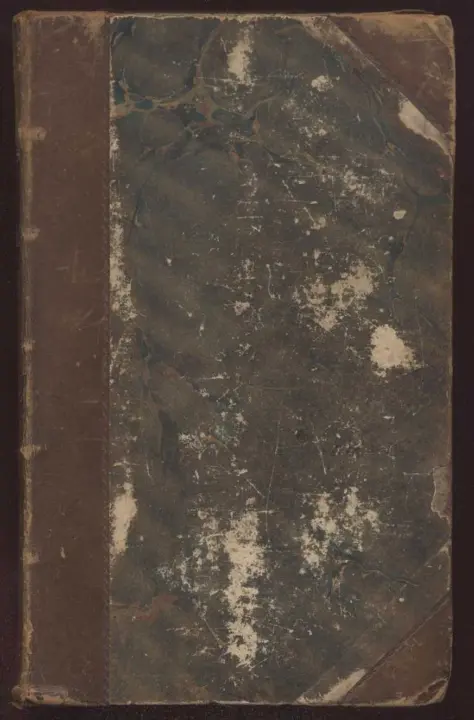
THE CLASSIC COLLECTION✦Sir Jasper Carew: His Life and ExperienceCLASSIC FREE BOOKS
Sir Jasper Carew: His Life and Experience
Charles Lever
THE CLASSIC COLLECTION · 1896
"Tony Butler" by Charles James Lever is a novel written in the late 19th century. The story revolves around the life of Tony Butler, a young man who comes from a modest background, living with his widowed mother in a secluded cottage in Northern Ireland. As Tony grapples with his own limitations and aspirations, the narrative explores themes of identity, class, and ambition in a society with rigid social structures. The opening of the novel sets up the picturesque yet isolating setting of the Butler cottage, highlighting the close bond between Tony and his mother as she dedicates herself to his education. Despite her optimism, Tony struggles with learning and feels a deep sense of inadequacy, wondering how to carve out a meaningful career in a world that seems beyond his reach. The narrative introduces several secondary characters, including the influential Lyle family and the looming expectations they place upon Tony. As he prepares to venture to Liverpool for an uncertain future, the family dynamics and societal pressures become central to understanding Tony's ambitions, fears, and the complex world he must navigate.
Introduction adapted from the source catalogue; source summaries may be automatically generated.
Free to read · English · 199,606 words · No account needed
MAKE TIME FOR A GOOD BOOK
On by default. Untick to stop anonymous reading totals. Each page counts after 10 seconds in view. How this works.
Anonymous counting is on unless you have switched it off.
As he had written so far, a noisy summons at his door aroused him; while the old Commodore's voice called out, “Maitland! Maitland! I want a word with you.” Maitland opened the door, and without speaking, returned to the fire, standing with his back to it, and his hands carelessly stuck in his pockets.
“I thought I 'd come over and have a cigar with you here, and a glass of brandy-and-water,” said Graham. “They 're hard at it yonder, with harp and piano, and, except holystoning a deck, I don't know its equal.”
“I 'm the more sorry for your misfortune, Commodore, that I am unable to alleviate it I 'm deep in correspondence just now, as you see there, and have a quantity more to do before bedtime.”
“Put it aside, put it aside; never write by candlelight. It ruins the eyes; and yours are not so young as they were ten years ago.”
“The observation is undeniable,” said Maitland, stiffly.
“You're six-and-thirty? well, five-and-thirty, I take it.”
“I 'm ashamed to say I cannot satisfy your curiosity on so natural a
subject of inquiry.”
“Sally says forty,” said he, in a whisper, as though the remark required caution. “Her notion is that you dye your whiskers; but Beck's idea is that you look older than you are.”
“I scarcely know to which of the young ladies I owe my deeper acknowledgments,” said Maitland, bowing.
“You're a favorite with both; and if it hadn't been for the very decided preference you showed, I tell you frankly they 'd have been tearing caps about you ere this.”
“This flattery overwhelms me; and all the more that it is quite
unexpected.”
“None of your mock modesty with me, you dog!” cried the Commodore, with a chuckling laugh. “No fellow had ever any success of that kind that he did n't know it; and, upon my life, I believe the very conceit it breeds goes halfway with women.”
“It is no small prize to learn the experiences of a man like yourself on
such a theme.”
“Well, I 'll not deny it,” said he, with a short sigh. “I had my share--some would say a little more than my share--of that sort of thing. You'll not believe it, perhaps, but I was a devilish good-looking fellow when I was--let me see--about six or eight years younger than you are now.”
“I am prepared to credit it,” said Maitland, dryly.
“There was no make-up about me,--no lacquering, no paint, no padding; all honest scantling from keel to taffrail. I was n't tall, it's true. I never, with my best heels on, passed five feet seven and a half.”
Your reading position is saved on this browser. Take it to another device with a library code. Reading pages adapt to text, rather than matching a printed edition.
BEHIND THE BOOK
This eBook is for the use of anyone anywhere in the United States and most other parts of the world at no cost and with almost no restrictions whatsoever. You may copy it, give it away or re-use it under the terms of the Project Gutenberg License included with this eBook or online at www.gutenberg.org. If you are not located in the United States, you will have to check the laws of the country where you are located before using this eBook. Read the source licence.
The original source file, including credits and licence, is retained by this library. Request an original-format copy at no charge. Please include the book title and Project Gutenberg identifier #33604.
KEEP YOUR CURIOSITY GOING
Coulson Kernahan

Maurice Baring
Frances Wright
Cécile Tormay

Frederic Jesup Stimson

W. H. P. (William Henry Pope) Jarvis