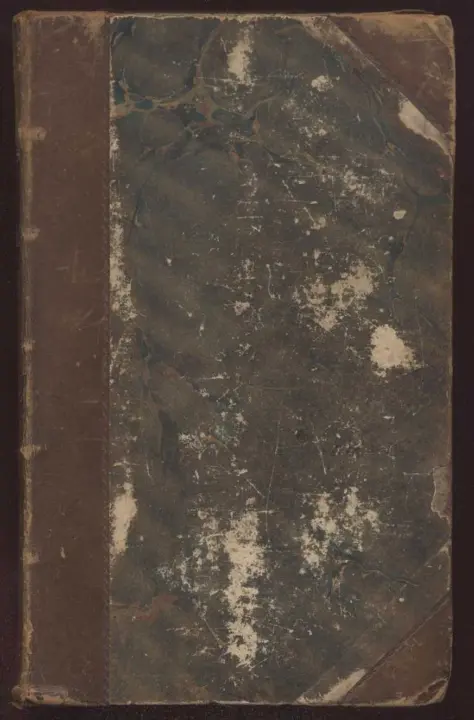
THE CLASSIC COLLECTION✦Sir Jasper Carew: His Life and ExperienceCLASSIC FREE BOOKS
Sir Jasper Carew: His Life and Experience
Charles Lever
THE CLASSIC COLLECTION · 1896
"Tony Butler" by Charles James Lever is a novel written in the late 19th century. The story revolves around the life of Tony Butler, a young man who comes from a modest background, living with his widowed mother in a secluded cottage in Northern Ireland. As Tony grapples with his own limitations and aspirations, the narrative explores themes of identity, class, and ambition in a society with rigid social structures. The opening of the novel sets up the picturesque yet isolating setting of the Butler cottage, highlighting the close bond between Tony and his mother as she dedicates herself to his education. Despite her optimism, Tony struggles with learning and feels a deep sense of inadequacy, wondering how to carve out a meaningful career in a world that seems beyond his reach. The narrative introduces several secondary characters, including the influential Lyle family and the looming expectations they place upon Tony. As he prepares to venture to Liverpool for an uncertain future, the family dynamics and societal pressures become central to understanding Tony's ambitions, fears, and the complex world he must navigate.
Introduction adapted from the source catalogue; source summaries may be automatically generated.
Free to read · English · 199,606 words · No account needed
MAKE TIME FOR A GOOD BOOK
On by default. Untick to stop anonymous reading totals. Each page counts after 10 seconds in view. How this works.
Anonymous counting is on unless you have switched it off.
“Pshaw!” said Tony, turning away angrily; and he muttered to himself as he walked off, “how stupid it is to take any view of life from a fellow who has never looked at it from a higher point than a hayloft!”
As the steamer rounded Fairhead, and the tall cliffs of the Causeway came into view, other thoughts soon chased away all memory of the poor country fellow. It was home was now before him,--home, that no humility can rob of its hold upon the heart; home, that appeals to the poorest of us by the selfsame sympathies the richest and greatest feel! Yes, yonder was Carrig-a-Rede, and there were the Skerries, so near and yet so far off. How slowly the great mass seemed to move, though it was about an hoar ago she seemed to cleave the water like a fish! How unfair to stop her course at Larne to land those two or three passengers, and what tiresome leave-takings they indulge in; and the luggage, too, they 'll never get it together! So thought Tony, his impatience mastering both reason and generosity.
“I 'll have to take the horses on to Derry, Master Tony,” said Waters, in an insinuating tone of voice, for he knew well what able assistance the other could lend him in any difficulty of the landing. “Sir Arthur thought that if the weather was fine we might be able to get them out on a raft and tow them into shore, but it's too rough for that.”
“Far too rough,” said Tony, his eyes straining to catch the well-known landmarks of the coast.
“And with blood-horses too, in top condition, there's more danger.”
“Far more.”
“So, I hope, your honor will tell the master that I did n't ask the captain to stop, for I saw it was no use.”
“None whatever. I 'll tell him,--that is, if I see him,” muttered Tony,
below his breath.
“Maybe, if there was too much sea 'on' for your honor to land--”
“What?” interrupted Tony, eying him sternly.
“I was saying, sir, that if your honor was forced to come on to Derry--”
“How should I be forced?”
“By the heavy surf, no less,” said Waters, peevishly, for he foresaw failure to his negotiation.
“The tide will be on the flood till eleven, and if they can't lower a boat, I 'll swim it, that's all. As to going on to Derry with you, Tom,” added he, laughing, “I'd not do it if you were to give me your four thoroughbreds for it.”
“Well, the wind 's freshening, anyhow,” grumbled Waters, not very sorry, perhaps, at the turn the weather was taking.
Your reading position is saved on this browser. Take it to another device with a library code. Reading pages adapt to text, rather than matching a printed edition.
BEHIND THE BOOK
This eBook is for the use of anyone anywhere in the United States and most other parts of the world at no cost and with almost no restrictions whatsoever. You may copy it, give it away or re-use it under the terms of the Project Gutenberg License included with this eBook or online at www.gutenberg.org. If you are not located in the United States, you will have to check the laws of the country where you are located before using this eBook. Read the source licence.
The original source file, including credits and licence, is retained by this library. Request an original-format copy at no charge. Please include the book title and Project Gutenberg identifier #33604.
KEEP YOUR CURIOSITY GOING
Coulson Kernahan

Maurice Baring
Frances Wright
Cécile Tormay

Frederic Jesup Stimson

W. H. P. (William Henry Pope) Jarvis