The pioneer
Geraldine Bonner
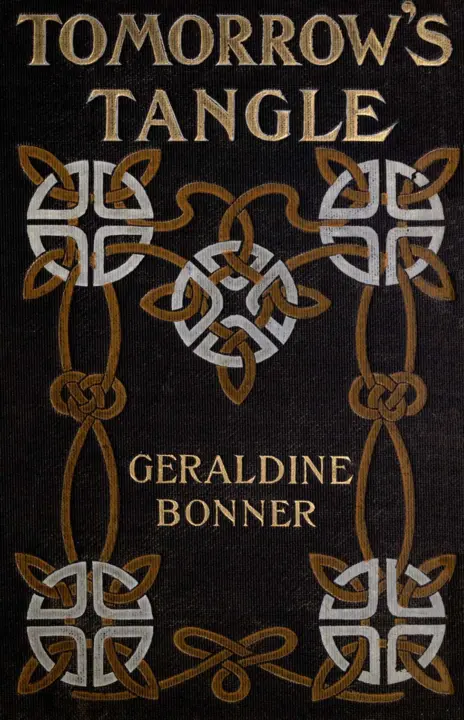
THE CLASSIC COLLECTION · 1903
"Tomorrow's Tangle" by Geraldine Bonner is a novel written in the early 20th century. Set against the backdrop of the harsh and unforgiving landscapes of the American West, the story follows Lucy, a young woman who endures a series of tragedies and trials as she navigates a life marked by hardship and loss. The book delves into themes of survival, resilience, and the complexities of human relationships in a world where both beauty and brutality coexist. The opening of the novel introduces Lucy and her struggles in the barren Utah desert, where she watches over her dying child while grappling with the weight of her past. This haunting scene sets the stage for a tale of survival as Lucy is alongside her husband, who shows little compassion during their ordeal. They are joined by another woman, who ultimately becomes the catalyst for a significant turning point in Lucy’s life. As the narrative unfolds, the reader is drawn into Lucy’s journey, not only through the desolation of her physical surroundings but also her emotional landscape as she finds herself in a new environment and facing new challenges. This compelling start promises a rich exploration of character, setting, and the determination to seek a better life amidst despair.
Introduction adapted from the source catalogue; source summaries may be automatically generated.
Free to read · English · 120,806 words · No account needed
MAKE TIME FOR A GOOD BOOK
On by default. Untick to stop anonymous reading totals. Each page counts after 10 seconds in view. How this works.
Anonymous counting is on unless you have switched it off.
There was a moment’s silence. The younger boy continued to smile and finger his knife, but it was evident he was not so easy in his mind. The stranger, now with difficulty restraining his laughter, turned again to Mariposa and said:
“If the lady had been in any way aggressing on the young gentleman’s comfort or convenience, it would not have been exactly justifiable, but comprehensible. But when you consider that her sole desire was to save him from eating something that would make him sick, then you begin to realize the seriousness of the offense. Oh, Benito, you’re in a bad way, I’m afraid!”
“I ain’t nothing of the kind,” said Benito, smiling and showing his dimples. “I ain’t done nothing more than Miguel.”
“I didn’t tell her to go to the devil,” exclaimed Miguel, in a loud,
combative voice.
“’Cause I said it first,” replied his brother, calmly. “You didn’t have
time.”
“Well, Benito,” said Barron, “I’ve got no use for you when you behave that way. There’s no excuse for it. You’ve used the worst kind of language to a lady who was trying to do a decent thing. I won’t take you this afternoon.”
The change on Benito’s face was sudden and piteous. The smile was frozen on his lips, he turned crimson, and said stammeringly, evidently hardly believing his ears:
“To see the balloon? Oh, Uncle Gam, you promised it for a week. Oh, I’d rather see the balloon than anything. Oh, Uncle Gam!”
“There’s no use talking; I won’t take a boy who behaves that way. I’m
angry with you.”
The man was absolutely grave and, Mariposa saw, spoke the truth when he said he was angry. The boy was about to plead, when probably a knowledge of the hopelessness of such a course silenced him. With a flushed face, he stood before the tribunal fighting with his tears, proud and silent. When he could no longer control them he turned and rushed into the house, his bursting sobs issuing from the hallway. Miguel charged after him.
“Oh, poor little fellow!” cried Mariposa; “how could you? Take him to see the balloon; do, please.”
Barron made no reply, sitting on the railing, frowning and abstracted. She turned her eyes on the other man. He was still smiling.
“Barron’s bringing up the boys,” he said, “and he takes it hard.”
“If I didn’t,” said the man from the railing, “who would? Heaven knows I don’t want to disappoint the poor little cuss, but somebody’s got to try and keep him in order.”
Your reading position is saved on this browser. Take it to another device with a library code. Reading pages adapt to text, rather than matching a printed edition.
Geraldine Bonner
Geraldine Bonner
Geraldine Bonner
Geraldine Bonner
BEHIND THE BOOK
This eBook is for the use of anyone anywhere in the United States and most other parts of the world at no cost and with almost no restrictions whatsoever. You may copy it, give it away or re-use it under the terms of the Project Gutenberg License included with this eBook or online at www.gutenberg.org. If you are not located in the United States, you will have to check the laws of the country where you are located before using this eBook. Read the source licence.
The original source file, including credits and licence, is retained by this library. Request an original-format copy at no charge. Please include the book title and Project Gutenberg identifier #67521.
KEEP YOUR CURIOSITY GOING
Coulson Kernahan

Maurice Baring
Frances Wright
Cécile Tormay

Frederic Jesup Stimson

W. H. P. (William Henry Pope) Jarvis