THE CLASSIC COLLECTION✦King TimeCLASSIC FREE BOOKS
King Time
Percy Keese Fitzhugh
THE CLASSIC COLLECTION · 1917
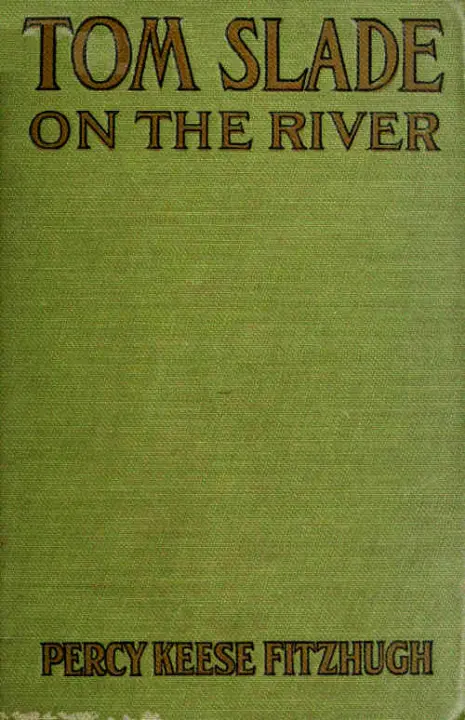
"Tom Slade on the River" by Percy Keese Fitzhugh is a children's novel written in the early 20th century. The book primarily focuses on the adventures of Tom Slade, a young boy scout, as he navigates the challenges of camp life and engages in various escapades with his friends. The story captures themes of friendship, bravery, and the spirit of scouting while highlighting the camaraderie among the scouts. The opening portion of the novel sets the stage for the arrival of the Bridgeboro Troop at Temple Camp, where young Raymond Hollister is anxiously waiting for his friends, particularly his patrol leader Garry Everson. During this time, Raymond reflects on his previous winter spent with Jeb Rushmore, with the enthusiasm of summer adventures ahead of him. As the boys eventually arrive, a mysterious and urgent message is discovered through the rescue of a carrier pigeon, which leads to a quest into the woods when Tom Slade takes the initiative to find those in need of help. The narrative not only introduces the delightful banter among the scouts but also establishes the importance of teamwork and selflessness inherent in the scouting tradition.
Introduction adapted from the source catalogue; source summaries may be automatically generated.
Free to read · English · 47,156 words · No account needed
MAKE TIME FOR A GOOD BOOK
On by default. Untick to stop anonymous reading totals. Each page counts after 10 seconds in view. How this works.
Anonymous counting is on unless you have switched it off.
Artie suggested a pale lavender. The salesman was greatly amused at their talk, but Tom was somewhat nettled and embarrassed, and he was glad when the completion of the business put an end to their nonsense.
On the way back to the boats and afterwards they speculated somewhat about the two scouts. There was no particular reason for their doing so except that the red-headed boy lingered in their minds with his trim appearance and his vivacious manner. Later, they recalled his jaunty, careless air, his friendly salute and his winning smile, almost with a shudder.
“We saw the kind of scout that Raymond believes in,” taunted Roy, upon their return to the boats. “He had on the full uniform, belt-axe, whistle, bugle, gaiters, hat——”
“That’s right,” said Mr. Ellsworth, winking at Raymond. “That’s what they’re for—to be worn.”
“There was only one thing wrong with him,” Roy concluded.
“What?” demanded Raymond, quite boldly for him.
“He was made of wood,” said Roy.
“Well, then, let him serve as a terrible example,” laughed the scoutmaster. “I dare say there are a few others like him.”
“Did he have any invisible badges on?” Doc asked slyly.
“Doesn’t Tomasso look too sweet for anything?” teased Roy.
“Cut it out,” grumbled Tom. “It’s time to get supper.”
They stayed at their mooring that night and lolled about on the cabin roof of the Honor Scout while Harry Stanton strummed his ukulele and those who knew the soft music of the far-off Pacific isles hummed the airs which seem nowhere so melodious as on the water. A group of small boys from the unkempt waterside section caught the strains and shuffled down, grimy and ragged, to sprawl upon the piles of lumber on the wharf, staring with wide open eyes, and listening. To them it was like a circus come to town. To the scouts it was a new kind of camp fire.
In the morning they were gone, doubtless leaving a refreshing memory with the youthful denizens of that squalid neighborhood.
The Hudson above Troy is no longer of majestic beauty and the voyagers were not sorry for the novelty which presented when they entered the canal. At least, they did not have to “squint” for hidden perils, though the locks played sorry havoc with the beautiful enameled freeboard of the Honor Scout.
“Cruising in a canal is about as exciting as a hike on Broadway,”
commented Roy.
“You said something,” agreed Connie.
It was not long, indeed, before the novelty began to wear off, and they were one and all glad when the boats emerged into the broad expanse of Lake Champlain.
Your reading position is saved on this browser. Take it to another device with a library code. Reading pages adapt to text, rather than matching a printed edition.
Percy Keese Fitzhugh
Percy Keese Fitzhugh
Percy Keese Fitzhugh
Percy Keese Fitzhugh
BEHIND THE BOOK
This eBook is for the use of anyone anywhere in the United States and most other parts of the world at no cost and with almost no restrictions whatsoever. You may copy it, give it away or re-use it under the terms of the Project Gutenberg License included with this eBook or online at www.gutenberg.org. If you are not located in the United States, you will have to check the laws of the country where you are located before using this eBook. Read the source licence.
The original source file, including credits and licence, is retained by this library. Request an original-format copy at no charge. Please include the book title and Project Gutenberg identifier #42155.
KEEP YOUR CURIOSITY GOING
Coulson Kernahan

Maurice Baring
Frances Wright
Cécile Tormay

Frederic Jesup Stimson

W. H. P. (William Henry Pope) Jarvis