THE CLASSIC COLLECTION✦King TimeCLASSIC FREE BOOKS
King Time
Percy Keese Fitzhugh
THE CLASSIC COLLECTION · 1917
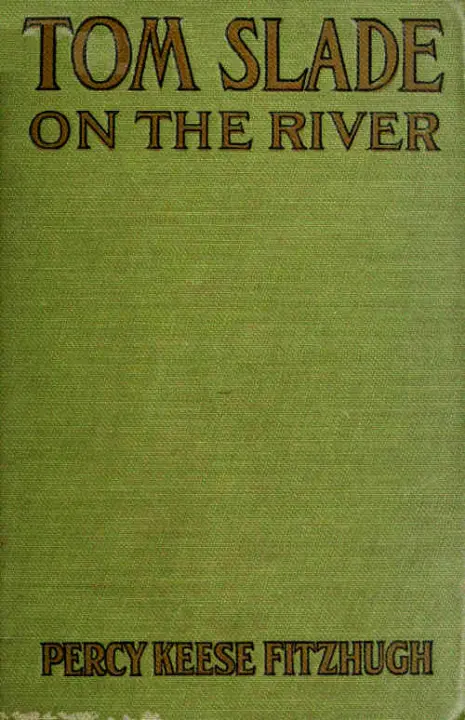
"Tom Slade on the River" by Percy Keese Fitzhugh is a children's novel written in the early 20th century. The book primarily focuses on the adventures of Tom Slade, a young boy scout, as he navigates the challenges of camp life and engages in various escapades with his friends. The story captures themes of friendship, bravery, and the spirit of scouting while highlighting the camaraderie among the scouts. The opening portion of the novel sets the stage for the arrival of the Bridgeboro Troop at Temple Camp, where young Raymond Hollister is anxiously waiting for his friends, particularly his patrol leader Garry Everson. During this time, Raymond reflects on his previous winter spent with Jeb Rushmore, with the enthusiasm of summer adventures ahead of him. As the boys eventually arrive, a mysterious and urgent message is discovered through the rescue of a carrier pigeon, which leads to a quest into the woods when Tom Slade takes the initiative to find those in need of help. The narrative not only introduces the delightful banter among the scouts but also establishes the importance of teamwork and selflessness inherent in the scouting tradition.
Introduction adapted from the source catalogue; source summaries may be automatically generated.
Free to read · English · 47,156 words · No account needed
MAKE TIME FOR A GOOD BOOK
On by default. Untick to stop anonymous reading totals. Each page counts after 10 seconds in view. How this works.
Anonymous counting is on unless you have switched it off.
“Did you see that hickory stick there—all worm-eaten?” Tom asked. “It had some carving on it. None of these trees are hickory trees.”
“I saw it but I didn’t notice the carving,” said Doc, surprised.
“Didn’t you notice there weren’t any hickory trees anywhere around
there?” Tom asked.
“No, I didn’t—I’m a punk scout—I must be blind,” said Doc.
“You’re good on first-aid,” said Tom, indifferently.
“How’d you know it was hickory?” Connie asked.
“Because I can tell hickory,” said Tom, bluntly, “and it’s being all worm-eaten proved it—kind of. That’s the trouble with hickory.”
They always had to make the best of Tom’s answers.
“I don’t know where he got the hickory stick,” he said, as he pushed along through the underbrush, “but he didn’t get it anywhere around here, that’s sure.”
“And he probably didn’t sit down that same day and carve things on it, either,” suggested Garry; “Tom, you’re a wonder.”
“He might have lived up here for two or three years after he fell,” said Doc reflectively. “Gee, it starts you thinking, don’t it?”
Connie shook his head. “It’s a mystery, all right,” said he.
The thought of the solitary man, disabled crippled, perhaps, living there on that lonely mountain after the terrible accident which had brought him there lent a new gruesomeness to their discoveries. And who but Tom Slade would have been able to keep an open mind and to see so clearly by the aid of trifling signs as to separate the two apparent catastrophes and see them as independent occurrences?
“Tomasso, you’re the real scout,” said Doc. “The rest of us are only
imitations.”
Tom said nothing. He was used to this kind of talk and was about as proof against such praise as a battleship is against a popgun. And just now he was thinking of other things. Yet if he could have looked into the future and seen there the extraordinary explanation of his discovery and known the strange adventures it would lead to, he might have paused, even on that all but hopeless errand of rescue, and looked again at those pathetic remains. But those things were to be reserved for another summer.
“Is there anything we can do? What do you suggest, Tom?” Garry asked, dropping his half flippant manner.
“I say, let’s shout again,” said Tom. “We must be nearly a mile farther on by now, and the brook’s getting around to the east, too.”
“Good and loud,” said Connie.
“All together—now!”
Your reading position is saved on this browser. Take it to another device with a library code. Reading pages adapt to text, rather than matching a printed edition.
Percy Keese Fitzhugh
Percy Keese Fitzhugh
Percy Keese Fitzhugh
Percy Keese Fitzhugh
BEHIND THE BOOK
This eBook is for the use of anyone anywhere in the United States and most other parts of the world at no cost and with almost no restrictions whatsoever. You may copy it, give it away or re-use it under the terms of the Project Gutenberg License included with this eBook or online at www.gutenberg.org. If you are not located in the United States, you will have to check the laws of the country where you are located before using this eBook. Read the source licence.
The original source file, including credits and licence, is retained by this library. Request an original-format copy at no charge. Please include the book title and Project Gutenberg identifier #42155.
KEEP YOUR CURIOSITY GOING
Coulson Kernahan

Maurice Baring
Frances Wright
Cécile Tormay

Frederic Jesup Stimson

W. H. P. (William Henry Pope) Jarvis