THE CLASSIC COLLECTION✦King TimeCLASSIC FREE BOOKS
King Time
Percy Keese Fitzhugh
THE CLASSIC COLLECTION · 1923
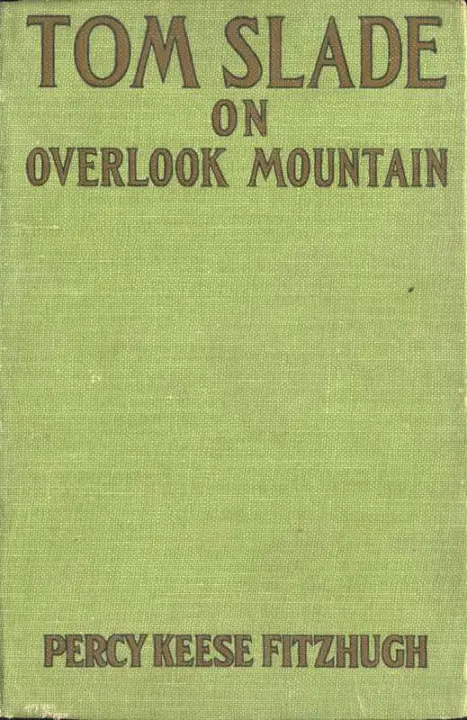
"Tom Slade on Overlook Mountain" by Percy Keese Fitzhugh is a novel written in the early 20th century. It follows the adventures of Tom Slade, a young scout who embodies the spirit of exploration and camaraderie. The story delves into themes of loyalty, resilience, and self-discovery as Tom encounters a cast of colorful characters, including an elderly wanderer named Caleb Dyker, whose past deeply intertwines with the book’s unfolding mysteries. At the start of the novel, Tom is introduced as an assistant at Temple Camp, feeling restless and yearning for adventure following his experiences in the war. His life takes an unexpected turn when he meets Caleb Dyker, a poignant figure displaced by the creation of the Ashokan Reservoir, which has submerged his hometown of West Hurley. Their meeting near a spring sets off a series of revelations, as Tom becomes increasingly drawn into Caleb's past and the lingering effects of his grandson's troubled history tied to a notorious murder. The opening establishes Tom's longing for adventure, his compassionate nature, and hints at the significant challenges and adventures he will face on Overlook Mountain.
Introduction adapted from the source catalogue; source summaries may be automatically generated.
Free to read · English · 40,408 words · No account needed
MAKE TIME FOR A GOOD BOOK
On by default. Untick to stop anonymous reading totals. Each page counts after 10 seconds in view. How this works.
Anonymous counting is on unless you have switched it off.
They walked in silence toward where the clearing led into the trail, then along the narrow, obstructed way till the obscure, overgrown path ran close to the precipitous descent and the distant reservoir lay full in view.
“That’s Woodstock,” said Tom; “that village about half-way.”
“Oh I’d love to go there,” said Audry. “They must be wonderful, those people, those artists and writers. They’re doing something really worth while. They’re all thinkers.”
“Well we’ve been doing a pretty good job on the mountain,” Tom said.
“Oh don’t mention that work in the same breath with the Woodstock colony,” said Audry. “Those people down there are all thinkers. You don’t mean to say that Fairgreaves and Whalen and Billy the sailor are constructive, do you? That they are originating anything, in the higher sense?”
“No, I suppose we’re not,” said poor Tom.
“You mean they, not you. I bet you’ve known a lot of girls that you never told me about—not dead ones.”
“Yes, I’ve known some dead ones,” laughed Tom. Then instantly remorseful for the pleasantry he said, “But I’ve learned more from you than any girl I ever met; gee, you’ve got more brains than all of them put together.”
“I suppose they invite you all over,” she said, “in Bridgeburgh where
you live?”
“Bridgeboro,” said Tom.
“Do you correspond with any? I bet there’s one you like especially.”
“I bet there is,” said Tom.
“Tell me her name?”
“It’s a funny name,” said Tom.
“Is she interested in serious things? Tell me her name.”
“Goodfellow,” said Tom. “She’s a boat.”
Audry seemed relieved. But she did not forget to be argumentative. “You can’t say that you love a boat,” she said.
“Well, I wasn’t exactly talking about love,” said Tom.
For a moment this seemed to silence her. Then she rose to the surface with the kind of analytical talk that always edified poor Tom. “You can’t say that you’re really fond of a thing that can’t offer any response. You can’t really say that you’re fond of a boat. You might say you like a boat.”
Tom seemed greatly impressed. “Well, I like that boat, you can bet,” he
said.
So then he told her about his only sweetheart, the Goodfellow. They sat on a rock some yards short of the first crevice and she listened to his recital of the charms of the gay little cruiser which it seemed he was permitted to like but not to love. He had never known before that there was anything technical about one’s feelings.
Your reading position is saved on this browser. Take it to another device with a library code. Reading pages adapt to text, rather than matching a printed edition.
Percy Keese Fitzhugh
Percy Keese Fitzhugh
Percy Keese Fitzhugh
Percy Keese Fitzhugh
BEHIND THE BOOK
This eBook is for the use of anyone anywhere in the United States and most other parts of the world at no cost and with almost no restrictions whatsoever. You may copy it, give it away or re-use it under the terms of the Project Gutenberg License included with this eBook or online at www.gutenberg.org. If you are not located in the United States, you will have to check the laws of the country where you are located before using this eBook. Read the source licence.
The original source file, including credits and licence, is retained by this library. Request an original-format copy at no charge. Please include the book title and Project Gutenberg identifier #59439.
KEEP YOUR CURIOSITY GOING
Coulson Kernahan

Maurice Baring
Frances Wright
Cécile Tormay

Frederic Jesup Stimson

W. H. P. (William Henry Pope) Jarvis