THE CLASSIC COLLECTION✦An outlaw’s diary: the CommuneCLASSIC FREE BOOKS
An outlaw’s diary: the Commune
Cécile Tormay
THE CLASSIC COLLECTION · 1902
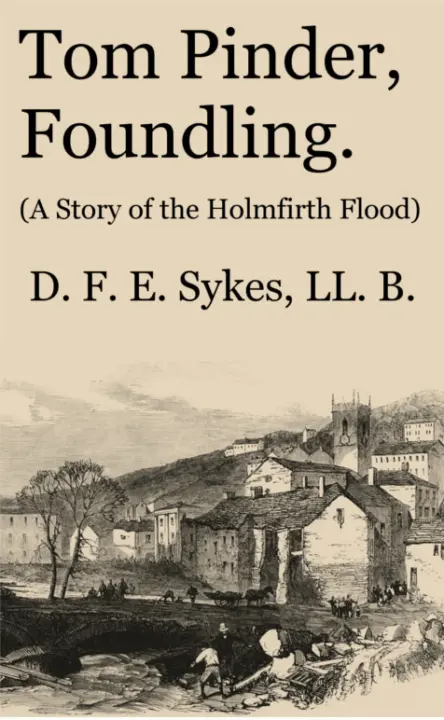
"Tom Pinder, Foundling: A Story of the Holmfirth Flood" by D. F. E. Sykes is a historical novel likely written in the early 20th century. The narrative centers around the life of Tom Pinder, a foundling, exploring the themes of Victorian values and the impact of the Holmfirth flood, set against the backdrop of West Yorkshire. The author portrays the struggles of common people during this time, providing insight into their lives and relationships. The opening of the story introduces the reader to the setting of the Hanging Gate, a public house in a small hamlet named Wakey, amidst a harsh winter night in the early 19th century. It vividly depicts the ambience of the inn and its patrons, including Mrs. Betty Schofield, the landlady; Molly, the local midwife; and Mr. William Black, the schoolmaster. Their conversations reflect the values and issues of the period, particularly concerning the local cooperative movement and communal life. The tranquility of the evening is disrupted when Aleck, a shepherd, discovers a snow-covered woman outside, leading to the revelation of an infant found with her, setting the stage for Tom's journey and the unfolding narrative of his identity and heritage.
Introduction adapted from the source catalogue; source summaries may be automatically generated.
Free to read · English · 84,472 words · No account needed
MAKE TIME FOR A GOOD BOOK
On by default. Untick to stop anonymous reading totals. Each page counts after 10 seconds in view. How this works.
Anonymous counting is on unless you have switched it off.
Ben Garside took to Methodism in his old age, and wore glossy black-cloth o' Sundays. But he always averred that he had fallen from his best ideals, and suffered the fear for his own soul to deaden his concern for the souls of others. He and Jack smoked many a pipe together in the calm summer months of peaceful and prosperous years, seated on the crumbling walls of Co-op. Mill, and mourning over a vanished dream.
The last sage dictum of Ben to be recorded in this narrative suggested its title. It was uttered on the eve of his friend's wedding.
"Aw reckon, Tom, as ha' tha'll be goin' to Aenon Chapel after tha'rt
wed?"
"Why so?" asked Tom
"Cost tha'rt one o' th' elect."
"I don't take you, Ben."
"Why, mon, doesn't elect mean chossen."
"I suppose so, Ben."
"Why, doesn't ta see, tha'rt Dorothy's choice?"
As many of the readers of "Dorothy's Choice" may not be conversant with the facts upon which that story is based, and as those who are may wish to have in concise form a historical narrative of that great catastrophe the following account, taken from the author's "History of Huddersfield and Its Vicinity," is appended:-- "The Bilberry Reservoir is situated at the head of a narrow gorge or glen, leading from the Holme Valley, at Holme Bridge, to a high bluff of land called Good Bent, and was supplied by two streams flowing through the cloughs running to the north-east and south-east of Good Bent, and draining the Moors of Holme Moss on the one side and the hills running up to Saddleworth on the other, including some thousands of acres of moorland. The confluence of the streams takes place between two large hills, called Hoobrook Hill and Lum Bank, and which run parallel to each other for a distance of about one hundred and fifty yards, when they open out and form an extensive oval basin of not less than three hundred yards diameter. The reservoir formed by blocking up the valley below the basin enclosing some twelve acres of surface. It was defective in its original construction, and was for a long time known to be in a most dangerous condition. At the time when the embankment gave way the quantity of water in the reservoir would not be less than eighty-six million two hundred and forty-eight thousand gallons or the enormous and fearful amount of three hundred thousand tons in weight. It burst a little before one o'clock in the morning of February 5th, 1852. The moon shone bright over the varied and romantic landscape; the streamlets swollen by recent heavy rains, filled the river to its banks; the industrious population were recruiting their wasted energies by sleep, when all at once, in a moment, the ponderous embankment was carried away by the force and weight of the pent-up waters, and desolation, ruin, and death overspread the rich and fertile valley for miles around. Trees were torn up by the roots and hurried onwards by the rush of waters, roaring with renewed fury as they swept each successive obstruction. The death-shrieks of scores were hushed as the flood passed forwards to new scenes of destruction and death, leaving in its track ponderous pieces of rock weighing many tons; the dead carcases of horses, cows, goats, and other cattle; here and there broken machinery, bags of wool, carding machines, dye pans, steam engine boilers, timber, spars, looms, furniture, and every variety of wreck. It would seem as if the whole body of accumulated waters had tumbled down the valley together, sweeping all before them, throwing a four-storey mill down like a thing of nought, tossing steam engine boilers about like feathers, and carrying death and destruction in their progress. In consequence of the narrowness between the mountain bluffs on either side, a vast volume of water was kept together, which spent its force upon Holmfirth, where the mass of houses, shops, mills, warehouses, and other buildings was expected to present a formidable barrier to its further progress. The check, however, was but momentary for the flood, with the mass of floating wreck which it carried in its bosom, shot through buildings, gutted some, and tumbled others down, until it found a further outlet and passed on, doing more or less damage lower down the valley at Thongs Bridge, Honley, and Armitage Bridge. After passing the last place mentioned the flood got more into the open country spreading itself out in the fields, and swelling the river down below Huddersfield. Much might be written on the details and incidents connected with the catastrophe. A few of the most striking may be mentioned. A few hundred yards below the reservoir stood a small building two storeys high called Bilberry Mill, the occupation of Joseph Broadhead, and used as a scribbling and dressing mill. The end of the mill was caught by the sudden swell, and about ten feet in length and its gable were washed down the valley. A little further down the valley, and on the same side as Bilberry Mill, stood Digley Upper Mill, lately occupied by Mr. John Furniss, woollen manufacturer. The building was a block of stone work, consisting of a factory, a large house, farm buildings, and outhouses. The end of the mill was washed away, a quantity of machinery, and a large amount of property in the shape of pieces, warps, etc., destroyed, and the gable end of the house, which was comparatively new, and the farm buildings swept away. In the latter were twelve tons of hay, three cows, a horse, and several head of poultry, which were all carried down the stream. A short distance below stood Digley Mill property, which consisted of a large building sixty yards square, four storeys high, built of stone; a weaving shed, containing thirty-four looms and other machinery; two dwelling-houses, seven cottages, farm, and other outbuildings, making altogether a small town. Adjacent to it in the valley and on the hill side were several fields of rich and fertile land; the whole forming a secluded but compact estate, valued at from twelve to fifteen thousand pounds. In one of the houses built on the river side, resided Mrs. Hirst, widow of the late George Hirst; and in the other resided Henry Beardsall, her son-in-law. The cottages were occupied by work people. The buildings formed a mass of solid stone work; but the torrent swept it away like a straw, carrying its ponderous machinery down the valley, and tossing its boilers about with the greatest ease. The engine was carried from its place, and became embedded in the mud lower down in the valley. The house built on the hill-side remained, but the cottages and all the other buildings were carried away, except a tall engine chimney. With the buildings were swept away four cows and a valuable horse. Bank End Mill was the next building in the valley. Its gable end and one window from the top to the bottom of the building were washed away. It was completely gutted in the lower rooms and the machinery in the upper storeys was thrown together in heaps. The dye house and stove, about twenty yards long, were completely cleared away, leaving nothing of them standing above the ground. The property belonged to Joe Roebuck whose loss was estimated at from two to three thousand pounds. The valley here widens until it reaches Holme Bridge, a small village composed of a few hundred inhabitants. The stream here is crossed by a bridge of one arch, about forty yards on one side of which stands Holme Church, in the centre of a graveyard; and about the same distance on the other side stood a toll gate and a number of dwellings. The bridge was swept away to its foundations. The wall surrounding the church was ravished by the speeding torrent, and the few trees planted in the yard were uprooted and carried down the stream. The interior of the church and the graveyard, as seen a day or two after the flood, presented a melancholy spectacle. Inside the church the water had risen about five feet. The floor was torn up--the pews had been floating, and the floor was covered with sand and mud several inches thick. In the centre of the aisle was laid the body of a goat which had been washed from Upper Digley Mill, and within a few feet of it, resting on the seat of one of the pews, lay the coffin and remains of a full grown man. Both these relics, with others not found, had been washed up from their graves by the whirlpools formed by the current, as it passed over the churchyard. The roads and fields from the reservoir downwards to this point were almost covered with huge masses of stone and other loose substances, of which the bank of the reservoir had been formed. Down to this point no human life appears to have been lost; but a little lower down, at the village of Hinchliffe Mill, the loss of life was very great. This village was on the left bank of the river, and consisted principally of cottage houses. The factory, which gave its name to the village, was a large building five storeys high, built on the opposite side of the river, and which remained, though the water had passed its first and second floor, and done great damage to the machinery. The mill was for some time blocked up to the windows in the second storey with huge pieces of timber, broken machinery, and wreck of various descriptions, which the torrent brought down from the mills above. On the village side of the river, six dwellings which formed "Water Street," were swept down and hurled forward with the flood, and thirty-five of the inmates perished. The following is the list of the occupants of the houses that were swept down. The first house was occupied by Miss Marsden and three others; the second by Joseph Todd, his wife and children; the third by J. Crosland and seven others; the fourth by James Metternick, and nine others; the fifth by Joshua Earnshaw, his little girl, and two sons; and the sixth by John Charlesworth, and nine others. The houses in this neighbourhood not washed down, were in some cases flooded into the chambers; and in one of them--the endmost left standing--were sixteen individuals, who saved their lives by getting on an adjoining roof. In the adjoining houses, five persons perished. Of the five persons who were overcome by the waters in the houses above Hinchliffe, three were drowned in one house, viz.--James Booth, his wife, and a lodger. In the same pile of buildings, the wife of Joseph Brook (who was endeavouring to save herself and child) was drowned with her infant in her arms. The country grows wilder below the last-mentioned place; and in the centre of a wide valley stood Bottom's Mill. From the open country here offered to the stream, the factory, which was a very large one, sustained comparatively little damage. After leaving the mill, the torrent assailed the machine shops and works of Messrs. Pogson and Co.; proceeding thence to Harpin's Victoria woollen mill, doing great damage. Machinery was broken, cottages carried away, and much property destroyed. At the time of the calamity twenty persons were in these cottages, and were only rescued by a communication being opened up through the walls with the end house which was rather higher up away from the flood. Here in one chamber, the poor creatures were huddled together expecting momentary death, when at last the water abated sufficiently to allow of their being removed which was scarcely effected before the house fell in. Within a short distance of Victoria Mill stood Dyson's Mill, which was occupied by Mr. Sandford in the yard of which Mr. Sandford resided. His house was swept away, and with it himself, his two children, and servant. The factory sustained very serious damage, both in its walls and machinery. Mr. Sandford was a person of considerable property, and is said to have had three or four thousand pounds in the house at the time. However this may be, it is known that he had just before been in treaty for the purchase of a considerable estate at Penistone, and that he had only that very week given instructions to a share broker at Huddersfield to buy for him a large amount of London and North Western Railway Stock. His life was also insured for a large sum. The bodies of Mr. Sandford's two daughters and his housekeeper were found a few days after the flood; but the body of Mr. Sandford was not found till February 20th. His friends wished to find the body in order to prove his death, without which they would not have been entitled to receive the amount secured by his policy of insurance. A reward of ten pounds was therefore offered in the first instance for the recovery of his body, which sum was increased to one hundred pounds. Procklington or Farrars' Upper Mill stood next, the large dyehouse of which was completely destroyed. The damage was estimated at two, or three thousand pounds; and one of the boilers, weighing six tons, was carried by the water to Berry Brow, a distance of three miles. These were the property of Mr. J. Farrar. The factory known as the Tower Mill, situate a little below, was built across the stream; but the torrent rushed onward and carried the greater portion of the mill along with it, leaving the two ends standing. The mill was filled with valuable machinery and woollen material, and was the property of Mr. Hodson Farrar. In the factory yard two children were drowned, and a little further down a third child was found dead. At the George Inn, near this place, nine bodies, principally recovered from the stream, were laid. At Holmfirth, hundreds of dwellings were inundated, some of them were filled to the top storey, compelling the inmates to escape through and get upon the roof for safety; indeed, the houses were thoroughly gutted. Happily no lives were lost; but the most heart-rending scenes occurred to the inhabitants of some of the houses on the opposite side of the street. On the left hand side of what the day previous was a narrow street stood the toll-bar house, kept by S. Greenwood, who, with his wife and child, were swept away. He was seen to come out of the house with a lighted candle in his hand return into the house, close the door after him, and in a moment or two not a vestige of the house was to be seen. Lower down, on the same side of the street, was an extensive warehouse occupied by Messrs. Crawshaw, carriers, which was swept away. To the left were some extensive blue dye works; the destruction of these premises was most complete. A little above the mill and between that building and a stable, stood two small cottages, one occupied by S. Hartley and his family, the other by R. Shackleton and family. All the members save three of these families, were swept away with the cottages. Victoria Bridge was dismantled. On the right hand side, over the bridge, was a new row of shops, built in the modern style, every one of which was flooded. The loss sustained by the various occupants was great. At Smithy Place (a hamlet about two miles north-east of Holmfirth) the water rose to a fearful height, and but for the alarm which had been given, the loss of life must have been great. Whole families had to leave their beds and betake themselves out of the way of the flood with no other covering than what they slept in some quite naked; and the shrieks and cries of children for their parents, and parents for their children, were heartbreaking. The damage done in this place was very great. From Honley to Armitage Bridge the wreck was fearful, the front and back walls of St. Paul's Church, at the latter place, being completely destroyed. Two children were found dead above the "Golden Fleece" Inn, one of them on the water side, the other washed into a tree; they were conveyed to the inn. A young woman, about eighteen years of age, was found dead and naked in a field near Armitage Fold. Beyond this part there was some slight damage done. From a statement published soon after the occurrence, it appears, that so far as could be ascertained, 77 lives had been lost, 38 of them being adults, and 39 children; 26 were married, 12 unmarried, and 12 children were left destitute. The estimated damage and summary of property, in addition to the loss from devastated land under tillage was as follows :--Buildings destroyed: 4 mills, 10 dyehouses, 3 stoves, 27 cottages, 7 tradesmen's houses, 7 shops, 7 bridges, 10 warehouses, 8 barns and stables. Buildings seriously injured: 5 dyehouses, 17 mills, 3 stoves, 129 cottages, 7 tradesmen's houses, 44 large shops, 11 public-houses 5 bridges, 1 county bridge, 4 warehouses, 13 barns, 3 places of worship, and 2 iron foundries. Hands thrown out of work: Adults, 4,896; children, 2,142 total, 7,038. The total loss of property was estimated at £250,000. The coroner's jury, who viewed the bodies of the persons drowned by the flood, in addition to the usual verdict of "Found drowned," made a statement to the effect that the Holme Reservoir Commissioners had been guilty of great and culpable negligence in allowing the reservoir to remain for several years in a dangerous state, with a full knowledge thereof, and that had they been in the position of a private individual or firm they would certainly have subject themselves to a verdict of "Manslaughter." Generous subscriptions were raised for the sufferers in various parts of the country, amounting altogether to £68,000. A large surplus of the fund was left after relieving the sufferers, which was devoted towards the erection of five almshouses, the first stone being laid in 1856. A brass plate bears the following inscription:--
Your reading position is saved on this browser. Take it to another device with a library code. Reading pages adapt to text, rather than matching a printed edition.
BEHIND THE BOOK
This eBook is for the use of anyone anywhere in the United States and most other parts of the world at no cost and with almost no restrictions whatsoever. You may copy it, give it away or re-use it under the terms of the Project Gutenberg License included with this eBook or online at www.gutenberg.org. If you are not located in the United States, you will have to check the laws of the country where you are located before using this eBook. Read the source licence.
The original source file, including credits and licence, is retained by this library. Request an original-format copy at no charge. Please include the book title and Project Gutenberg identifier #54121.
KEEP YOUR CURIOSITY GOING
Cécile Tormay

Moritz Busch
Coulson Kernahan
John L. Ransom

Maurice Baring
Frances Wright