THE CLASSIC COLLECTION✦Found in the Philippines: The Story of a Woman’s LettersCLASSIC FREE BOOKS
Found in the Philippines: The Story of a Woman’s Letters
Charles King
THE CLASSIC COLLECTION · 1908
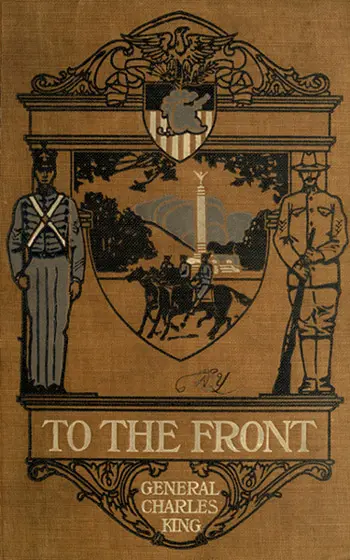
"To the Front: A Sequel to Cadet Days" by Charles King is a historical novel written in the early 20th century. The story follows George Montrose Graham, a recent graduate of West Point, as he embarks on his military career against a backdrop of personal and national tensions. The novel explores themes of duty, honor, and the challenges faced by young officers as they transition from civilian life to military service. The opening of the book introduces a grand graduation day at West Point, where Cadet George Graham stands out among his peers as he receives his diploma. The narrative then shifts to his mother and other family members, who are both excited and anxious about his future as an army officer. As the cadets celebrate their achievements, an ominous telegram signals trouble in the mining community connected to George's father, setting the stage for Graham's immediate commitment to service and action. The plot hints at the challenges George will face as he confronts both external conflicts in the mining sector and the struggles of stepping into his new role as a lieutenant.
Introduction adapted from the source catalogue; source summaries may be automatically generated.
Free to read · English · 45,171 words · No account needed
MAKE TIME FOR A GOOD BOOK
On by default. Untick to stop anonymous reading totals. Each page counts after 10 seconds in view. How this works.
Anonymous counting is on unless you have switched it off.
The adjutant was figuring in his note-book. He closed it, arose at once, and looked about him. Officers and men, the six troops, or companies, of the detachment seemed busy at breakfast. The aroma of soldier coffee floated on the keen morning air, and under the gentle, genial influence of the welcome stimulant men began to thaw out, and presently the firesides were merry with chaff and fun. A curious and sympathetic group, to be sure, hovered about the survivors of the hunters' camp, listening rather doubtfully to their tales, for the tales had taken devious turns under cross-examination. But for the bloody trappings of Pete Gamble's horse, telling mutely of tragedy, the hunters might have met only contempt and scoffing. Indian scares were old as the trails.
"Whose turn is it?" presently questioned the major, as Mr. Willard started away. The adjutant halted and faced about:
"'D' and 'F' troops, sir."
"All right. One officer and twenty men from each will be enough."
And then came striding forward, with quick, elastic steps, a young soldier in dark-blue campaign shirt and riding-breeches, a three weeks' stubble on his clear-cut, sun-burned face, a field-glass slung over one shoulder, a leather-covered note-book tucked away inside his cartridge-belt. No sign of rank was visible about his dress, yet there could be little doubt of it. The major looked up, smiling.
"Fast going for topographical notes yesterday, wasn't it, Mr. Connell?"
"I'm afraid so, sir. Indeed, I'm ashamed to submit them, but I wouldn't have missed this scout for a month's pay, all the same."
"Well, we don't often see the engineers on this sort of duty. I'm glad the general sent you along. What is it, captain?" he broke off, turning to a gray-mustached, choleric-looking veteran who came suddenly upon them, breathing rather hard.
"Major," began the stout man, impetuously, "this makes the third time in ten days 'F' Troop's been ordered on side scout, or some part of it. Now we're ordered back to hunt up what's left of that wagon camp, and--"
"One moment, captain," interposed the commander, placidly. "You say 'we.' My orders are only one officer and twenty men."
"Well, I have only one officer with me, and he don't belong," was the querulous rejoinder. "He's simply a volunteer with the command, and so utterly inexperienced that I consider it necessary to go myself. I can't trust my men to a mere boy just out of school."
"That will do, Captain Garrett," said the major, promptly, yet with absolutely unruffled tone and temper. "If I can, you may. Mr. Graham has had more experience than you are aware of."
Your reading position is saved on this browser. Take it to another device with a library code. Reading pages adapt to text, rather than matching a printed edition.
Charles King

Charles King

Charles King

Charles King
BEHIND THE BOOK
This eBook is for the use of anyone anywhere in the United States and most other parts of the world at no cost and with almost no restrictions whatsoever. You may copy it, give it away or re-use it under the terms of the Project Gutenberg License included with this eBook or online at www.gutenberg.org. If you are not located in the United States, you will have to check the laws of the country where you are located before using this eBook. Read the source licence.
The original source file, including credits and licence, is retained by this library. Request an original-format copy at no charge. Please include the book title and Project Gutenberg identifier #19952.
KEEP YOUR CURIOSITY GOING
Cécile Tormay

Moritz Busch
Coulson Kernahan
John L. Ransom

Maurice Baring
Frances Wright