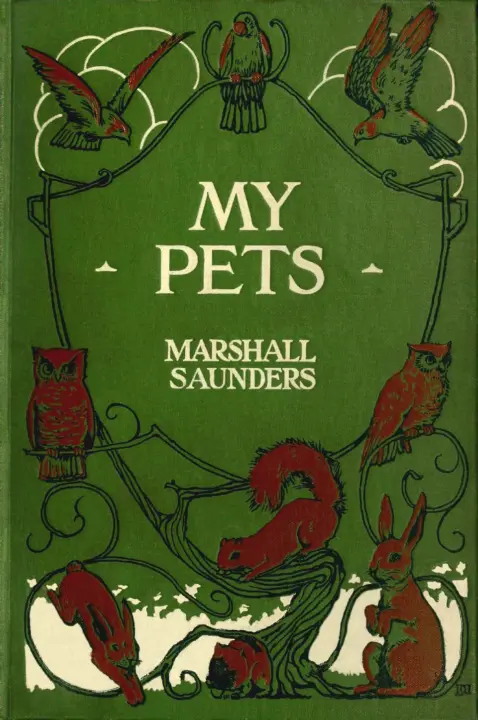
My pets
Marshall Saunders
THE CLASSIC COLLECTION · 1901
"'Tilda Jane: An Orphan in Search of a Home. A Story for Boys and Girls" by Marshall Saunders is a children's novel written in the early 20th century. The story follows 'Tilda Jane, a spirited little girl who has run away from an orphan asylum and is in search of a home where she can feel safe and loved. The narrative captures her adventures and misadventures as she tries to navigate a world unfamiliar to her, carrying with her both the hope and challenges that come with being an orphan. The opening of the story introduces us to 'Tilda Jane hiding in a thicket, excitedly observing the return of crows, symbolic of a new beginning. She is distinctively characterized as crafty and determined, shown through her interactions with a young man she nicknames “creamery shark.” Together, they embark on a journey, with 'Tilda planning to escape to Australia, believing there orphans are treated better than in her current home. The narrative begins to unfold 'Tilda's fears and desires, giving readers a glimpse into her character, her bond with a dog named Gippie, and her resolve to find a place where she truly belongs. As the story continues, the complexities of 'Tilda’s journey and her quest for identity and belonging will likely develop further, providing layers of both humor and poignancy.
Introduction adapted from the source catalogue; source summaries may be automatically generated.
Free to read · English · 52,682 words · No account needed
MAKE TIME FOR A GOOD BOOK
On by default. Untick to stop anonymous reading totals. Each page counts after 10 seconds in view. How this works.
Anonymous counting is on unless you have switched it off.
"Yes, sir," she said, dreamily, and lingering over her syllables as if she found a new pleasure in the exercise of speech. "You had so much to say, an' the other people had so much to say, that the room seemed chock full o' words. They was flyin' round ever so thick, but I couldn't ketch one o' them."
"Well, now, you've got to quit lying and tell us where you come from," said the assistant inspector, roughly. "You've got to be sent home to-morrow."
"Sent home?" she repeated wonderingly.
"Yes--to Canada. Now tell us the name of the place you belong to, or we'll ship you to some poorhouse."
"Do I come from Canada?" she asked, with a mystified air.
Jack jogged his assistant's elbow. "Seemed to me there was the smell
of a ship about her."
"Not so," responded Blakeman who prided himself on distinguishing nationalities. "She hasn't any European accent. She's from right over the border here somewhere."
"Do you know my mother?" 'Tilda Jane was eagerly asking the assistant
inspector.
"Yes--know her well. If you don't speak up I'll telegraph her."
"Oh, I'll never speak then," said 'Tilda Jane, taking a step forward and clasping her hands painfully. "Oh, sir, do telegraph to my mother. I've cried an' cried at nights 'bout her. Other girls has mothers that loves 'em an' strokes their hair, an' nobody ever done that to me. They just thinks I'm ugly. Oh, sir, oh, sir, won't you telegraph my mother?"
Blakeman had gone too far. The sentiment of the meeting was against him, and a low murmur warned him to retract what he had said.
"I don't mean your mother," he said, sulkily. "I mean your guardians."
"The lady-boards?" asked 'Tilda Jane, eagerly.
He did not know what "lady-boards" meant, but his silence seemed to give assent to her question, and losing the bright flush that had come to her face, she relapsed into painful and profound silence.
He would never know how he had hurt her. Oh! what hopes he had raised, and in an instant dashed to the ground, and checking the convulsion in her throat, she stealthily wiped away the two tears of distress coursing down her thin cheeks.
"Don't cry," said Jack, kindly. "I expect you're tired from your trip in the train yesterday. You had a pretty long one, hadn't you?"
"Yes, Mr. Jack," she said, humbly. "It seemed kind o' long, but I'm not used to bein' drug along so mighty quick."
"I didn't notice her till we passed McAdam Junction," whispered Jack to his assistant. "She's come down from some place in New Brunswick. Telegraph McAdam."
Your reading position is saved on this browser. Take it to another device with a library code. Reading pages adapt to text, rather than matching a printed edition.
Marshall Saunders
Marshall Saunders
Marshall Saunders
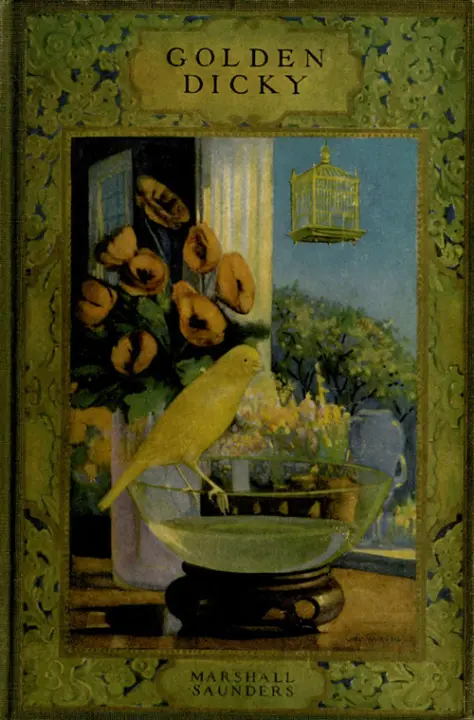
Marshall Saunders
BEHIND THE BOOK
This eBook is for the use of anyone anywhere in the United States and most other parts of the world at no cost and with almost no restrictions whatsoever. You may copy it, give it away or re-use it under the terms of the Project Gutenberg License included with this eBook or online at www.gutenberg.org. If you are not located in the United States, you will have to check the laws of the country where you are located before using this eBook. Read the source licence.
The original source file, including credits and licence, is retained by this library. Request an original-format copy at no charge. Please include the book title and Project Gutenberg identifier #52018.
KEEP YOUR CURIOSITY GOING
Coulson Kernahan

Maurice Baring
Frances Wright
Cécile Tormay

Frederic Jesup Stimson

W. H. P. (William Henry Pope) Jarvis