THE CLASSIC COLLECTION✦A dead man’s diaryCLASSIC FREE BOOKS
A dead man’s diary
Coulson Kernahan
THE CLASSIC COLLECTION · 1883
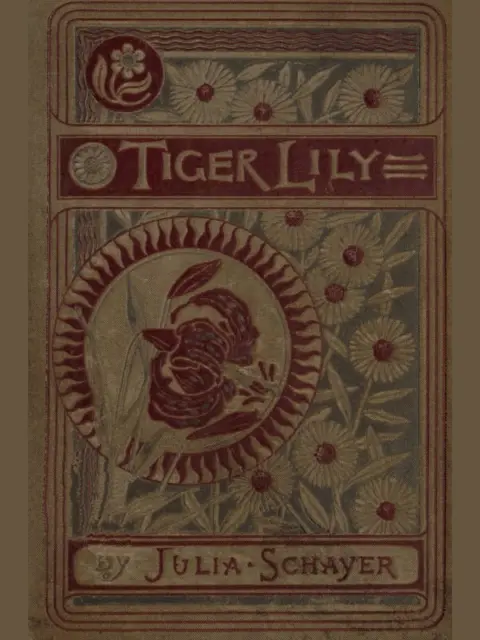
"Tiger Lily and Other Stories" by Julia Thompson von Stosch Schayer is a collection of short stories written in the late 19th century. The primary narrative appears to center around the character Lilly O'Connell, a young girl of mixed heritage who faces societal prejudice and internal struggles stemming from her identity. The themes of resilience, identity, and societal rejection are likely explored as Lilly navigates her relationships and self-perception in a world that harshly judges her based on her appearance and lineage. At the start of the narrative, we are introduced to Lilly O'Connell during a chaotic scene at her school, where she defends a younger boy from bullies, showcasing her courageous and fiery spirit. This physical confrontation accentuates her uniqueness, with her red hair and mixed heritage drawing both ridicule and admiration from her peers. The unfolding dialogue hints at her feelings of isolation and her desperate quest for belonging in a society that ostracizes her. As the story progresses, we see Lilly grappling with deep-seated emotions related to her identity, particularly her longing for acceptance while contending with the harsh realities of prejudice. Her interactions with the compassionate young man, Roger Horton, hint at potential developments in her journey toward self-acceptance and her fight against the societal limitations placed on her.
Introduction adapted from the source catalogue; source summaries may be automatically generated.
Free to read · English · 48,872 words · No account needed
MAKE TIME FOR A GOOD BOOK
On by default. Untick to stop anonymous reading totals. Each page counts after 10 seconds in view. How this works.
Anonymous counting is on unless you have switched it off.
She talked with him a great deal, too, in her careless, fluent way, or rather to him, for the conversation on Granger's part was limited to an occasional eager question, a flash of his fine eyes, or an appreciative smile at some witty turn. She talked of many things, but with delicate tact avoided such themes as might prove embarrassing to an unsophisticated mind--including books.
It was, therefore, with a little shock of surprise that she one day found him buried in the pages of Tennyson, a volume of whose poems she had left upon the carriage seat while she and Lill explored a neighboring pasture for raspberries.
He was lying at full length in the sweet-fern, one arm beneath his head, his face eager and absorbed. He did not notice her approach, and she had been standing near him for some moments before he became aware of her presence. Then, closing the book, he sprang to his feet.
"So you read poetry, Mr. Granger?" she said, arching her straight brows
slightly.
"Sometimes," he answered. "I have read a good many of the old poets. My grandfather left a small library, which came into my possession."
"Then you have read Shakspere----" began the lady.
"Yes," interrupted Granger, "Shakspere, and Milton, and Pope, and Burns. Is it so strange?" he asked, turning upon her one of his swift glances. "If one plowman may write poetry another plowman may read it, I suppose."
He spoke with bitterness, a deep flush rising to his temples.
"And have you read modern authors too?"
"Very little. There is no opportunity here. There is nothing here--nothing!" he answered, flinging aside a handful of leaves he had unwittingly gathered.
"Why do you stay here, then?"
The question sprang, almost without volition, from her lips. She would gladly have recalled it the next moment.
Granger gave her another swift glance, and it seemed to her that he repressed the answer which was already upon his tongue. A strange, bitter smile came to his lips.
"Let the shoemaker stick to his last," he said, turning toward the carriage, "and the farmer to his plow."
During the homeward ride he was even more taciturn than usual. At the door, Mrs. Jerome offered him the volume of Tennyson. He accepted it, with but few words.
When he returned it, a few days later, it opened of itself, and between the leaves lay a small cluster of wild roses, and some lines were faintly marked. They were these:
"When she made pause, I knew not for delight;
Because with sudden motion from the ground
She raised her piercing orbs and filled with light
The interval of sound."
Your reading position is saved on this browser. Take it to another device with a library code. Reading pages adapt to text, rather than matching a printed edition.
BEHIND THE BOOK
This eBook is for the use of anyone anywhere in the United States and most other parts of the world at no cost and with almost no restrictions whatsoever. You may copy it, give it away or re-use it under the terms of the Project Gutenberg License included with this eBook or online at www.gutenberg.org. If you are not located in the United States, you will have to check the laws of the country where you are located before using this eBook. Read the source licence.
The original source file, including credits and licence, is retained by this library. Request an original-format copy at no charge. Please include the book title and Project Gutenberg identifier #61068.
KEEP YOUR CURIOSITY GOING
Coulson Kernahan

Maurice Baring
Frances Wright
Cécile Tormay

Frederic Jesup Stimson

W. H. P. (William Henry Pope) Jarvis