THE CLASSIC COLLECTION✦A dead man’s diaryCLASSIC FREE BOOKS
A dead man’s diary
Coulson Kernahan
THE CLASSIC COLLECTION · 1883
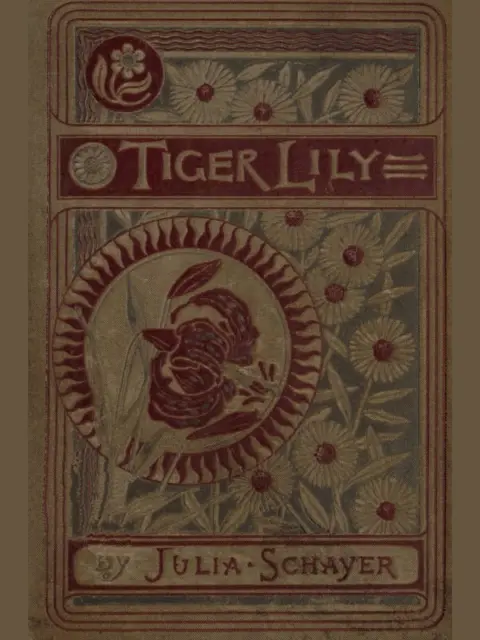
"Tiger Lily and Other Stories" by Julia Thompson von Stosch Schayer is a collection of short stories written in the late 19th century. The primary narrative appears to center around the character Lilly O'Connell, a young girl of mixed heritage who faces societal prejudice and internal struggles stemming from her identity. The themes of resilience, identity, and societal rejection are likely explored as Lilly navigates her relationships and self-perception in a world that harshly judges her based on her appearance and lineage. At the start of the narrative, we are introduced to Lilly O'Connell during a chaotic scene at her school, where she defends a younger boy from bullies, showcasing her courageous and fiery spirit. This physical confrontation accentuates her uniqueness, with her red hair and mixed heritage drawing both ridicule and admiration from her peers. The unfolding dialogue hints at her feelings of isolation and her desperate quest for belonging in a society that ostracizes her. As the story progresses, we see Lilly grappling with deep-seated emotions related to her identity, particularly her longing for acceptance while contending with the harsh realities of prejudice. Her interactions with the compassionate young man, Roger Horton, hint at potential developments in her journey toward self-acceptance and her fight against the societal limitations placed on her.
Introduction adapted from the source catalogue; source summaries may be automatically generated.
Free to read · English · 48,872 words · No account needed
MAKE TIME FOR A GOOD BOOK
On by default. Untick to stop anonymous reading totals. Each page counts after 10 seconds in view. How this works.
Anonymous counting is on unless you have switched it off.
They stood on the steps a moment in silence; then he held out his hand. As she placed her own within it, she felt it tremble. Their eyes met, too, with a swift recognition, and a sharp, sweet pain went through her heart. She forced herself to turn her eyes away, and to say quietly:
"Good-evening and good-bye, Mr. Madison."
The young man dropped her hand and drew a quick breath.
"Good-bye, Thirza," he said; "may you find it all that you anticipate.
Good-bye."
And the score or more pairs of inquisitive eyes at the surrounding windows saw young Mr. Madison walk calmly away, and Miss Bradford, with equal calmness, enter her boarding-house.
The next morning Thirza went away, and, the nine days' wonder being over, she was dropped almost as completely out of the thoughts and conversation of the people of Millburn as if she had never existed.
We will not accompany her on her travels. There was a time when we might have done so; but alas, for the story-writer of to-day! Picture-galleries, palaces, and châlets, noble, peasant, and brigand, gondolas, volcanoes, and glaciers,--all are as common and familiar to the reader of the period as bonbons. It is enough to say that Thirza wandered now in reality, as she had so often in fancy, through the storied scenes which had so charmed her imagination; often doubting if it were indeed herself, or if what she saw were not the baseless fabric of a vision, which the clanging of the factory bell might demolish at any moment.
Sue's astonishment when Thirza, after two months in England and Scotland, walked one day into her apartment in Paris, quite unannounced, can be imagined. She wondered and conjectured, but, as her unexpected guest was neither awkward nor badly dressed, accepted the situation gracefully, and ended by really enjoying it. After delightful Paris days, came Italy, Germany, and Switzerland, and then more of Paris, and at last came a time when inexorable figures showed Thirza plainly that she must think of returning to America.
"Thirza," protested Sue, "you really mustn't go."
For answer Thirza held up to view a travel-stained porte-monnaie.
"Perhaps we can arrange it somehow," persisted her cousin, vaguely. "You might take a situation as governess, you know;" these words were uttered doubtfully, and with a deprecating glance at the face opposite.
"Thank you!" responded Thirza. "I don't feel a call in that direction. I think, on the whole, I'd prefer weaving cotton."
"You'll find it unendurable!" groaned Sue.
"Well, que voulez-vous?" responded her cousin, lightly; a quick ear would have noted the slight tremor in her voice. "I have had a glorious holiday."
Your reading position is saved on this browser. Take it to another device with a library code. Reading pages adapt to text, rather than matching a printed edition.
BEHIND THE BOOK
This eBook is for the use of anyone anywhere in the United States and most other parts of the world at no cost and with almost no restrictions whatsoever. You may copy it, give it away or re-use it under the terms of the Project Gutenberg License included with this eBook or online at www.gutenberg.org. If you are not located in the United States, you will have to check the laws of the country where you are located before using this eBook. Read the source licence.
The original source file, including credits and licence, is retained by this library. Request an original-format copy at no charge. Please include the book title and Project Gutenberg identifier #61068.
KEEP YOUR CURIOSITY GOING
Coulson Kernahan

Maurice Baring
Frances Wright
Cécile Tormay

Frederic Jesup Stimson

W. H. P. (William Henry Pope) Jarvis