THE CLASSIC COLLECTION✦A dead man’s diaryCLASSIC FREE BOOKS
A dead man’s diary
Coulson Kernahan
THE CLASSIC COLLECTION · 1883
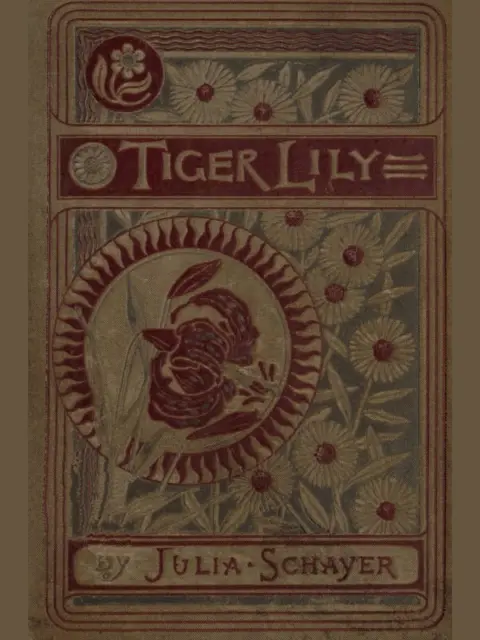
"Tiger Lily and Other Stories" by Julia Thompson von Stosch Schayer is a collection of short stories written in the late 19th century. The primary narrative appears to center around the character Lilly O'Connell, a young girl of mixed heritage who faces societal prejudice and internal struggles stemming from her identity. The themes of resilience, identity, and societal rejection are likely explored as Lilly navigates her relationships and self-perception in a world that harshly judges her based on her appearance and lineage. At the start of the narrative, we are introduced to Lilly O'Connell during a chaotic scene at her school, where she defends a younger boy from bullies, showcasing her courageous and fiery spirit. This physical confrontation accentuates her uniqueness, with her red hair and mixed heritage drawing both ridicule and admiration from her peers. The unfolding dialogue hints at her feelings of isolation and her desperate quest for belonging in a society that ostracizes her. As the story progresses, we see Lilly grappling with deep-seated emotions related to her identity, particularly her longing for acceptance while contending with the harsh realities of prejudice. Her interactions with the compassionate young man, Roger Horton, hint at potential developments in her journey toward self-acceptance and her fight against the societal limitations placed on her.
Introduction adapted from the source catalogue; source summaries may be automatically generated.
Free to read · English · 48,872 words · No account needed
MAKE TIME FOR A GOOD BOOK
On by default. Untick to stop anonymous reading totals. Each page counts after 10 seconds in view. How this works.
Anonymous counting is on unless you have switched it off.
"I'll be darned!" he muttered, "I'll be darned if I hain't got the mitten!" and, discomfited and sore, the Adonis of Jones' Hill disappeared in the evening shadows.
Jane was watching his departure from behind the curtain of the sitting-room window. In all probability her gentle bosom had never been the scene of such a struggle as was now going on beneath the chaste folds of her striped calico gown. She could not doubt the object of Mr. Stebbins's visit, nor its obvious result. Astonishment, incredulity, curiosity, in turn possessed her.
"Waal!" she soliloquized, as the curtain fell from her trembling fingers, "the way some folks fly in the face of Providence doos beat the master!"
Thirza, too, had observed her suitor as he strode away, with an expression of scorn upon her face which finally gave way to one of amusement, ending in a laugh--a curious hysterical laugh. A moment later she had thrown herself upon the bed, and Jane, who in a state of curiosity bordering on asphyxia, came up to the door soon after, heard a sound of sobbing, and considerately went away.
Thirza had her cry out; every woman knows what that means, and knows, too, the mingled sense of relief and exhaustion which follows. It was fully an hour later when she arose and groped her way down into the sitting-room where Jane sat knitting zealously by the light of a small lamp. That person's internal struggles commenced afresh, and a feeling of indignation quite comprehensible burnt in her much-vexed bosom as Thirza, after lighting another lamp, bade her "good-night," and went out of the room, leaving her cravings for fuller information unassuaged.
Once more in her room, Thirza seated herself before the glass and began to loosen the heavy dark braids of her hair. Upon the bureau lay an open letter, and leaving the soft tresses half undone, she took it up and re-read it. When she had finished she let it fall upon her lap and fell to thinking. The letter was from her cousin Sue, and bore a foreign post-mark, and from thinking over its contents Thirza fell into reflections upon the diversity of human fate, particularly her own and Sue's. They had commenced life under very similar circumstances. Both had been born about the same time, and in the town of Millburn. Both were "only" children, the fathers of both were mechanics of the better class, and the girls were closely associated up to their fourteenth year, as play-fellows and school-mates. Sue was an ordinary sort of a girl, with a rather pretty blonde face; Thirza, a bright, original creature, with a mobile, dark face, which almost every one turned to take a second look at; a girl who, with a book, almost any book, became oblivious of all else. Her father was a man of more than ordinary intelligence, of a dreamy, speculative turn of mind, and subject to periods of intense depression. When she was about fourteen years old, Thirza went one evening to the barn to call her father to supper. Receiving no answer to her call, she entered, and there, in a dim corner, she saw something suspended from a beam,--something she could never efface from her memory. A shaft of sunlight full of dancing motes fell athwart the distorted face, whose smile she must now forever miss, and across the rigid hands which would never again stroke her hair in the old fond, proud way. In that moment the child became a woman. She went to the nearest neighbor, and without scream or sob told what she had seen--then she went to her mother. Soon after, the young girl whose school-life was thus early ended took her place at a loom in one of the great cotton-mills, and there she remained for more than ten years, the sole support and comfort of her weak, complaining mother, who from the dreadful day that made her a widow, sank into hopeless invalidism. One year previously to the commencement of this story she had been laid to rest. In the meantime Sue had grown up, and married a "smart fellow," who after a few years of successful business life in New York, had been sent by some great firm to take charge of a branch establishment in Paris.
Your reading position is saved on this browser. Take it to another device with a library code. Reading pages adapt to text, rather than matching a printed edition.
BEHIND THE BOOK
This eBook is for the use of anyone anywhere in the United States and most other parts of the world at no cost and with almost no restrictions whatsoever. You may copy it, give it away or re-use it under the terms of the Project Gutenberg License included with this eBook or online at www.gutenberg.org. If you are not located in the United States, you will have to check the laws of the country where you are located before using this eBook. Read the source licence.
The original source file, including credits and licence, is retained by this library. Request an original-format copy at no charge. Please include the book title and Project Gutenberg identifier #61068.
KEEP YOUR CURIOSITY GOING
Coulson Kernahan

Maurice Baring
Frances Wright
Cécile Tormay

Frederic Jesup Stimson

W. H. P. (William Henry Pope) Jarvis