THE CLASSIC COLLECTION✦A dead man’s diaryCLASSIC FREE BOOKS
A dead man’s diary
Coulson Kernahan
THE CLASSIC COLLECTION · 1883
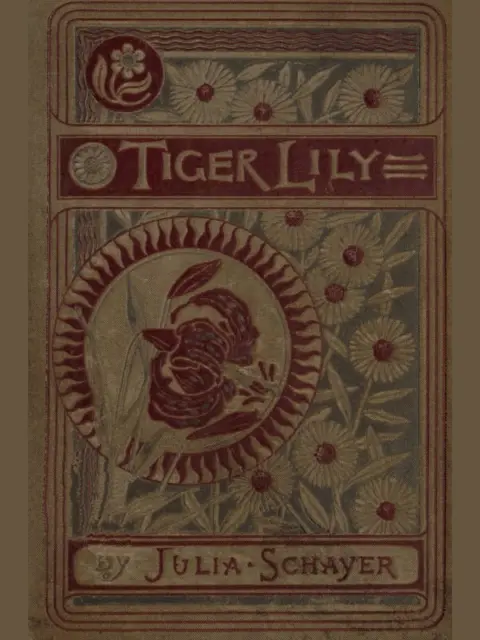
"Tiger Lily and Other Stories" by Julia Thompson von Stosch Schayer is a collection of short stories written in the late 19th century. The primary narrative appears to center around the character Lilly O'Connell, a young girl of mixed heritage who faces societal prejudice and internal struggles stemming from her identity. The themes of resilience, identity, and societal rejection are likely explored as Lilly navigates her relationships and self-perception in a world that harshly judges her based on her appearance and lineage. At the start of the narrative, we are introduced to Lilly O'Connell during a chaotic scene at her school, where she defends a younger boy from bullies, showcasing her courageous and fiery spirit. This physical confrontation accentuates her uniqueness, with her red hair and mixed heritage drawing both ridicule and admiration from her peers. The unfolding dialogue hints at her feelings of isolation and her desperate quest for belonging in a society that ostracizes her. As the story progresses, we see Lilly grappling with deep-seated emotions related to her identity, particularly her longing for acceptance while contending with the harsh realities of prejudice. Her interactions with the compassionate young man, Roger Horton, hint at potential developments in her journey toward self-acceptance and her fight against the societal limitations placed on her.
Introduction adapted from the source catalogue; source summaries may be automatically generated.
Free to read · English · 48,872 words · No account needed
MAKE TIME FOR A GOOD BOOK
On by default. Untick to stop anonymous reading totals. Each page counts after 10 seconds in view. How this works.
Anonymous counting is on unless you have switched it off.
"I hope to gracious she aint comin' down sick!" she reflected. "You aint got backache and pains in your limbs, have you?" she inquired, with thinly veiled anxiety.
Lilly laughed.
"No, Miss Bullins; nothing of the kind."
"I thought you looked kind o' queer," said the good creature,
coloring.
"I am only a little tired; not sick."
She came and stood by the old maid's chair, as she sat warming her feet at the stove, and laid her hand on the thin gray hair.
"Good-night, Miss Bullins."
"Good-night, dear. Hadn't you better drink a cup of pepper-tea before
you go to bed?"
"No, thank you; I am only tired."
She sat by the window of her little bedroom over the shop a long time before lighting her lamp. Dim and dark, the river wound along, its surface gleaming here and there faintly through the leafless branches of the willows. Overhead, the solemn stars shone coldly. The houses along its banks were already dark and silent. At some involuntary movement, her hand fell upon a soft white mass of needle-work which strewed the table near her, and the contact seemed to rouse her. She rose, lit the lamp, folded the dainty, lace-trimmed garment, and made it into a parcel with some others which she took from a drawer, and went to bed. It was long before she slept, but the early morning found her asleep, with a peaceful smile upon her face.
The next day, being Saturday, was a busy one, for let Death stalk as he will, people must have their Sunday gear. The little shop was full at times, and feminine tongues and fingers flew without cessation, mixing millinery and misery in strange confusion.
"You don't say that's Mis' Belden's bonnet, with all them flowers on it? Well, I never! And she a member!"
"Why, you're a member, too, ain't you, Mis' Allen?" says another, with a glance at the first speaker's head, where feathers of various hues waved majestically.
"Oh, you mean my feathers?" was the spirited answer. "Feathers an' flowers is different things. You must draw the line somewhere, an' I draw it at feathers."
"They say one o' the women died up to the pest-house yesterday," said one woman, in the midst of an earnest discussion as to the comparative becomingness of blue roses and crimson pansies.
"Dear me!" said Miss Bullins, compassionately, "an' not a woman there to lay her out! Sarah Gatchell didn't go up till to-day."
"They don't lay 'em out," remarked the other, unconcernedly, holding a brilliant pansy against her bilious countenance. "They roll 'em up in the sheet they die on, and bury 'em in the pasture."
Your reading position is saved on this browser. Take it to another device with a library code. Reading pages adapt to text, rather than matching a printed edition.
BEHIND THE BOOK
This eBook is for the use of anyone anywhere in the United States and most other parts of the world at no cost and with almost no restrictions whatsoever. You may copy it, give it away or re-use it under the terms of the Project Gutenberg License included with this eBook or online at www.gutenberg.org. If you are not located in the United States, you will have to check the laws of the country where you are located before using this eBook. Read the source licence.
The original source file, including credits and licence, is retained by this library. Request an original-format copy at no charge. Please include the book title and Project Gutenberg identifier #61068.
KEEP YOUR CURIOSITY GOING
Coulson Kernahan

Maurice Baring
Frances Wright
Cécile Tormay

Frederic Jesup Stimson

W. H. P. (William Henry Pope) Jarvis