THE CLASSIC COLLECTION✦A dead man’s diaryCLASSIC FREE BOOKS
A dead man’s diary
Coulson Kernahan
THE CLASSIC COLLECTION · 1883
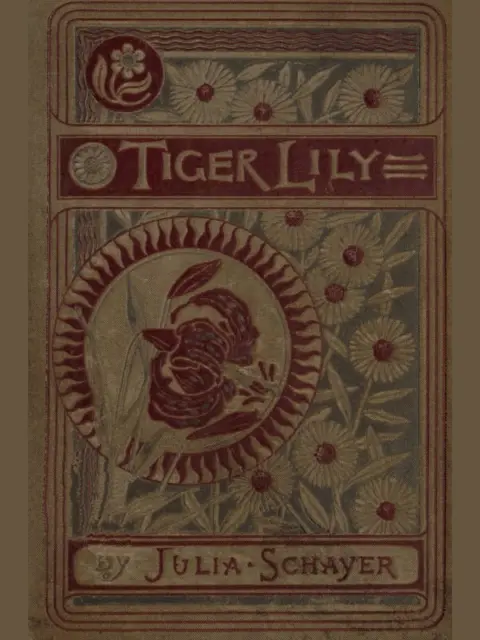
"Tiger Lily and Other Stories" by Julia Thompson von Stosch Schayer is a collection of short stories written in the late 19th century. The primary narrative appears to center around the character Lilly O'Connell, a young girl of mixed heritage who faces societal prejudice and internal struggles stemming from her identity. The themes of resilience, identity, and societal rejection are likely explored as Lilly navigates her relationships and self-perception in a world that harshly judges her based on her appearance and lineage. At the start of the narrative, we are introduced to Lilly O'Connell during a chaotic scene at her school, where she defends a younger boy from bullies, showcasing her courageous and fiery spirit. This physical confrontation accentuates her uniqueness, with her red hair and mixed heritage drawing both ridicule and admiration from her peers. The unfolding dialogue hints at her feelings of isolation and her desperate quest for belonging in a society that ostracizes her. As the story progresses, we see Lilly grappling with deep-seated emotions related to her identity, particularly her longing for acceptance while contending with the harsh realities of prejudice. Her interactions with the compassionate young man, Roger Horton, hint at potential developments in her journey toward self-acceptance and her fight against the societal limitations placed on her.
Introduction adapted from the source catalogue; source summaries may be automatically generated.
Free to read · English · 48,872 words · No account needed
MAKE TIME FOR A GOOD BOOK
On by default. Untick to stop anonymous reading totals. Each page counts after 10 seconds in view. How this works.
Anonymous counting is on unless you have switched it off.
He was an old-school physician, and an old-school gentleman as well. He would have considered it indecent to appear before the world in any other garb than a broadcloth swallow-tail coat of ancient date, and with his long neck wrapped in white lawn nearly to the point of suffocation. He entered the room, and bowed with courtly gallantry on seeing a feminine figure standing by the table; but, as Lilly looked up and the lamp-light fell upon her face and hair, there was a perceptible congealing of his manner.
"Miss--a----" he began.
"I am Lilly O'Connell," she said, simply.
"Oh--a--yes! Miss O'Connell. Hm! Sit down, Miss O'Connell,--sit down!" he added, observing her closely from under his shaggy brows.
The girl remained standing, but the doctor seated himself before the
glowing grate, and placed himself in an attitude of professional
attention.
"You are--indisposed?" he asked, presently, as she remained silent.
"No; I am quite well," she answered; and then, after a little pause, during which her color mounted and faded, she continued: "I have heard that there is need of more help at the hospital, and I came to ask you to take me as nurse, or anything you most need."
Her voice trembled a little, and her eyes were fixed eagerly upon the
doctor's face.
He turned square about, the withered, purple-veined hands clutching the arms of his chair tightly, a kind of choking sound issuing from his bandaged throat.
"Will you say that again?" he asked abruptly, staring with raised eyebrows at the pale, earnest face.
Lilly repeated what she had said, more firmly.
"Good heavens!" ejaculated the old man, measuring the girl from head to
foot slowly.
"Child," he said, after a pause, "do you know what you are talking
about?"
"I think so," the girl answered, quietly.
"No, you do not!" the old man said, almost brusquely. "It is a place to try the nerves of the strongest man, to say nothing of a woman's. It is no place for a girl--no place."
"I am not afraid," the girl said, her voice breaking. "They say I am good in sickness, and I will do any kind of work. It is dreadful to think of those poor little children and women, with no one to do anything for them but men. Oh, do not refuse!" she cried, coming nearer and holding out her hands entreatingly.
The doctor had fidgeted in his chair, uttering a variety of curious, inarticulate exclamations while she was speaking.
"But, child," he repeated, earnestly, "it would be as much as your life is worth to enter the house. You would come down in a week. You might die!"
Your reading position is saved on this browser. Take it to another device with a library code. Reading pages adapt to text, rather than matching a printed edition.
BEHIND THE BOOK
This eBook is for the use of anyone anywhere in the United States and most other parts of the world at no cost and with almost no restrictions whatsoever. You may copy it, give it away or re-use it under the terms of the Project Gutenberg License included with this eBook or online at www.gutenberg.org. If you are not located in the United States, you will have to check the laws of the country where you are located before using this eBook. Read the source licence.
The original source file, including credits and licence, is retained by this library. Request an original-format copy at no charge. Please include the book title and Project Gutenberg identifier #61068.
KEEP YOUR CURIOSITY GOING
Coulson Kernahan

Maurice Baring
Frances Wright
Cécile Tormay

Frederic Jesup Stimson

W. H. P. (William Henry Pope) Jarvis