THE CLASSIC COLLECTION✦A dead man’s diaryCLASSIC FREE BOOKS
A dead man’s diary
Coulson Kernahan
THE CLASSIC COLLECTION · 1883
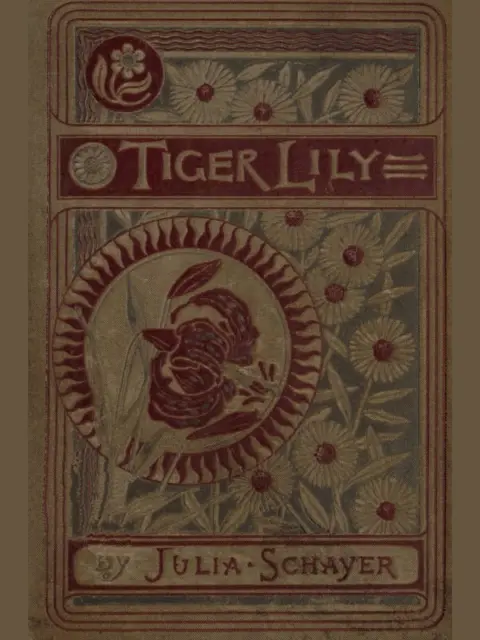
"Tiger Lily and Other Stories" by Julia Thompson von Stosch Schayer is a collection of short stories written in the late 19th century. The primary narrative appears to center around the character Lilly O'Connell, a young girl of mixed heritage who faces societal prejudice and internal struggles stemming from her identity. The themes of resilience, identity, and societal rejection are likely explored as Lilly navigates her relationships and self-perception in a world that harshly judges her based on her appearance and lineage. At the start of the narrative, we are introduced to Lilly O'Connell during a chaotic scene at her school, where she defends a younger boy from bullies, showcasing her courageous and fiery spirit. This physical confrontation accentuates her uniqueness, with her red hair and mixed heritage drawing both ridicule and admiration from her peers. The unfolding dialogue hints at her feelings of isolation and her desperate quest for belonging in a society that ostracizes her. As the story progresses, we see Lilly grappling with deep-seated emotions related to her identity, particularly her longing for acceptance while contending with the harsh realities of prejudice. Her interactions with the compassionate young man, Roger Horton, hint at potential developments in her journey toward self-acceptance and her fight against the societal limitations placed on her.
Introduction adapted from the source catalogue; source summaries may be automatically generated.
Free to read · English · 48,872 words · No account needed
MAKE TIME FOR A GOOD BOOK
On by default. Untick to stop anonymous reading totals. Each page counts after 10 seconds in view. How this works.
Anonymous counting is on unless you have switched it off.
"Yes, it is quite natural. Of course I have taken every precaution; but it was wrong of me to come without finding out how she felt. Tell her I will not come again until"--he paused, with an unpleasant feeling in his throat--"until she wishes me to come."
"Well, I am sure," said Mrs. Fairfield, rising with an alacrity which betrayed how great was her relief, "you must know what a trial it is to her, Roger. The poor girl feels so badly. You are not angry?" giving her hand, but holding the camphorated handkerchief between them.
"No," Dr. Horton said, taking the reluctant fingers a moment, "not at
all angry."
He went away into the outer darkness, walking a little heavily. The house-door shut behind him with a harsh, inhospitable clang, and as he went down the steps the wind blew a naked, dripping woodbine-spray sharply against his cheek, giving him a curiously unpleasant thrill.
When he was part way down the walk, he looked back. At the upper window the girlish figure was still visible, the face still pressed against the pane. His heart bounded at the sight, and then sank with a sense of remoteness and loss for which, a moment later, he chided himself bitterly.
Mrs. Fairfield waited only until she believed Roger was off the grounds, when she threw open all the windows in the room, sprinkled everything liberally with carbolic acid, and went up-stairs to her daughter.
She found Florence standing at the window where she had left her.
"What did he say?" she asked, without looking around.
"Oh, he was very reasonable," Mrs. Fairfield answered, seizing the camphor-bottle from the bureau, "very, indeed. He said it was wrong in him to have come under such circumstances, and he would not come again until the danger was over. Roger always was so sensible."
Tears rolled from the girl's eyes down over her blue cashmere wrapper,
and she bit her lips to keep back the sobs which threatened to break
out.
"Hannah says three more cases were reported to-night," said her mother, re-entering, after a short absence.
An exclamation escaped the girl's lips, and she wrung her fingers
nervously.
"We'd better go, hadn't we?" said Mrs. Fairfield.
"No!" cried the girl. "Yes! Oh, I don't know! I don't know!" and she threw herself upon the bed, crying hysterically.
The evil news being corroborated by the milkman next morning, led to another conference between mother and daughter, the result of which was that the following notes awaited Dr. Horton on his return from an exhausting day's work:
Your reading position is saved on this browser. Take it to another device with a library code. Reading pages adapt to text, rather than matching a printed edition.
BEHIND THE BOOK
This eBook is for the use of anyone anywhere in the United States and most other parts of the world at no cost and with almost no restrictions whatsoever. You may copy it, give it away or re-use it under the terms of the Project Gutenberg License included with this eBook or online at www.gutenberg.org. If you are not located in the United States, you will have to check the laws of the country where you are located before using this eBook. Read the source licence.
The original source file, including credits and licence, is retained by this library. Request an original-format copy at no charge. Please include the book title and Project Gutenberg identifier #61068.
KEEP YOUR CURIOSITY GOING
Coulson Kernahan

Maurice Baring
Frances Wright
Cécile Tormay

Frederic Jesup Stimson

W. H. P. (William Henry Pope) Jarvis