THE CLASSIC COLLECTION✦A dead man’s diaryCLASSIC FREE BOOKS
A dead man’s diary
Coulson Kernahan
THE CLASSIC COLLECTION · 1883
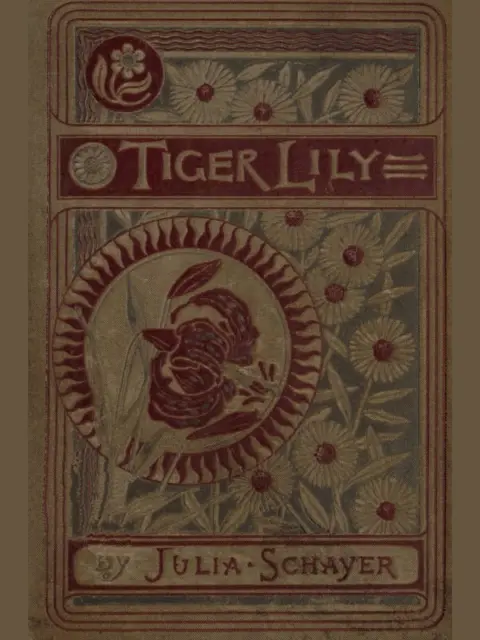
"Tiger Lily and Other Stories" by Julia Thompson von Stosch Schayer is a collection of short stories written in the late 19th century. The primary narrative appears to center around the character Lilly O'Connell, a young girl of mixed heritage who faces societal prejudice and internal struggles stemming from her identity. The themes of resilience, identity, and societal rejection are likely explored as Lilly navigates her relationships and self-perception in a world that harshly judges her based on her appearance and lineage. At the start of the narrative, we are introduced to Lilly O'Connell during a chaotic scene at her school, where she defends a younger boy from bullies, showcasing her courageous and fiery spirit. This physical confrontation accentuates her uniqueness, with her red hair and mixed heritage drawing both ridicule and admiration from her peers. The unfolding dialogue hints at her feelings of isolation and her desperate quest for belonging in a society that ostracizes her. As the story progresses, we see Lilly grappling with deep-seated emotions related to her identity, particularly her longing for acceptance while contending with the harsh realities of prejudice. Her interactions with the compassionate young man, Roger Horton, hint at potential developments in her journey toward self-acceptance and her fight against the societal limitations placed on her.
Introduction adapted from the source catalogue; source summaries may be automatically generated.
Free to read · English · 48,872 words · No account needed
MAKE TIME FOR A GOOD BOOK
On by default. Untick to stop anonymous reading totals. Each page counts after 10 seconds in view. How this works.
Anonymous counting is on unless you have switched it off.
Miss Fairfield made no other reply than to withdraw her hand, under the pretext of gathering up her muslin flounces for the walk across the lawn. Horton drew her white wrap over the bare arms and throat, and walked in silence by her side to the hall door. Even then he did not speak at once, feeling that the young lady was in no mood for conversation, but at last he drew the little white figure toward him, and said:
"You are tired, little girl. These church fairs and festivals are a great nuisance. I will not come in to-night, but I will drive round in the morning to see how you have slept."
To his surprise, the girl turned upon him suddenly, repulsing his arm.
"Why," she began, hurriedly, "why are you always defending Lilly
O'Connell?"
She shot the question at him with a force which took away his breath. She had always seemed to him gentleness itself. He hardly recognized her, as she faced him with white cheeks and blazing eyes.
"It was always so," she went on, impetuously, "ever since I can remember. You have always been defending her. No one must speak of her as if she were anything but a lady. I cannot understand it, Roger! I want to know what it means--the interest you show, and always have shown, in that--that girl!"
Horton had recovered himself by this time. He looked into the angry face with a quiet, almost stern, gaze. The girl shrank a little before it, and this, and the quiver of her voice toward the close of her last sentence, softened the resentment which had tingled through his veins. Shame, humiliation, not for himself, but for her, his affianced wife, burned on his cheeks.
"What interest, Florence?" he said, repeating her words. "Just that interest which every honest man, or woman, feels in a fellow-creature who suffers wrongfully. Just that--and nothing more."
Her lips parted as if to retort, but the steadiness of her lover's gaze disconcerted her. He was very gentle, but she felt, as she had once or twice before, the quiet mastery of his stronger nature, and the eyes fell. He took both her hands and held them awhile without removing his eyes from her face.
"Good-night, Florence," he said, at last, almost with sadness.
She would have liked to let him see that she was sorry for her ill-temper, or rather for the manifestation of it, but she was only overawed, not penitent, and bent her head to his parting kiss without a word.
Your reading position is saved on this browser. Take it to another device with a library code. Reading pages adapt to text, rather than matching a printed edition.
BEHIND THE BOOK
This eBook is for the use of anyone anywhere in the United States and most other parts of the world at no cost and with almost no restrictions whatsoever. You may copy it, give it away or re-use it under the terms of the Project Gutenberg License included with this eBook or online at www.gutenberg.org. If you are not located in the United States, you will have to check the laws of the country where you are located before using this eBook. Read the source licence.
The original source file, including credits and licence, is retained by this library. Request an original-format copy at no charge. Please include the book title and Project Gutenberg identifier #61068.
KEEP YOUR CURIOSITY GOING
Coulson Kernahan

Maurice Baring
Frances Wright
Cécile Tormay

Frederic Jesup Stimson

W. H. P. (William Henry Pope) Jarvis