THE CLASSIC COLLECTION✦A dead man’s diaryCLASSIC FREE BOOKS
A dead man’s diary
Coulson Kernahan
THE CLASSIC COLLECTION · 1883
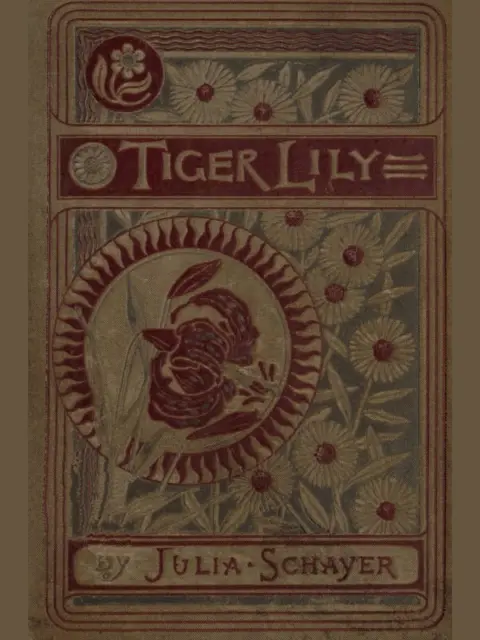
"Tiger Lily and Other Stories" by Julia Thompson von Stosch Schayer is a collection of short stories written in the late 19th century. The primary narrative appears to center around the character Lilly O'Connell, a young girl of mixed heritage who faces societal prejudice and internal struggles stemming from her identity. The themes of resilience, identity, and societal rejection are likely explored as Lilly navigates her relationships and self-perception in a world that harshly judges her based on her appearance and lineage. At the start of the narrative, we are introduced to Lilly O'Connell during a chaotic scene at her school, where she defends a younger boy from bullies, showcasing her courageous and fiery spirit. This physical confrontation accentuates her uniqueness, with her red hair and mixed heritage drawing both ridicule and admiration from her peers. The unfolding dialogue hints at her feelings of isolation and her desperate quest for belonging in a society that ostracizes her. As the story progresses, we see Lilly grappling with deep-seated emotions related to her identity, particularly her longing for acceptance while contending with the harsh realities of prejudice. Her interactions with the compassionate young man, Roger Horton, hint at potential developments in her journey toward self-acceptance and her fight against the societal limitations placed on her.
Introduction adapted from the source catalogue; source summaries may be automatically generated.
Free to read · English · 48,872 words · No account needed
MAKE TIME FOR A GOOD BOOK
On by default. Untick to stop anonymous reading totals. Each page counts after 10 seconds in view. How this works.
Anonymous counting is on unless you have switched it off.
It happened one evening in mid-winter that I was hastening along Pennsylvania Avenue at an early hour, when, as I was passing a certain restaurant, the door of the ladies' entrance was pushed noisily open, and a party of three came out. The first of these was a man, middle-aged, well-dressed, and of a jaunty and gallant air, the second a large, high-colored young woman, the third--Phenie. She looked flushed and excited, and was laughing in her pretty, foolish way at something her male companion was saying to her. My heart stood still; but, as I watched the trio from the obscurity of a convenient door-way, I saw the man hail a Navy Yard car, assist Phenie to enter it, and return to his friend upon the pavement.
I was ill at ease. I felt a certain degree of responsibility concerning Phenie, and the next day, therefore, I waited for her at the great iron gate through which the employés of the Bureau must pass out, determined to have a few words with the child in private. Among the first to appear was Phenie, and with her, as I had feared, the high-colored young woman. In spite of that person's insolent looks, I drew Phenie's little hand unresistingly through my arm, and led her away.
Outside the building, as I had half-expected, loitered the man in whose company I had seen her on the previous evening. Daylight showed him to be a type familiar to Washington eyes--large, florid, scrupulously attired, and carrying himself with a mingled air of military distinction and senatorial dignity well calculated to deceive an unsophisticated observer.
He greeted Phenie with a courtly bow, and a smile, which changed quickly to a dark look as his eyes met mine, and turned away with a sudden assumption of lofty indifference and abstraction.
Phenie accompanied me to my room without a word, where I busied myself in preparing some work for her mother, chatting meanwhile of various trifling matters.
I could see that the girl looked puzzled, astonished, even a little angry. She kept one of her small, dimpled hands hidden under the folds of her water-proof, too, and her eyes followed me wistfully and questioningly.
"Who were those people I saw you with last evening, coming from H----'s saloon?" I suddenly asked.
Phenie gave me a startled glance; her face grew pale.
"Her name," she stammered, "is Nettie Mullin."
"And the gentleman?" I asked again, with an irony which I fear was
entirely thrown away.
The girl's color came back with a rush.
"His name is O'Brien, General O'Brien," she faltered. "He--he's a great man!" she added, with a pitiful little show of pride.
Your reading position is saved on this browser. Take it to another device with a library code. Reading pages adapt to text, rather than matching a printed edition.
BEHIND THE BOOK
This eBook is for the use of anyone anywhere in the United States and most other parts of the world at no cost and with almost no restrictions whatsoever. You may copy it, give it away or re-use it under the terms of the Project Gutenberg License included with this eBook or online at www.gutenberg.org. If you are not located in the United States, you will have to check the laws of the country where you are located before using this eBook. Read the source licence.
The original source file, including credits and licence, is retained by this library. Request an original-format copy at no charge. Please include the book title and Project Gutenberg identifier #61068.
KEEP YOUR CURIOSITY GOING
Coulson Kernahan

Maurice Baring
Frances Wright
Cécile Tormay

Frederic Jesup Stimson

W. H. P. (William Henry Pope) Jarvis